Nakajima Ki-43 II
Hayabusa Aces
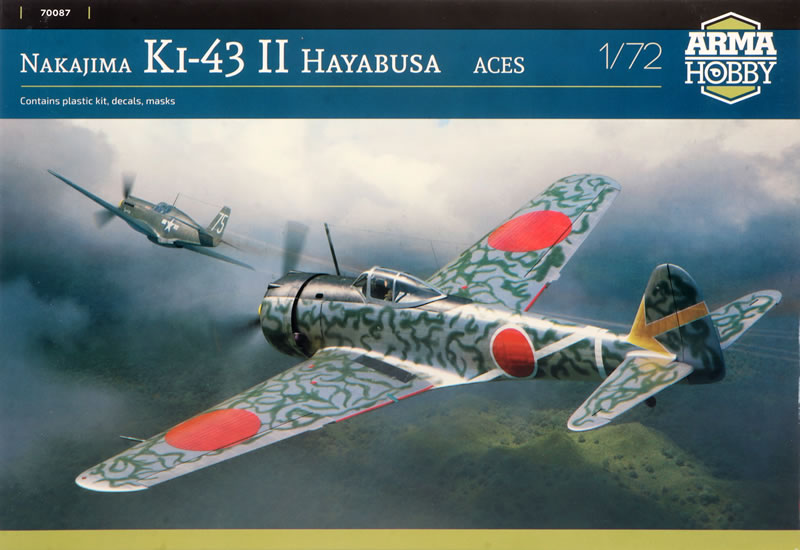
Arma Hobby, 1/72 scale
S
u m m a r y : |
Description and Item No.: |
Arma Hobby Kit No. 70087 - Nakajima Ki-43 II Hayabusa Aces |
Contents and Media: |
70 parts in grey plastic; four parts in clear plastic; self-adhesive canopy and wheel masks; markings for three aircraft options. |
Price: |
€22.12 plus shipping available online at Arma Hobby
Will be available from Hannants
and hobby retailers worldwide |
Scale: |
1/72 |
Review Type: |
First Look |
Advantages: |
High quality moulding; excellent surface textures and detail; high quality decals. |
Disadvantages: |
Excess flash on fin / rudder; end-opening box. |
Recommendation: |
Arma Hobby's 1/72 scale Ki-43 II Hayabusa Aces is a gorgeous little kit - crisp surface texture, high moulding quality and a very high level of detail. It's a great package with the plastic parts as well as self-adhesive masks. What more could we ask for? |
Reviewed by Brett Green

The Nakajima Ki-43 Hayabusa was the Imperial Japanese Army Air Force’s most important fighter of the early Pacific War and one of the most widely produced Japanese combat aircraft of World War II. Known to the Allies by the codename “Oscar”, the Ki-43 combined superb manoeuvrability with long range and excellent climb performance, making it a formidable opponent during the opening stages of the conflict.
Designed by Hideo Itokawa for the Nakajima Aircraft Company, the Ki-43 was intended as the successor to the Ki-27 “Nate”. The Japanese Army demanded a fighter with greater speed and heavier armament while retaining the extraordinary agility that Japanese pilots valued so highly. The prototype first flew in January 1939, but early testing revealed disappointing manoeuvrability. Nakajima engineers responded by introducing innovative “combat flaps”, dramatically improving turning performance and transforming the aircraft into an agile dogfighter.
The production Ki-43-I entered service in 1941 and quickly became a key component of Japanese offensives across China, Malaya, Burma and the Dutch East Indies. Allied pilots initially mistook the Hayabusa for the famous Mitsubishi A6M Zero due to its similar appearance and manoeuvrability. In combat, the Ki-43 proved deadly in turning engagements, but its light construction came at a cost. Armour protection and self-sealing fuel tanks were minimal or absent in early variants, leaving the aircraft highly vulnerable to enemy fire.
Later versions, including the Ki-43-II and Ki-43-III, introduced more powerful engines, improved protection and revised armament. Despite these refinements, the Hayabusa struggled against newer Allied fighters such as the Grumman F6F Hellcat and Republic P-47 Thunderbolt.
Even so, the Ki-43 remained in widespread service until the end of the war. More than 5,900 were built, and the type served in virtually every theatre involving Japanese Army aviation. Elegant, lightweight and deadly in skilled hands, the Hayabusa perfectly reflected Japanese fighter doctrine during the early years.
Arma Hobby released the first of its 1/72 scale Oscar famiily with their scale Ki-43 Hayabusa in late 2024.
They have now releases a companion piece - Ki-43 II Hayabusa Aces.
Arma Hobby's 1/72 scale Ki-43 II Hayabusa Aces comprises 70 parts in grey plastic, four parts in clear plastic, self-adhesive canopy and wheel masks and markings for three aircraft.
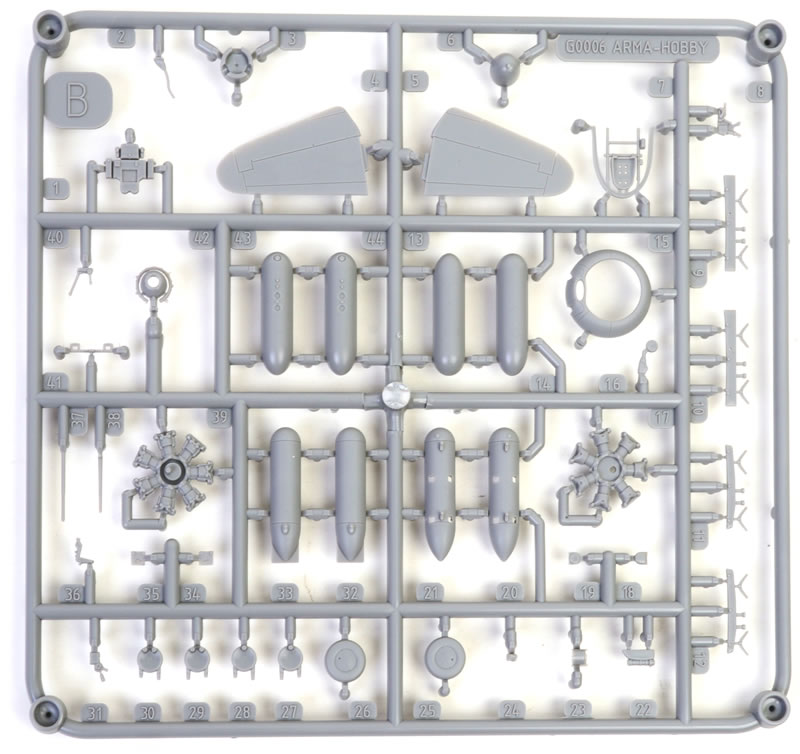
The grey plastic parts are delivered on two sprues. Moulding quality is excellent with only a single imperfections on my sample. See below for details.
Arma’s website advises that long-run metal moulds are used for their kit production, and it really does show.
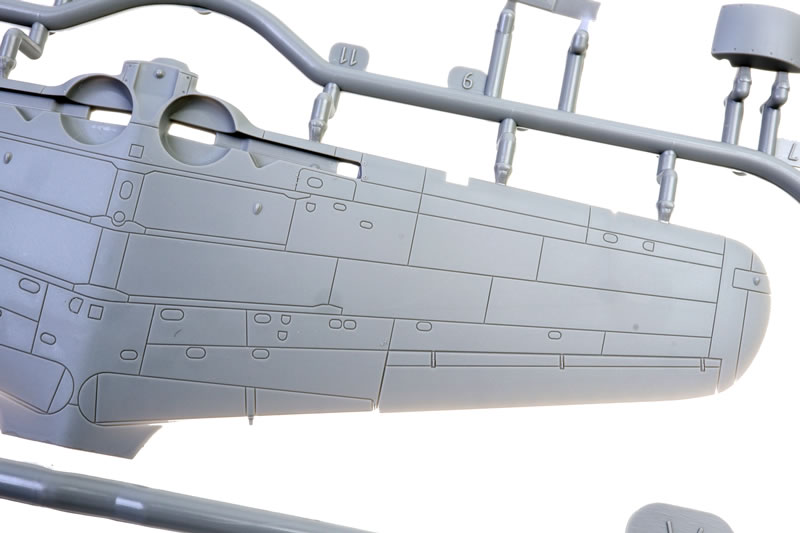
Being a long-run kit, the parts are moulded with all the alignment aids that you would expect including locating pins, holes and tabs.
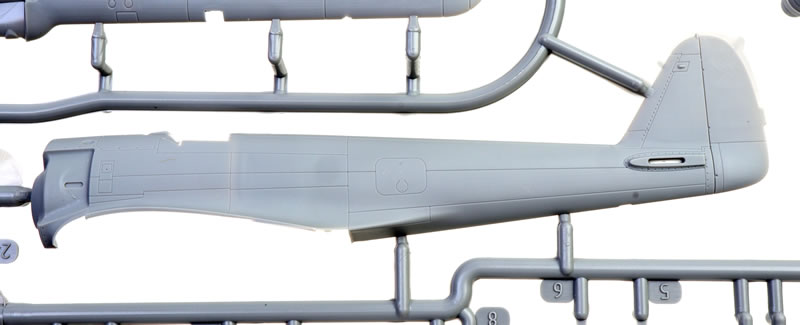
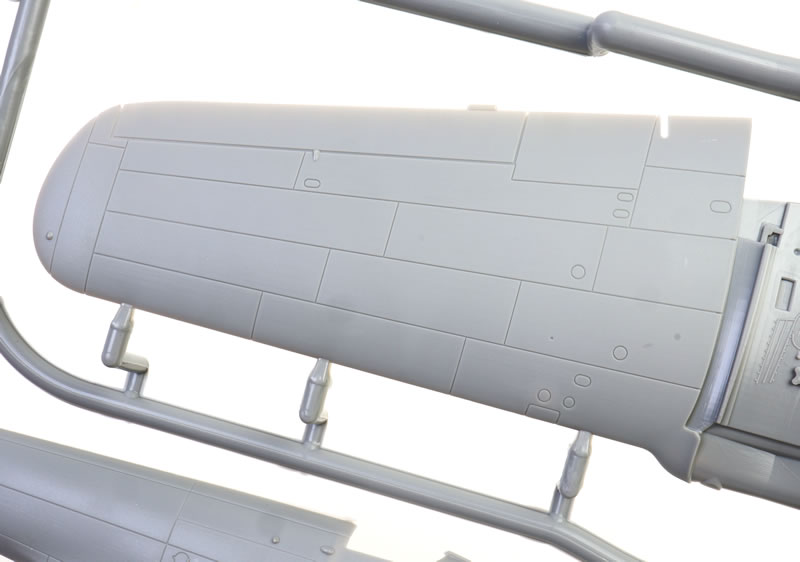
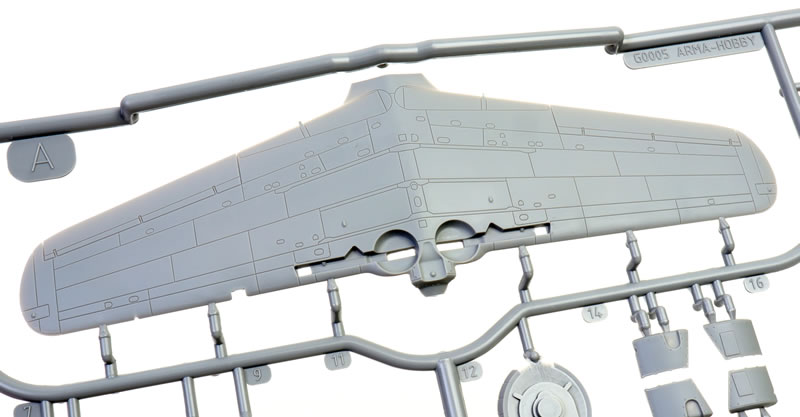
The larger parts feature a smooth satin finish. Surface textures are just gorgeous. Recessed panel lines, raised fastener heads, blister fairings and other structural details are very fine.
The rudder is moulded as part of the fuselage. Fabric texture effect on the rudder is remarkably subtle.
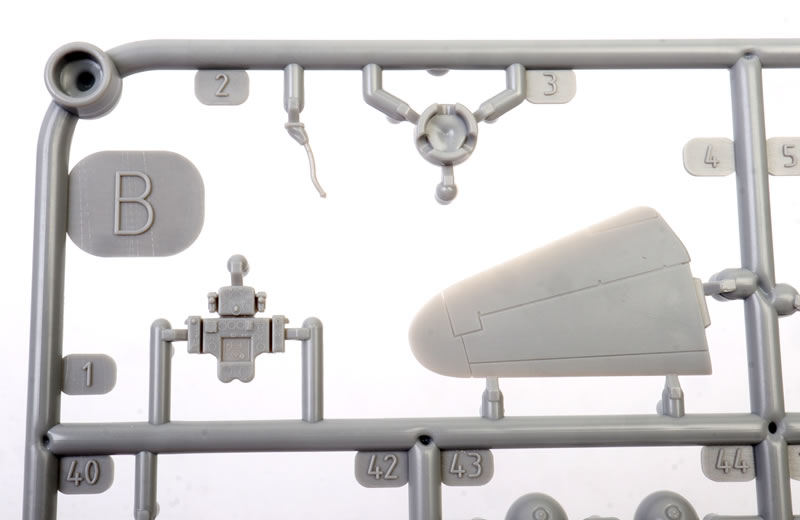
The fuselage is supplied as left and right halves with the standard fin moulded to the fuselage halves.
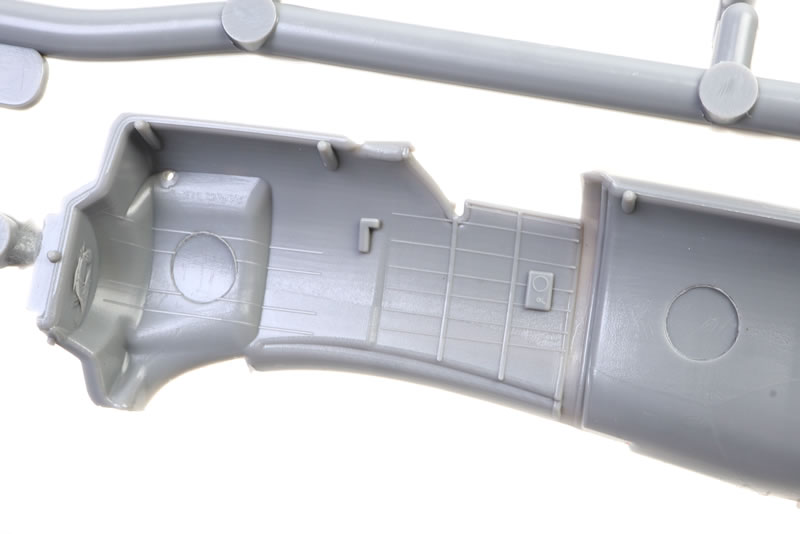
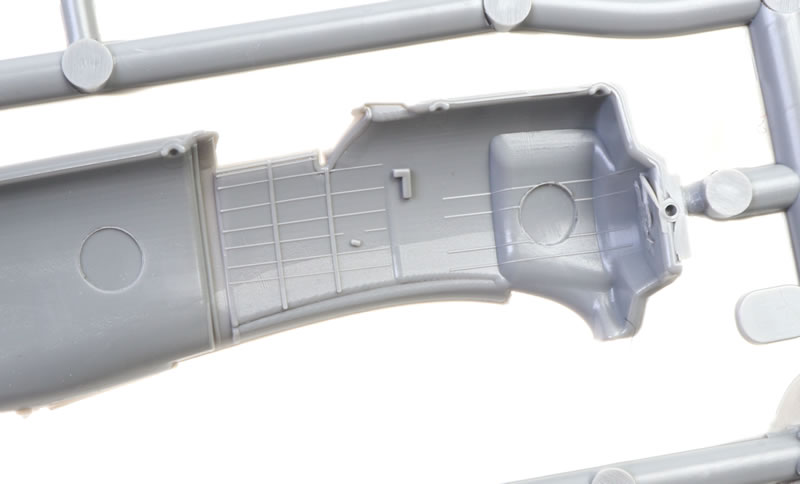
Some cockpit sidewall structural detail is moulded directly to the inside of the fuselage.
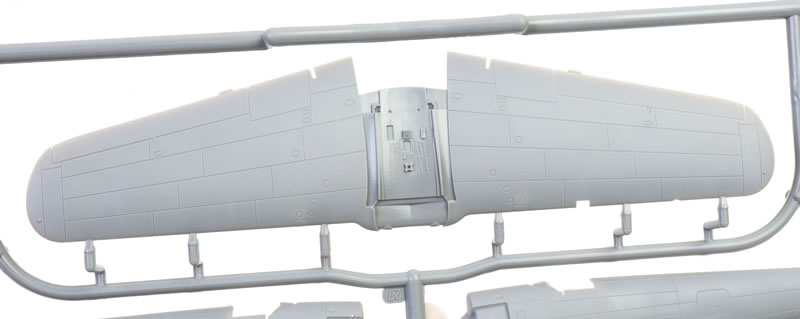
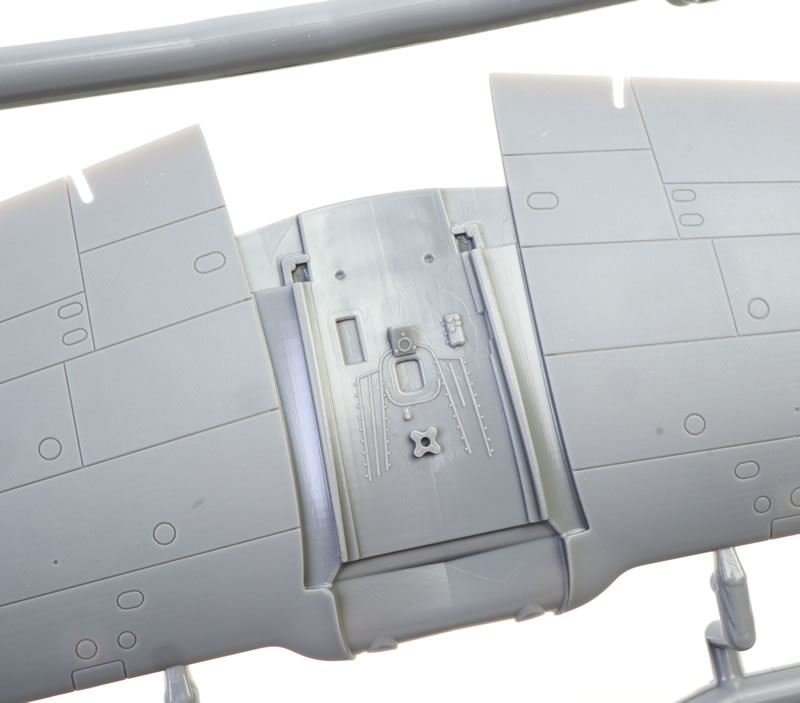
The cockpit floor is moulded as parts of the centre section of the bottom wing half.
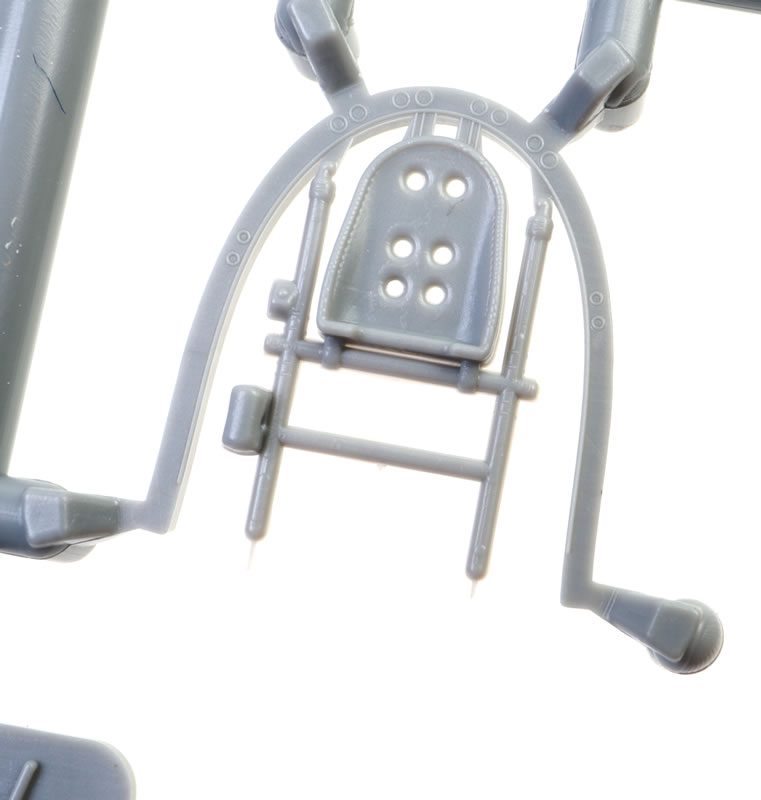
The seat backrest and rear bulkhead are moulded as a singke piece. The backrest features hollowed-out lightening holes - very impressive in this small scale. The seat pan is a separate part.
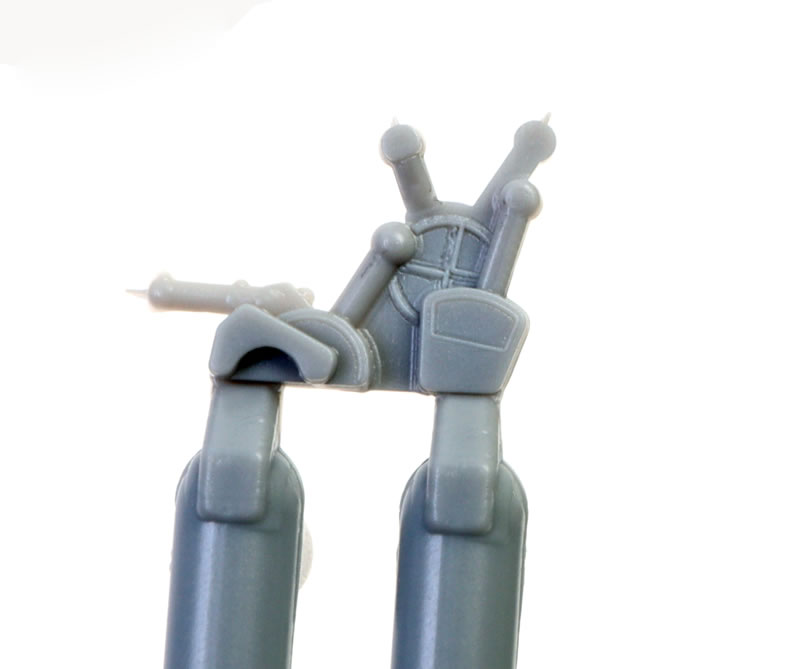
Side panels, the throttle quadrant, control column, rudder pedals, handles knobs and more round out the front office detail.
I particularly like the tiny but perfectly formed throttle quadrant.
A plastic instrument panel is also supplied with raised bezels and switches. This looks great, even in the bare plastic. The decal sheet supplies two sets of harness straps and instrument panels overlays.
The landing gear is moulded in a minimum number of parts, although care will be required during alignment and assembly. Test fit thoroughly!
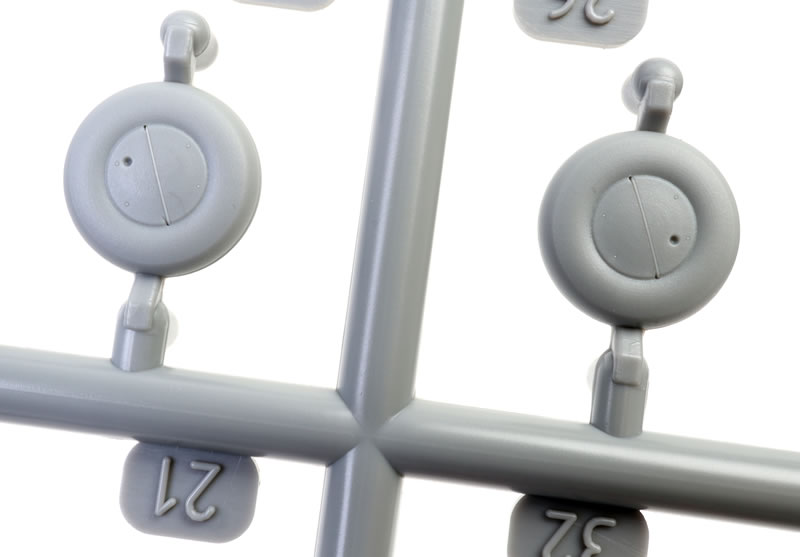
Main wheels are moulded as one piece each.
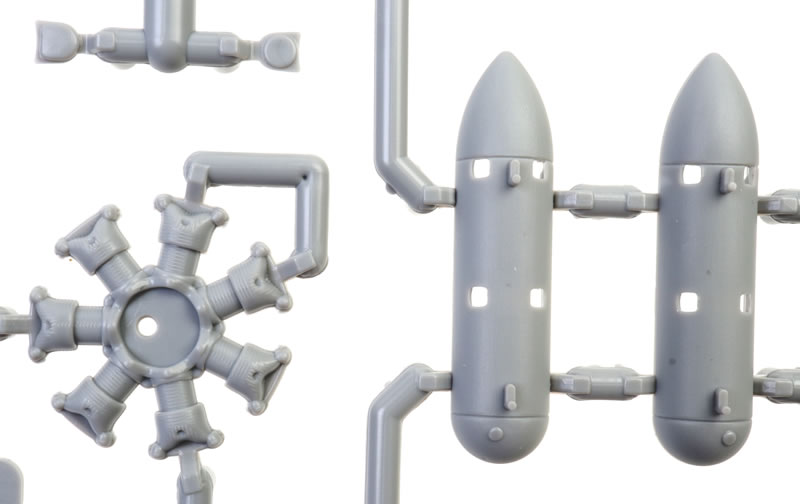
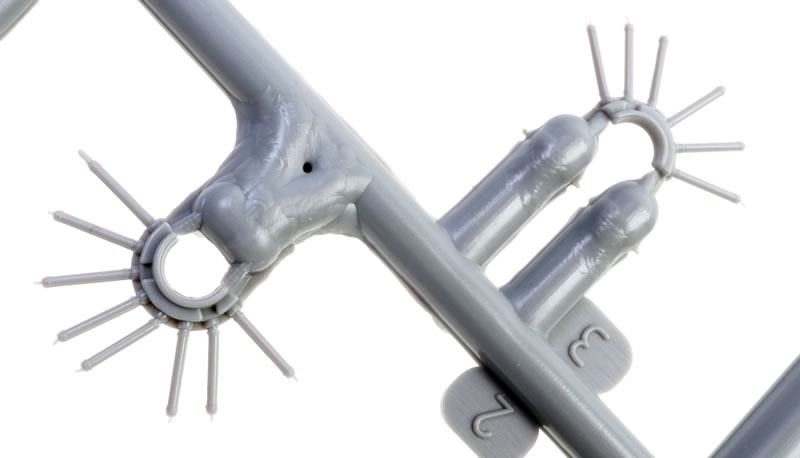
The five piece engine is very well done. The two rows of cylinders boast fine cooling fin detail. This is supplemented with pushrods and the crankcase cover.
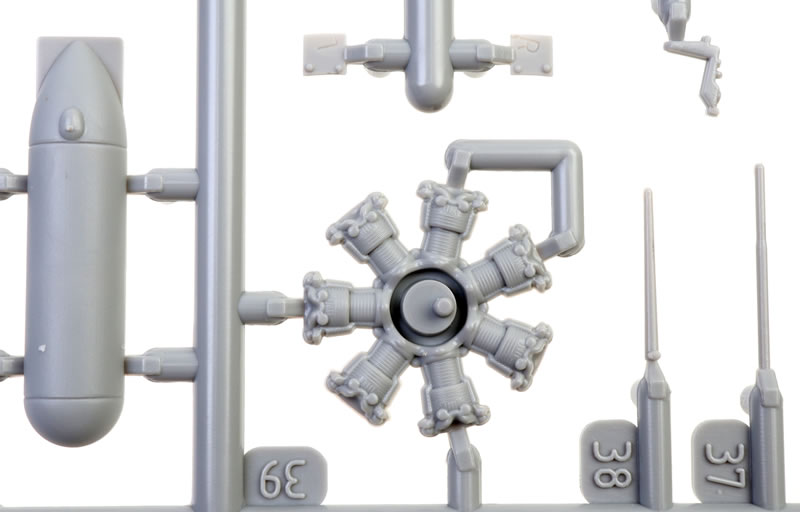
Pushrods are supplied as two hemispherical parts and the exhaust manifold is another pair of parts. Seven decals are included for the crankcase and magnetos.
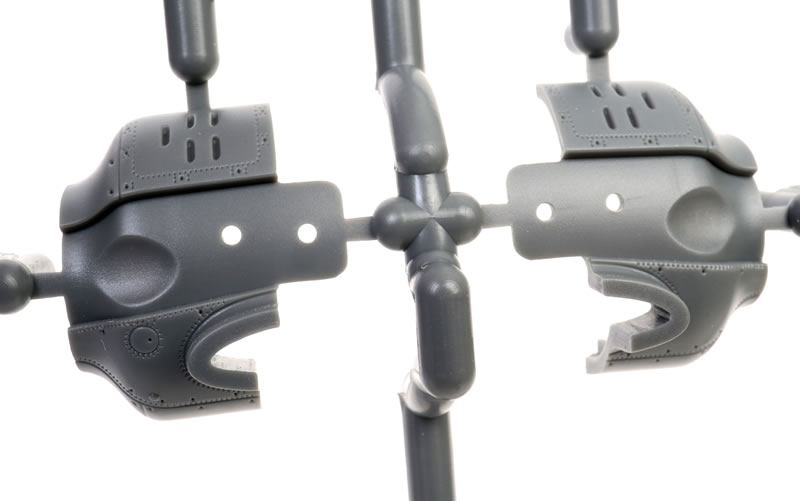
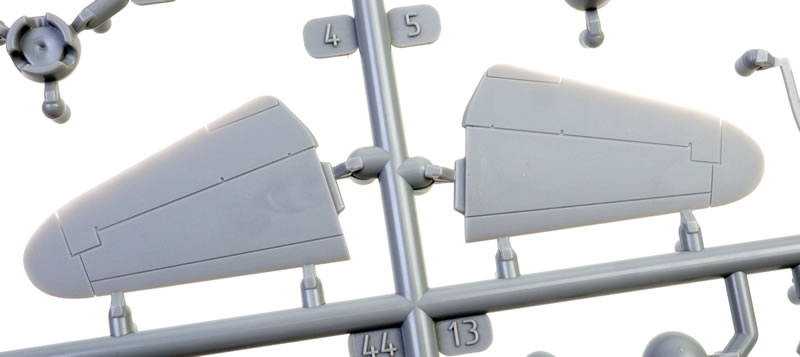
Two alternative manifold / exhaust parts and forward side fuselage panels are offered.
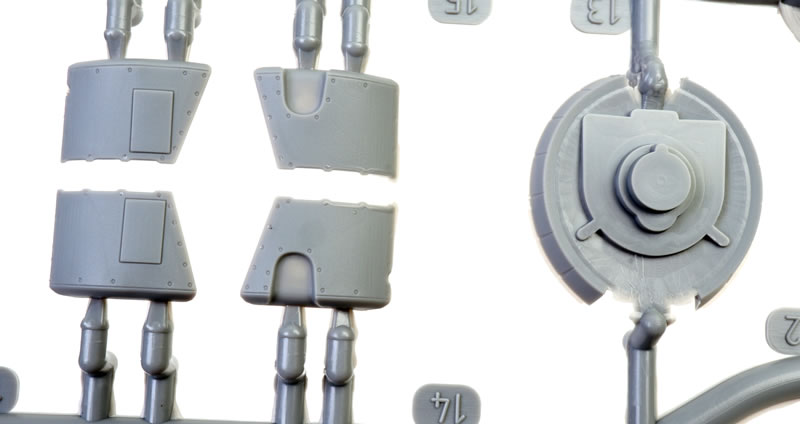
The engine cowling is broken down into five separate pieces.
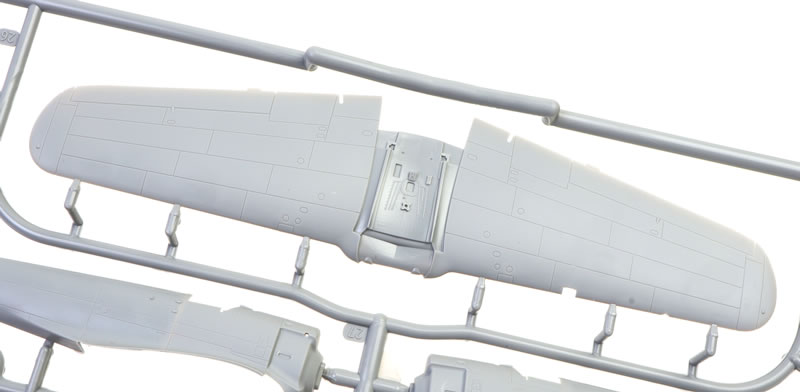
The wings are moulded in two parts - full span upper and lower partss. Trailing edges are very thin – almost translucent.
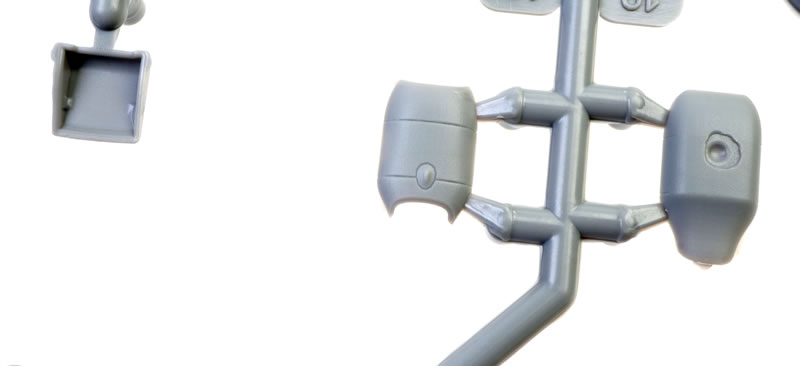
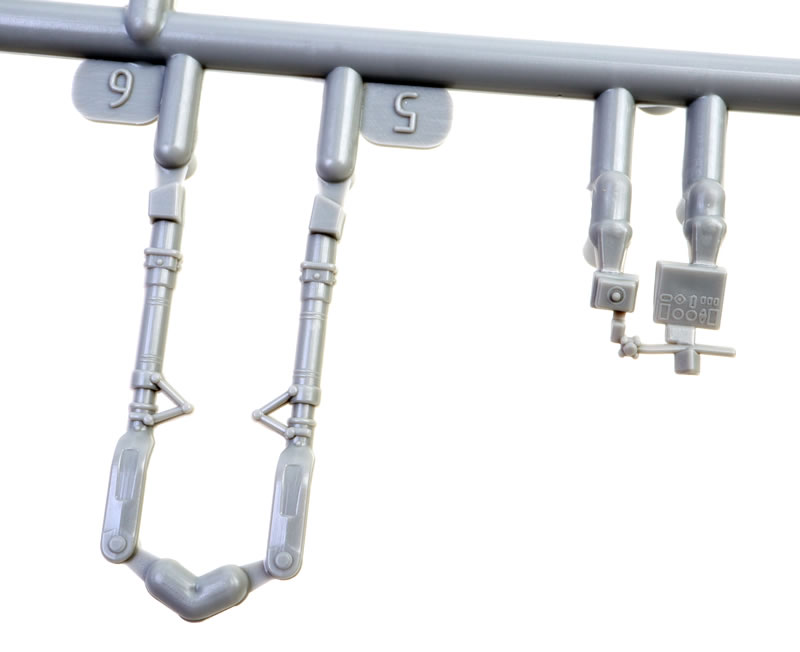
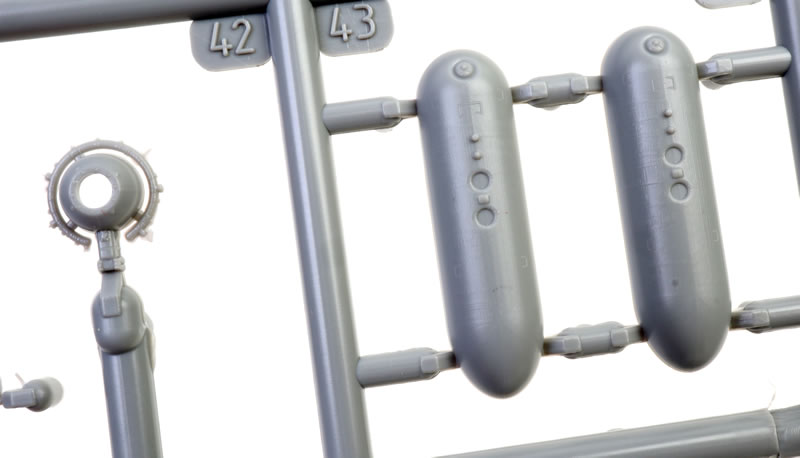
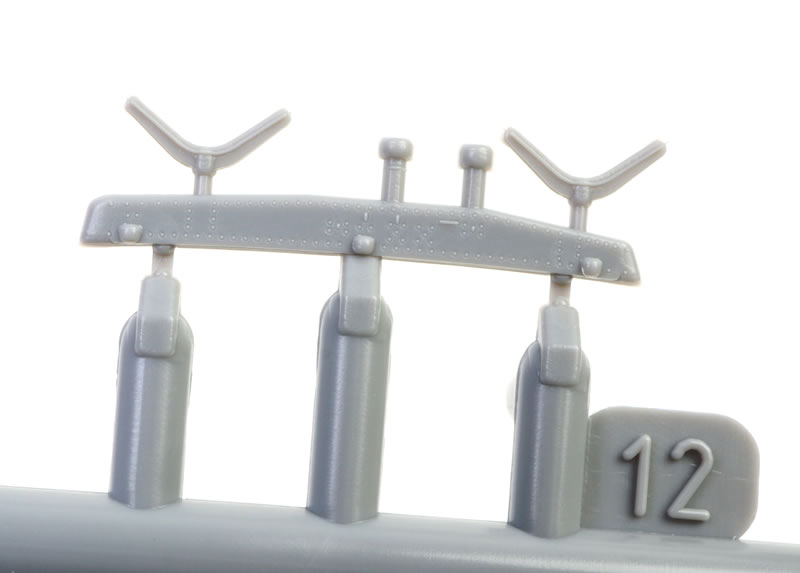
Two drop tanks wrap up the grey plastic parts. Two versions are supplied - early and late - and the location under the wings vary depending on your marking preference.
The instructions direct you to bend the sway braces 90° to the angle of the rack. I think the delicate sway braces are more likely to break than bend. I will be making a clean cut of the sway braces and then glue them back onto the racks at the 90° angle. Leave the sway braces plenty of time to set.
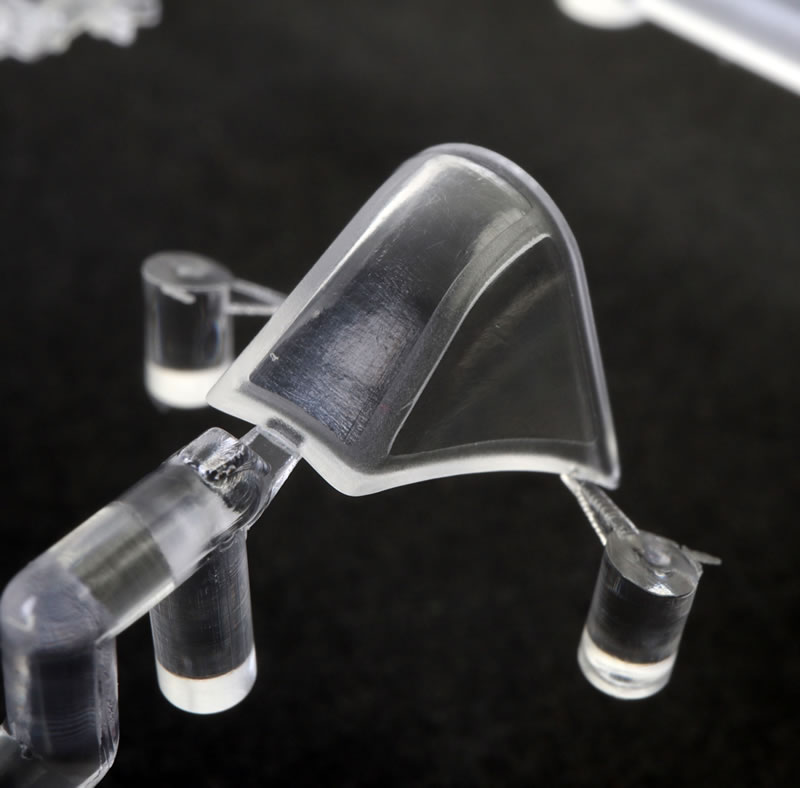
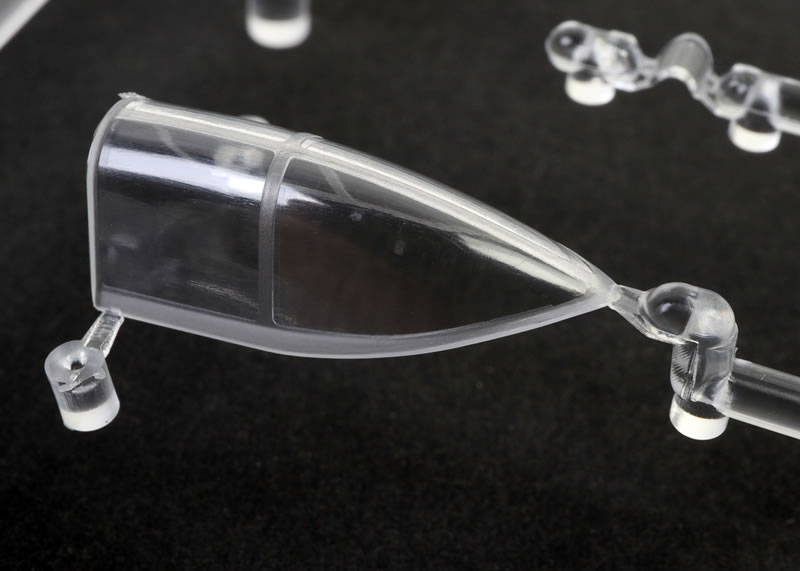
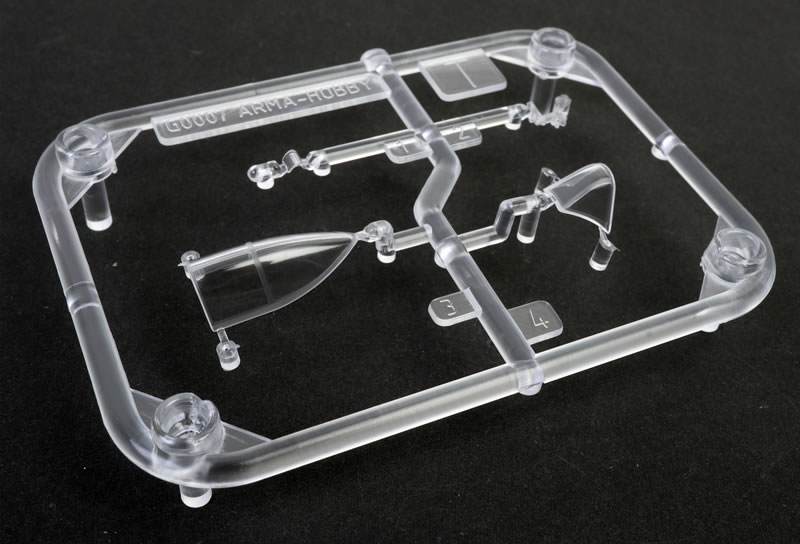
The canopy parts are thin and clear and offer separate parts for the windscreen and the sliding section. The gunsight lens is a clear part too.
Wing tip navigation lights are moulded as part of the wings.
Self adhesive masks are supplied for the framed canopy. This will be welcomed by modellers who dislike cutting their own masks.
Instructions are supplied as a 12 page stapled A5-sized booklet with 24 assenbly steps. As always, make sure you test fit until you are sure where everything goes before you commit to glue.
The kit is packed into a end-opening cardboard box.
Marking Options
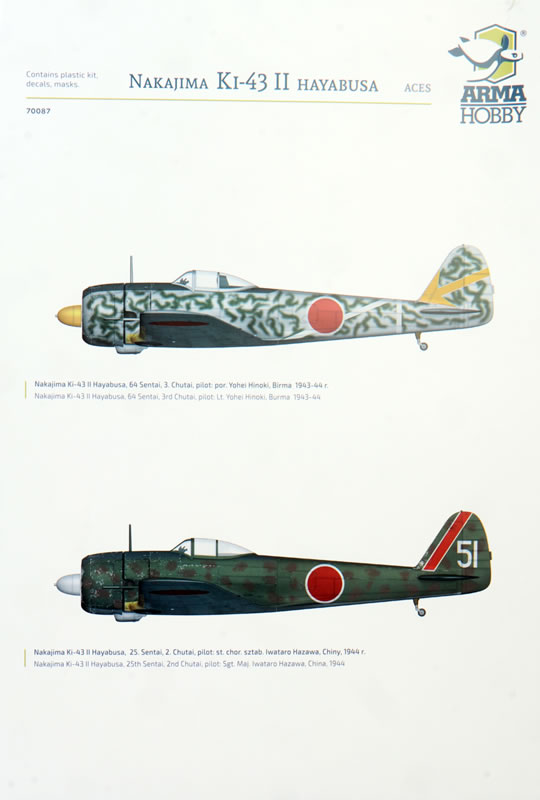
Two IJA options are offered.
-
Nakajima Ki-43-II, 64th Sentai, 3rd Chutai, Lt. Yohei Hinoki, Burma, 1943–44
-
Nakajima Ki-43-II, 25th Sentai, 2nd Chutai, Sgt. Maj. Iwataro Hazawa, China, 1944
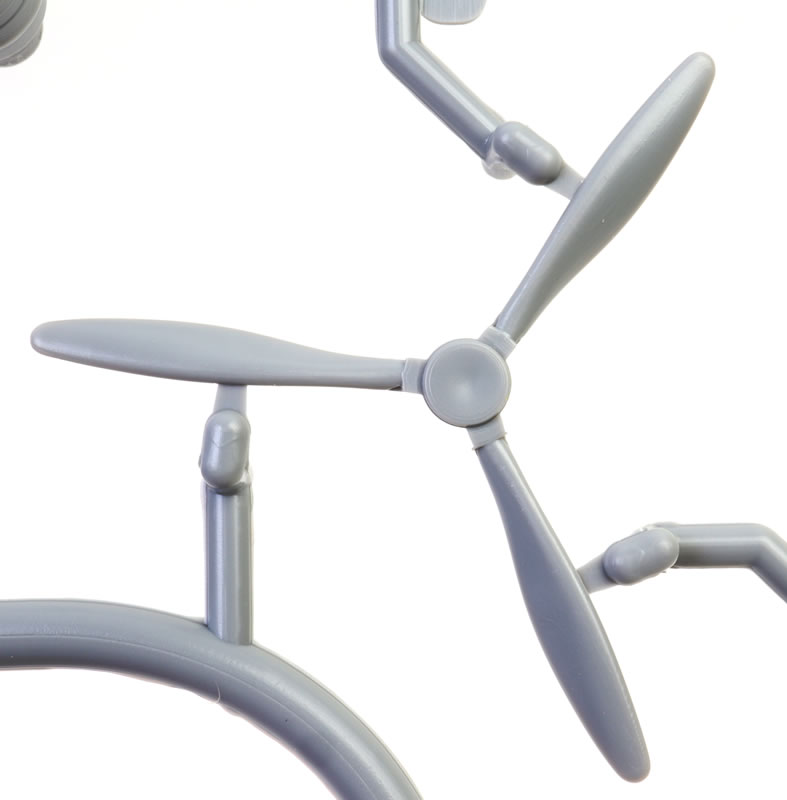
Stencil markings are delivered on the same single sheet, as are IFF leading edge wing markings and propeller logos.
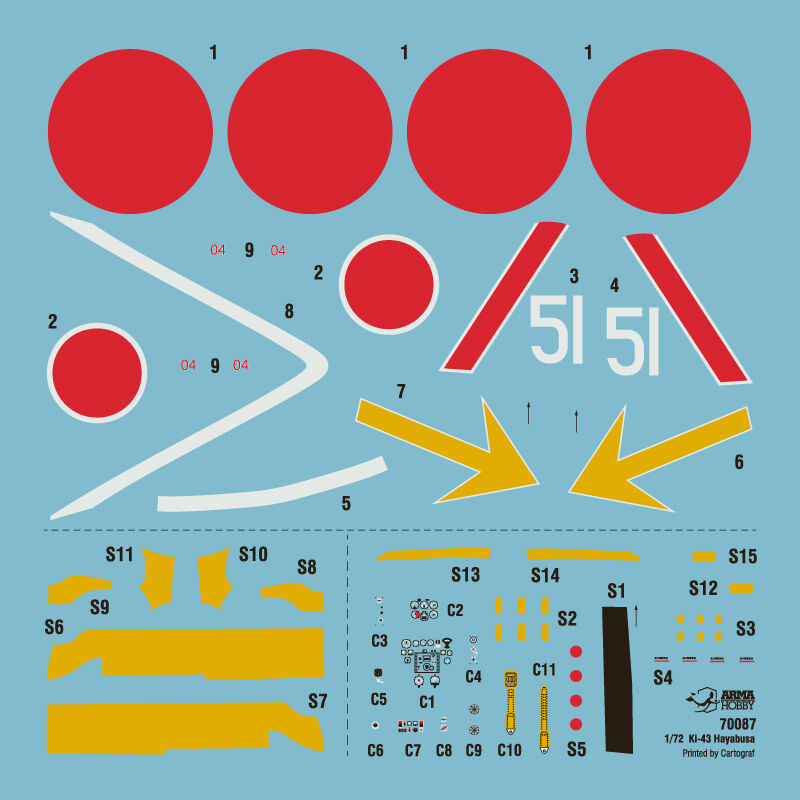
Colour callouts are provided for FS numbers and model paint numbers from a wide variety of companies – Hakata, AK, Mr Paint, Lifecolor, AMMO, Mr Color, Vallejo and Tamiya.
Decals are printed by Cartograf. They are glossy, colours are well saturated and everything is in perfect register.
Arma Hobby's 1/72 scale Ki-43 II Hayabusa Aces is a gorgeous little package - crisp surface texture, high moulding quality and a very high level of detail.
I do hope that Arma considers upscaling their Oscar to 1/48 too. The Fine Molds and Hasegawa kits were nice in their day but they are getting long in the tooth now with the Fine Molds kit dating all the way back to 1993 and Hasegawa to 2001.
In the meantime, you will enjoy Arma Hobby's 1/72 scale Ki-43 II Hayabusa!
* Historical background adapted from Wikipedia
Thanks to Arma Hobby for the sample
Review Text and Images Copyright © 2026 by Brett Green
Page Created 19 May, 2026
Last updated
19 May, 2026
Back to HyperScale Main Page
Back to Reviews Page |
 Home
| What's New |
Features |
Gallery |
Reviews |
Reference |
Forum |
Search
Home
| What's New |
Features |
Gallery |
Reviews |
Reference |
Forum |
Search