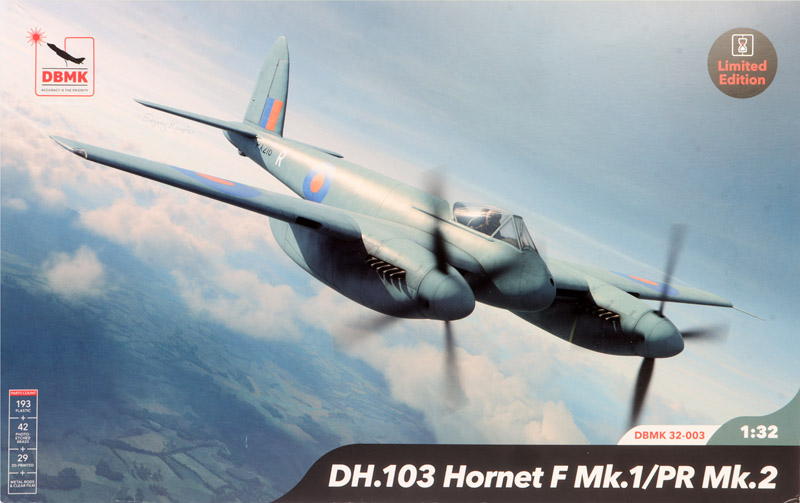
193 grey plastic parts, 29 3D-printed parts, 42 parts on a single colour photo-etched fret, photo-etched brass tube and two marking options on a large, glossy Cartograf decal sheet. A separate stencil decal sheet is also included.
Crisp surface textures; high level of detail; effective use of multimedia; useful options poseable canopy and control surfaces; high quality Cartograf decals.
Disadvantages:
None noted
Conclusion:
DBMK Models’ newest Hornet is a logical addition to their growing 1:32 scale range. This F Mk.1 / PR Mk.2 release combines quality plastic moulding with finely rendered 3D-printed components and welcome colour photo-etched detail. The cockpit is particularly well catered for, while the crisp surface detail, thoughtful engineering and Cartograf decals further enhance the package.
Although this is a limited-run multimedia kit rather than a conventional mainstream injection-moulded release, the quality of its components and the comprehensive nature of its contents will make it a rewarding project for experienced modellers.
I have already built DBMK’s initial 1:32 scale Hornet release and found construction to be an enjoyable experience. I don’t expect this one to be any different.
With markings for both a classic RAF fighter and the rare photographic reconnaissance variant, DBMK Models has delivered an attractive and well-equipped Hornet that should appeal to enthusiasts of this elegant British aircraft.
Highly Recommended.
Reviewed by Brett Green
Background
The de Havilland DH.103 Hornet represented the culmination of the company's piston-engine fighter development. Conceived in 1942 for long-range operations in the Pacific, its streamlined wooden airframe and twin Rolls-Royce Merlin engines delivered exceptional speed and manoeuvrability. The prototype, RR915, first flew on 28 July 1944 and exceeded expectations, reaching 485 mph during trials. The Hornet was among the fastest piston-engined fighters of its era.
The initial production fighter, the Hornet F Mk.1, was powered by Merlin 130/131 engines and armed with four 20 mm Hispano cannon concentrated in the nose. Provision was made for external fuel tanks and, in later configurations, bombs or rockets. The first production aircraft, PX210, was delivered to the Aeroplane and Armament Experimental Establishment at Boscombe Down on 28 February 1945. Although intended for the war against Japan, the Hornet arrived too late to see combat during the Second World War.
The F Mk.1 entered RAF squadron service in 1946, initially with No. 64 Squadron at Horsham St Faith. No. 19 Squadron followed, with Nos. 41 and 65 Squadrons also operating the type. The Hornet proved an outstanding fighter, although its relatively limited internal fuel capacity restricted endurance and operational radius.
DH 103 Hornet PR Mk.2
An unarmed photographic reconnaissance derivative, the PR Mk.2, was developed to exploit the Hornet's speed and range. Three F Mk.1 airframes—PX216, PX220 and PX249—were converted for trials, with their cannon removed and cameras installed in the rear fuselage.
Five additional aircraft were completed to PR Mk.2 standard, but the anticipated production programme was cancelled as post-war requirements contracted. The small number built served briefly with the Photographic Reconnaissance Development Unit at RAF Benson before being withdrawn.
The F Mk.1 and PR Mk.2 thus represented the Hornet's original fighter and reconnaissance concepts, before the improved F Mk.3 introduced greater fuel capacity and extended operational range.
FirstLook
DBMK Models released their initial limited-run, multimedia 1:32 scale de Havilland Hornet F Mk.3 in early 2026. They have now followed up with this 1:32 DH.103 Hornet F Mk.1 / PR Mk.2.
DBMK’s latest 1:32 scale Hornet comprises 193 grey plastic parts, 29 3D-printed parts, 42 parts on a single colour photo-etched fret, photo-etched brass tube and two marking options on a large, glossy Cartograf decal sheet. A separate stencil decal sheet is also included.
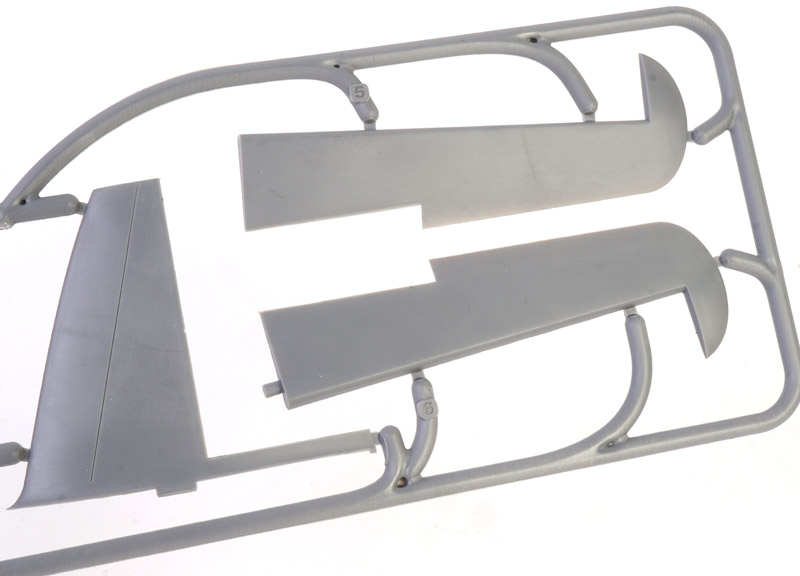
The differences are as follows. Sprues P and V are new to this version. Sprue P is a variation on elevators while Sprue V is a new version of the horizontal stabilisers, replacing Sprue W. Sprue K1, covering bombs and rockets, is not required and therefore omitted for this version.
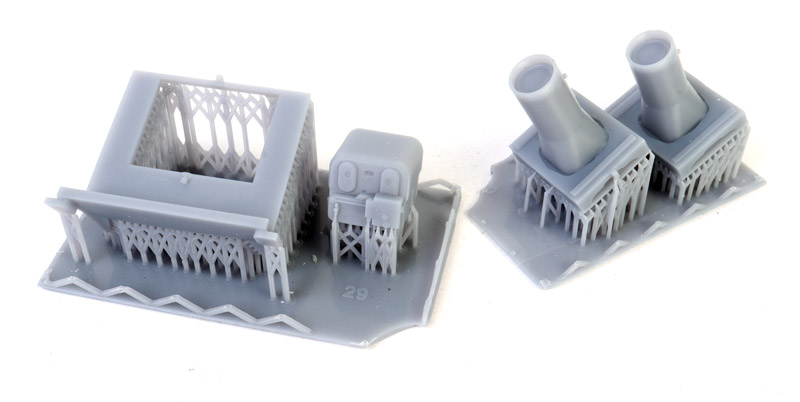
The 3D-printed components are produced by Ukrainian company ScaleX. These are supplied within protective honeycomb boxes, which safeguard the parts while remaining quick and easy to remove.
New to this version is a set of two 3D-printed cameras and associated hardware.
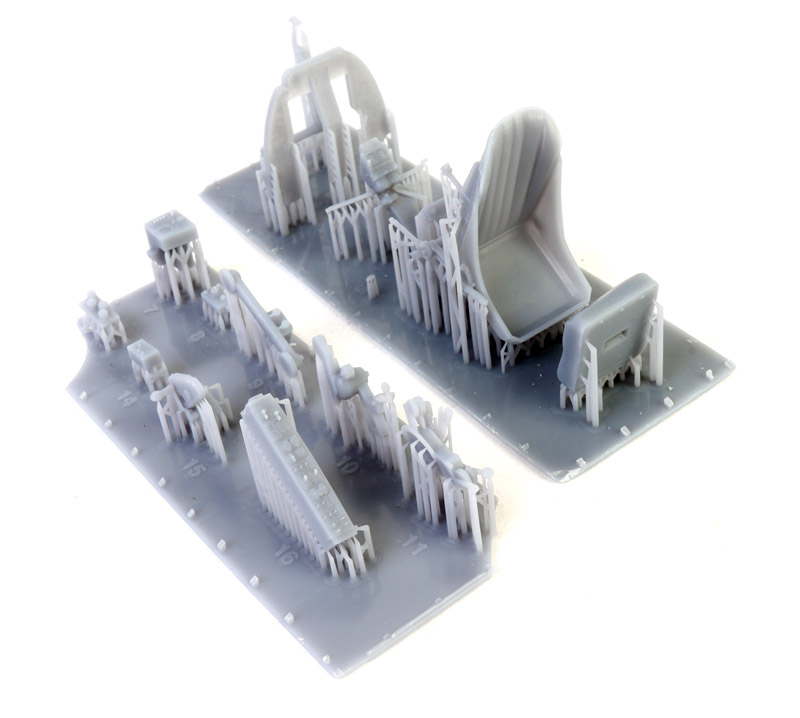
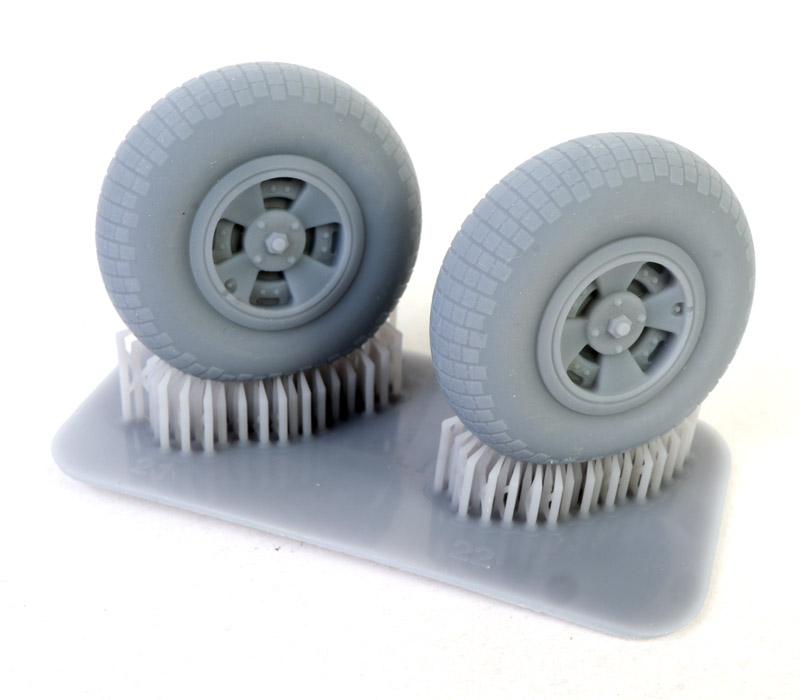
Cockpit-related 3D-printed parts include the pilot’s seat with backrest cushion printed in place, a separate seat cushion, side consoles and boxes, control column, throttle quadrant, undercarriage controls, gunsight, instrument panel backing, and switches. Exterior 3D-printed parts are also provided, including the lower nose with cannon ports, cannon barrel plugs, wing louvres, exhausts, and main wheels.
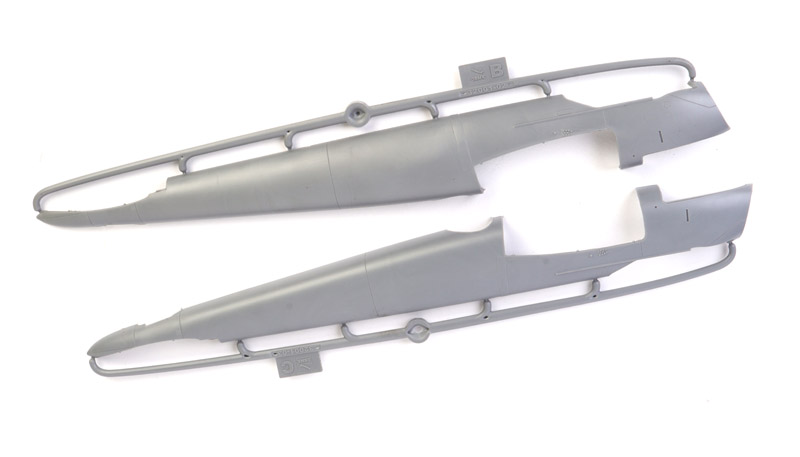
The grey plastic parts are well moulded. Surface detail is restrained, with crisp recessed panel lines throughout. Most of the large surfaces are smooth and largely free of texture, which is entirely appropriate given the Hornet’s predominantly wooden airframe.
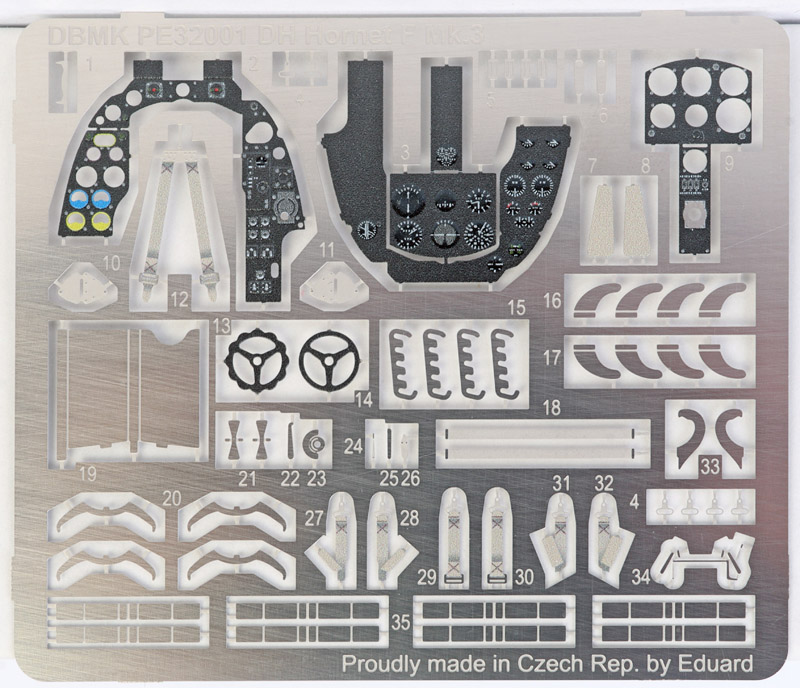
The cockpit is particularly well detailed, combining high-quality 3D-printed and photo-etched parts. The colour photo-etch is supplied by Eduard and meets the high standard we have come to expect from this prolific Czech manufacturer.
Highlights include the multi-part instrument panel, trim wheels and harness straps, along with numerous smaller detail parts.
The exhausts are printed as one-piece per side with perfectly hollowed-out stacks.
The main wheels are also 3D-printed resin items, while the anti-shimmy tail wheel and strut assembly are moulded in plastic.
The fuselage is conventionally broken down into two full-length halves. A separate lower fuselage entry hatch may be posed either open or closed.
The wings are supplied as separate port and starboard upper and lower sections. These four parts are supported and aligned by a substantial nine-part wing spar assembly. Separate ram-air intakes and louvres are also included.
All primary control surfaces are separate parts, including ailerons, trim tabs, elevators and rudder.
It appears that the undercarriage legs must be installed during assembly of the engine nacelles. This will leave them exposed for part of the construction process and all of the painting, so some care will be required to avoid accidental damage.
The Hornet’s port and starboard propellers rotated in opposite directions, and the propeller blades are moulded in pairs to ensure the correct pitch and rotation for each unit.
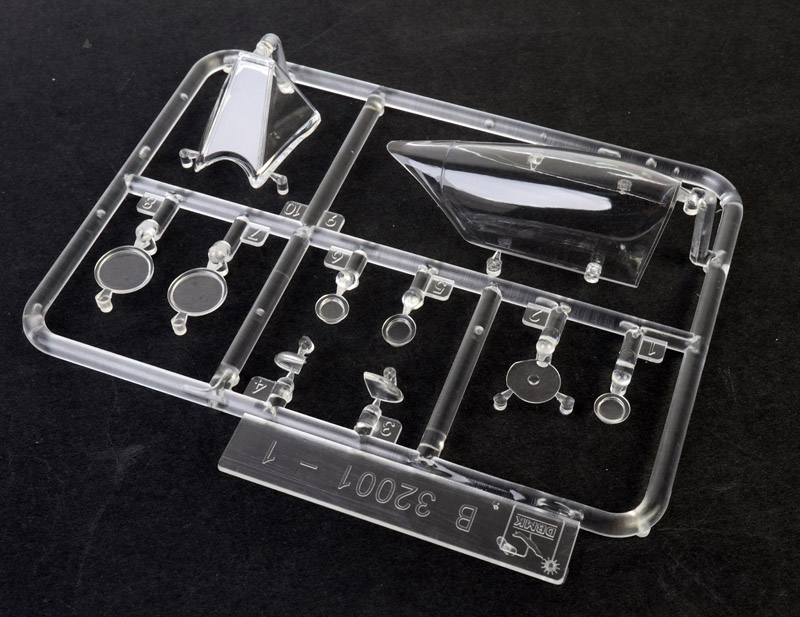
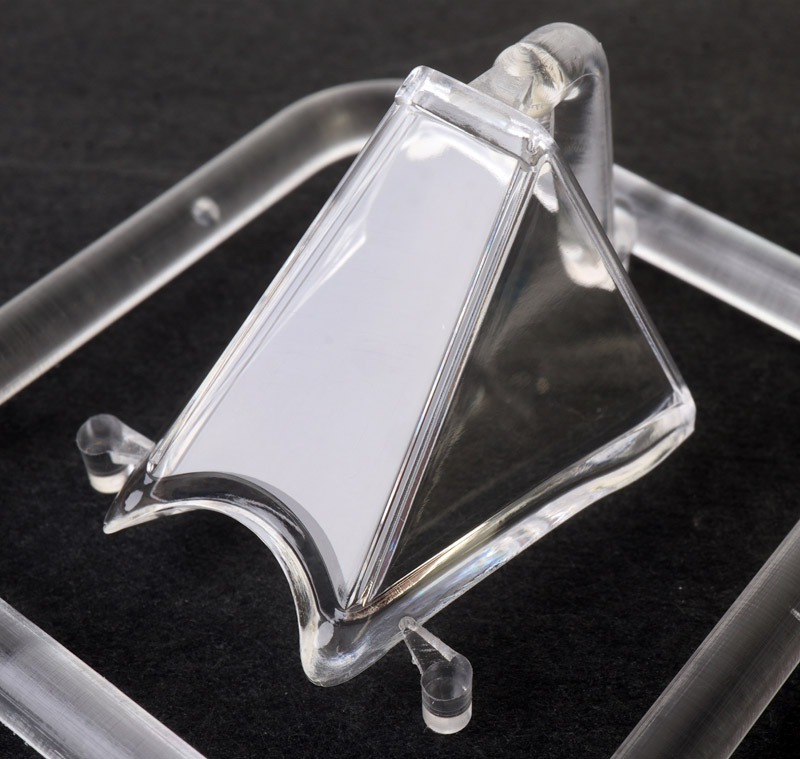
Clear parts are thin, sparkling and free from distortion.
The sliding section of the canopy may be posed either open or closed.
Two 100-gallon underwing fuel tanks are included.
Markings
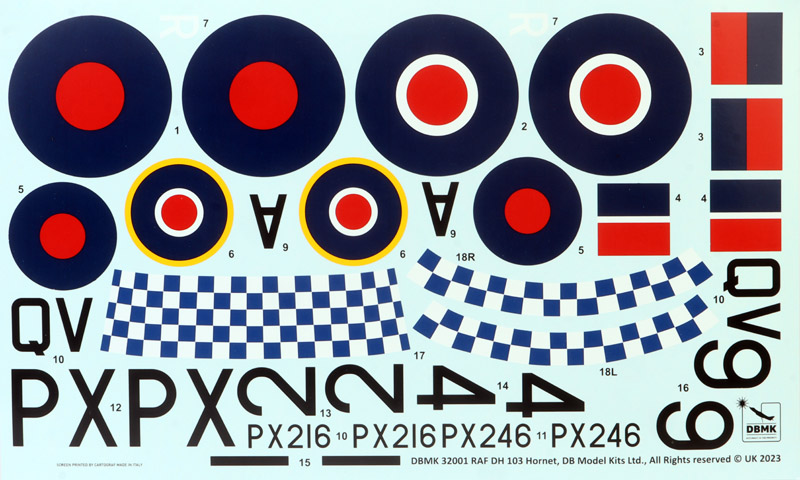
The decals are beautifully printed by Cartograf.
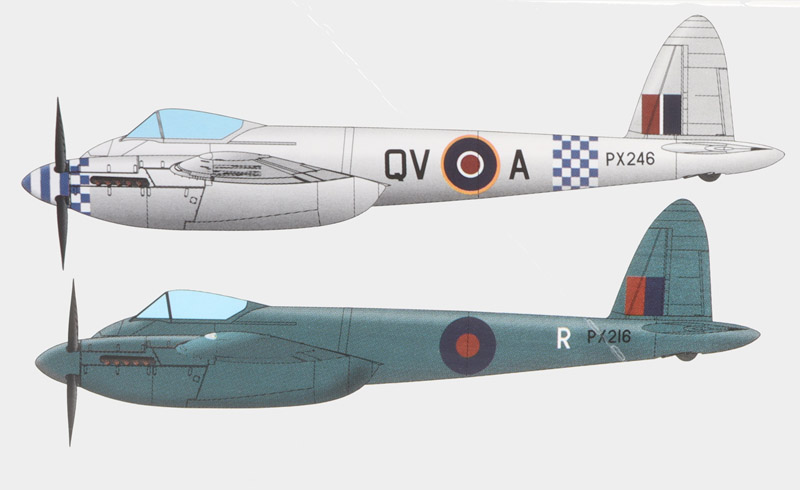
Markings for two aircraft are:
de Havilland Hornet F Mk.1, ΡΧ246, Νο.19 Squadron, 1947. Painted in High Speed Silver with blue and white chequered rear fuselage band and forward engine cowlings with sblue and white triped spinners.
de Havilland Hornet PR Mk.2, PX216 'R' Photographic Reconnaissance Development Unit, 1946. Finished in overall PRU Blue.
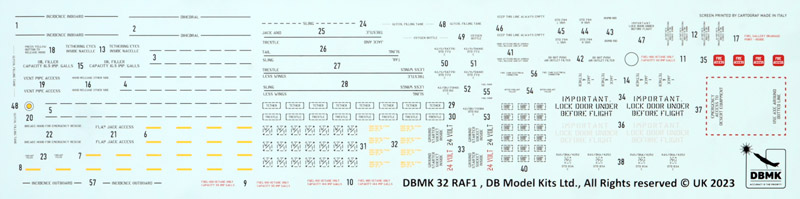
A separate stencil decal sheet is also included.
Accuracy
The kit is based on a CAD model licensed from Arthur Bentley, which was developed using factory drawings. This provides a high degree of confidence in the overall accuracy of the design.
Conclusion
DBMK Models’ newest Hornet is a logical addition to their growing 1:32 scale range. This F Mk.1 / PR Mk.2 release combines quality plastic moulding with finely rendered 3D-printed components and welcome colour photo-etched detail. The cockpit is particularly well catered for, while the crisp surface detail, thoughtful engineering and Cartograf decals further enhance the package.
Although this is a limited-run multimedia kit rather than a conventional mainstream injection-moulded release, the quality of its components and the comprehensive nature of its contents will make it a rewarding project for experienced modellers.
I have already built DBMK’s initial 1:32 scale Hornet release and found construction to be an enjoyable experience. I don’t expect this one to be any different.
With markings for both a classic RAF fighter and the rare photographic reconnaissance variant, DBMK Models has delivered an attractive and well-equipped Hornet that should appeal to enthusiasts of this elegant British aircraft.
 Home
| What's New |
Features |
Gallery |
Reviews |
Reference |
Forum |