|
DH.103 Hornet F. Mk.3
First Look - In Detail!
DBMK, 1/32 scale
S
u m m a r y |
| Description and Catalogue Number: |
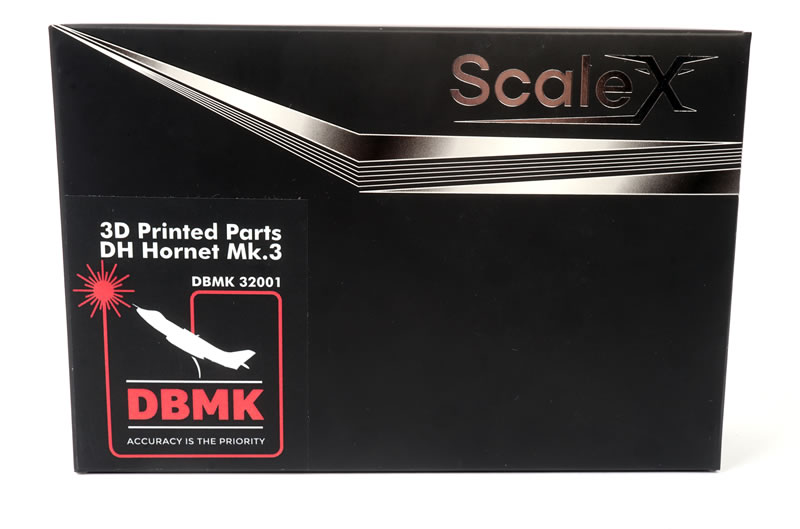
DBMK Kit No. 32001 - DH.103 Hornet F. Mk.3 |
| Scale: |
1/32 |
| Contents and Media: |
200 grey plastic parts; 32 3D-printed parts; 56 parts on a single colour photo-etched fret; white self-adhesive die-cut vinyl masking sheet; three marking options on a large, glossy Cartograf decal sheet. A separate stencil decal sheet is also included. |
| Price: |
£125 plus shipping, available exclusively from DBMK's website |
| Review Type: |
FirstLook |
| Advantages: |
Crisp surface textures; high level of detail; effective use of multimedia; useful options poseable canopy and control surfaces; high quality Cartograf decals. |
| Disadvantages: |
None noted |
| Conclusion: |
DBMK’s 1:32 scale de Havilland Hornet F. Mk.3 is a welcome and impressive addition to the large-scale aircraft modelling scene. The combination of finely moulded plastic parts, extensive use of high-quality 3D printing, and well-integrated photo-etched details results in a package that is comprehensive and thoughtfully engineered.
Surface textures are restrained and appropriate, the cockpit is outstanding straight from the box, and the inclusion of a robust wing spar and full-span fuselage halves suggests a solid and accurate foundation for the model. The parts breakdown is logical overall.
Add to this Cartograf decals, a masking sheet and a useful selection of stores, and DBMK has delivered a kit that promises to build into a striking and accurate replica of one of de Havilland’s most elegant fighters.
Highly Recommended. |
Reviewed by Brett Green

A Late-War Thoroughbred with Post-War Impact
The de Havilland Hornet was one of the last piston-engined fighters to enter Royal Air Force service, and arguably one of the most refined. Conceived during the latter stages of the Second World War, it combined proven de Havilland design philosophy with new engines, advanced aerodynamics and an uncompromising focus on speed, range and pilot visibility. Although it arrived too late to see combat in Europe, the Hornet went on to enjoy a brief but distinguished post-war career, particularly in the Far East.
Requirement and Design Origins
The Hornet’s origins lie in an Air Ministry requirement issued in 1943 for a long-range, high-performance fighter capable of operating in the Pacific theatre. Experience in the Far East had highlighted the need for aircraft with excellent range, strong climb performance and high speed, while still retaining good handling and reliability in tropical conditions.
Rather than starting from scratch, de Havilland elected to evolve the highly successful Mosquito concept into a smaller, lighter and more aerodynamically refined aircraft optimised specifically for fighter duties. The result was a sleek, low-drag airframe built largely of wood, powered by two Rolls-Royce Merlin engines and designed around a single-seat cockpit with exceptional all-round visibility.
From the outset, the Hornet was intended to be one of the fastest operational piston-engined fighters in the world—and de Havilland pursued that goal with characteristic confidence.
Production and Into Service
The Hornet prototype first flew on 28 July 1944. Flight testing confirmed the soundness of the design, with performance figures exceeding expectations. Maximum speeds in excess of 470 mph were recorded, placing the Hornet among the fastest piston-engined aircraft ever to reach operational service.
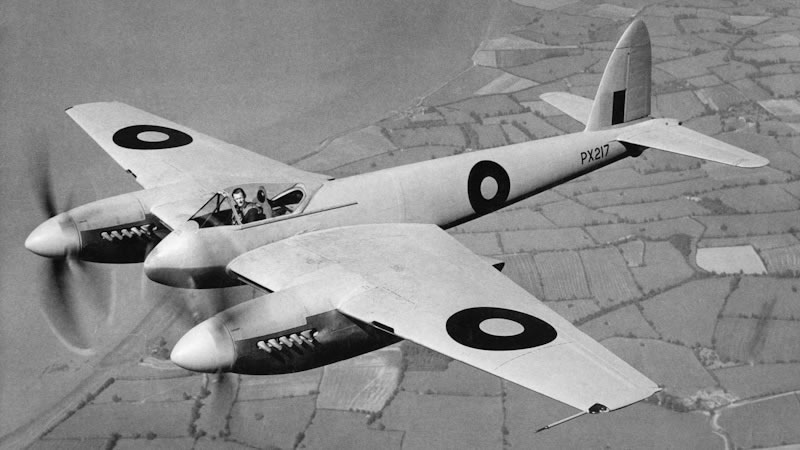
Production aircraft began to emerge as the war in Europe was drawing to a close, and the Hornet F.1 entered RAF service in 1946. Although the type missed the Second World War entirely, it was very much a product of wartime urgency refined by post-war experience.
Manufacture was undertaken by de Havilland at Hatfield, with further production spread across associated facilities. The Hornet’s wooden construction, while demanding skilled labour, allowed excellent surface finish and contributed significantly to its impressive performance.
Service and Combat Record
While the Hornet never saw combat in Europe, it found its operational niche in the Far East. RAF Hornets were deployed to Malaya and Singapore, where they served primarily as long-range fighters and ground-attack aircraft during the Malayan Emergency.
In this role, the Hornet proved fast, reliable and highly effective. Its range allowed it to operate over vast areas, while its four 20 mm Hispano cannon provided formidable firepower for strafing and close air support missions. The aircraft’s speed also made it difficult for insurgent forces to engage effectively, contributing to high survivability.
Although aerial combat opportunities were limited, the Hornet’s operational record was solid, with high availability rates and favourable pilot reports. It was widely regarded as a pleasure to fly, combining excellent handling with reassuring stability at low level.
Legacy
The de Havilland Hornet left a lasting impression despite its relatively short service life. It represented the ultimate expression of piston-engine fighter development in the dawn of the jet age.
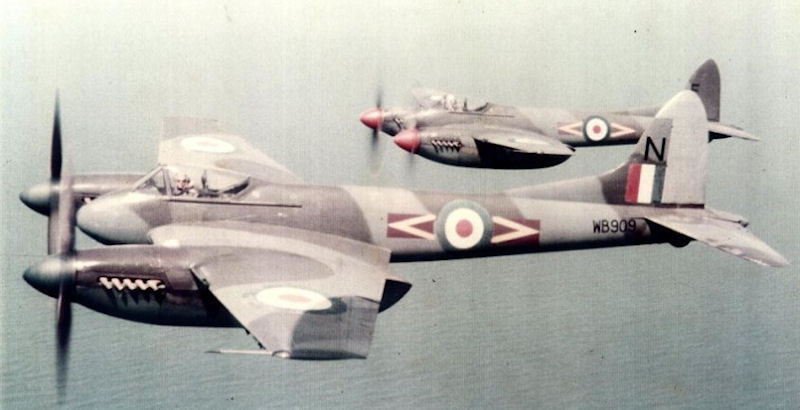
For de Havilland, the Hornet marked the culmination of wooden aircraft construction techniques refined during the Mosquito programme. For pilots, it was recalled as fast, responsive and beautifully balanced—an aircraft that rewarded smooth handling and precise flying.
Today, the Hornet occupies a special place in aviation history: a late-war design that missed its original conflict, yet proving itself in the challenging conditions of post-war operations. Elegant, purposeful and fast, the Hornet remains one of the most admired fighters of the piston era and a fitting final chapter before the jet age swept such aircraft from the front line.
The de Havilland Hornet in Scale
Classic Airframes was first to market with a 1:48 scale Hornet F.1/F.3 kit in 2003. They later followed up with a Sea Hornet F.20/NF.21. These were very nice kits for their time, but are now long out of production.
Trumpeter also released a 1:48 scale family of Hornet kits, debuting with a Hornet Mk.1 in 2014, followed by a Hornet F.3 and a Sea Hornet NF.21 in 2015. While these kits are widely available, they do suffer from accuracy issues, particularly around the fuselage and canopy profile, as well as landing gear details.
In 1:72 scale, Special Hobby offers a Hornet F. Mk.1.
AZ Model also entered the 1:72 Hornet market in 2020, releasing kits of the Mk.1, F. Mk.3, PR.2 and FR. Mk.4.
At the large end of the scale spectrum, HPH produced a limited-edition 1:32 scale resin Hornet in 2014, closely followed by a Sea Hornet NF.21.
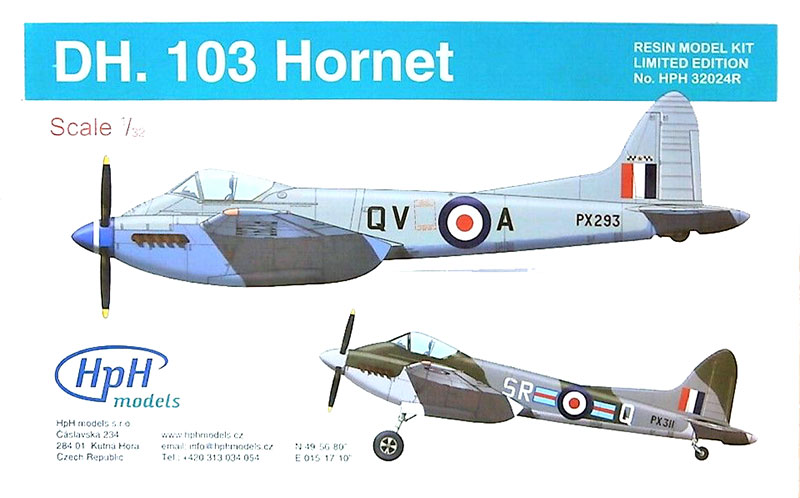
These kits are now difficult to find even at eye-wateringly prices!
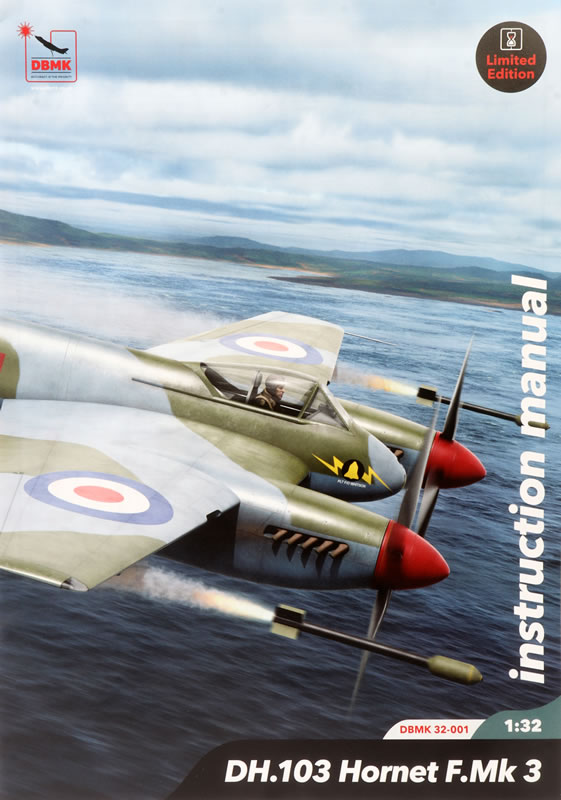
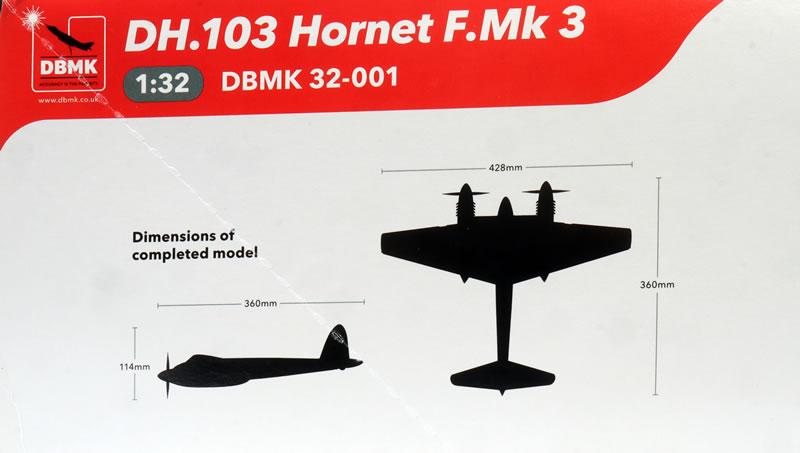
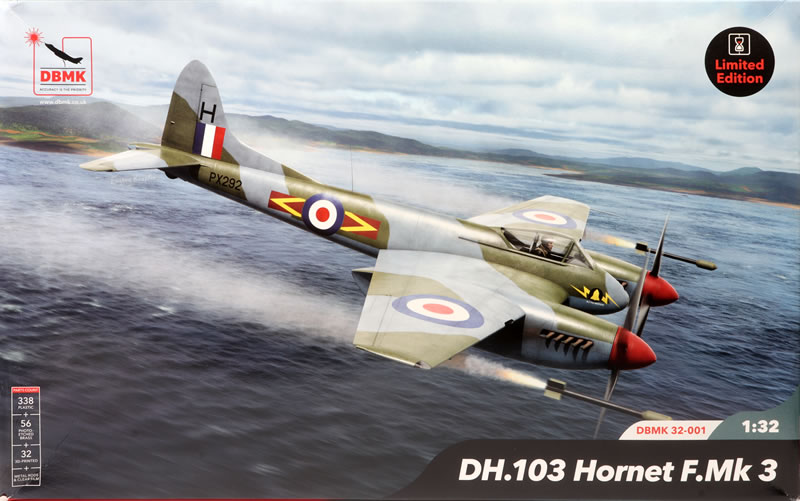
DBMK's limited-run, multimedia 1:32 scale de Havilland Hornet F. Mk.3 is just about to be released. I was fortunate to receive a test shot of this kit a few days ago. This appears to be a late-stage sample, so what you see here should be very close to the final production release.
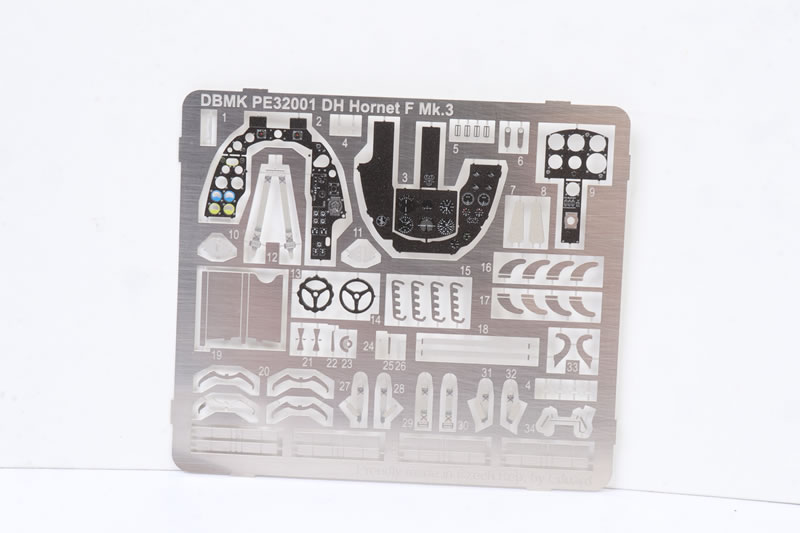
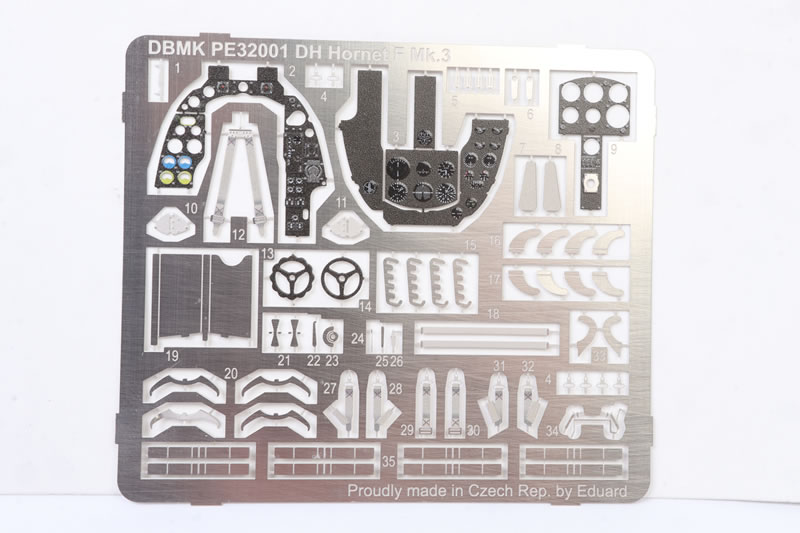
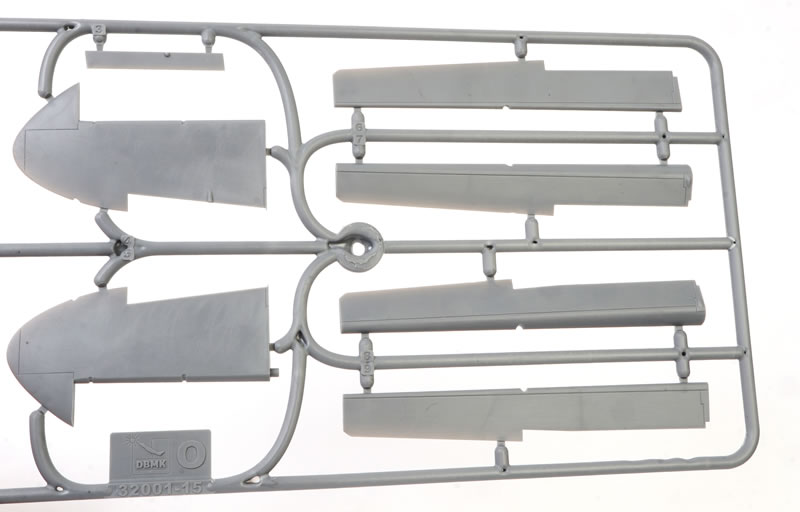
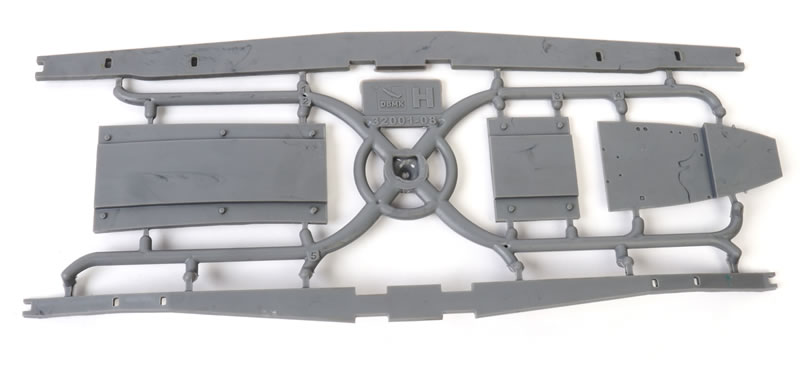
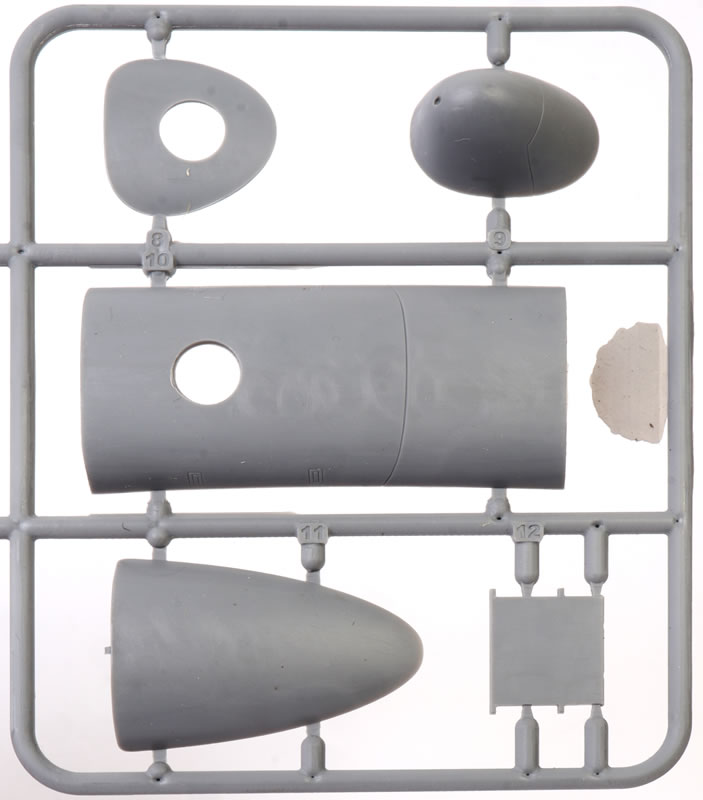
DBMK’s 1:32 scale Hornet comprises 200 grey plastic parts, 32 3D-printed parts, 56 parts on a single colour photo-etched fret, a white self-adhesive die-cut vinyl masking sheet, and three marking options on a large, glossy Cartograf decal sheet. A separate stencil decal sheet is also included.
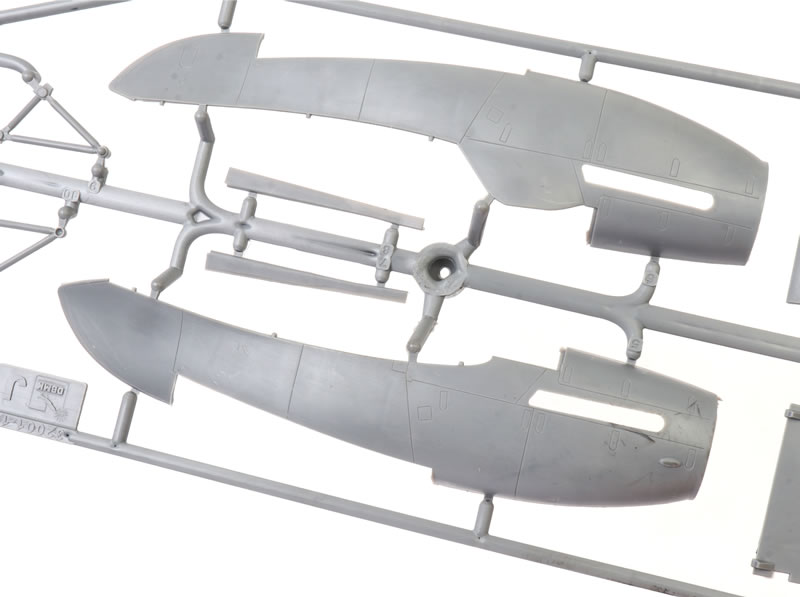
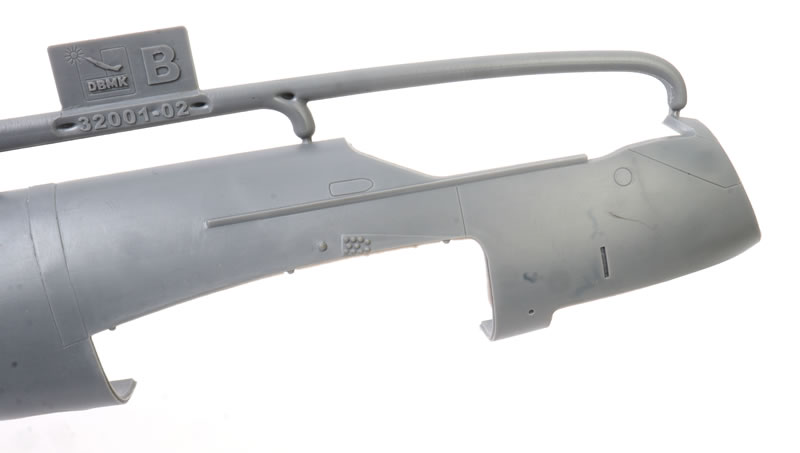
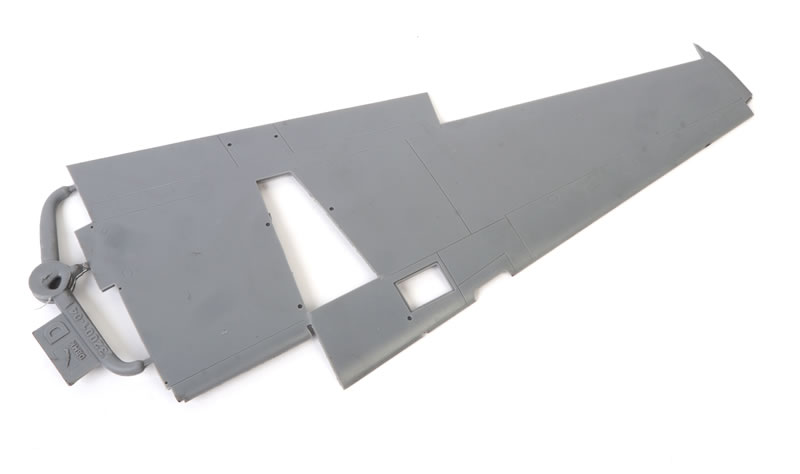
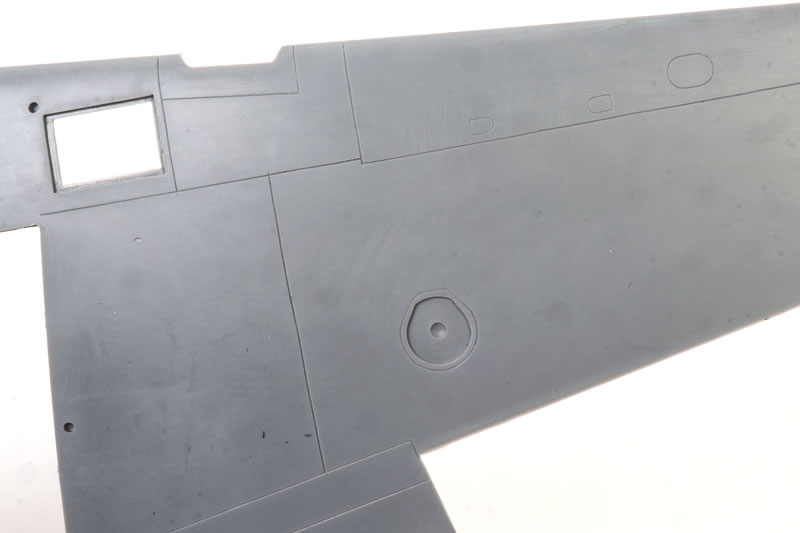
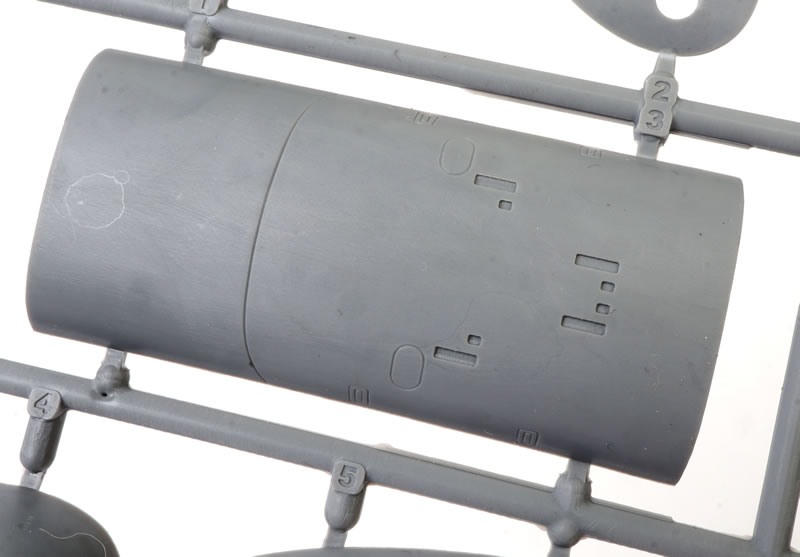
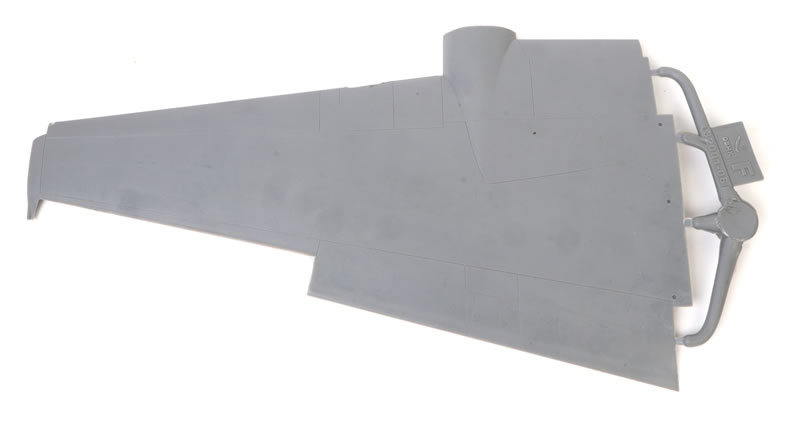
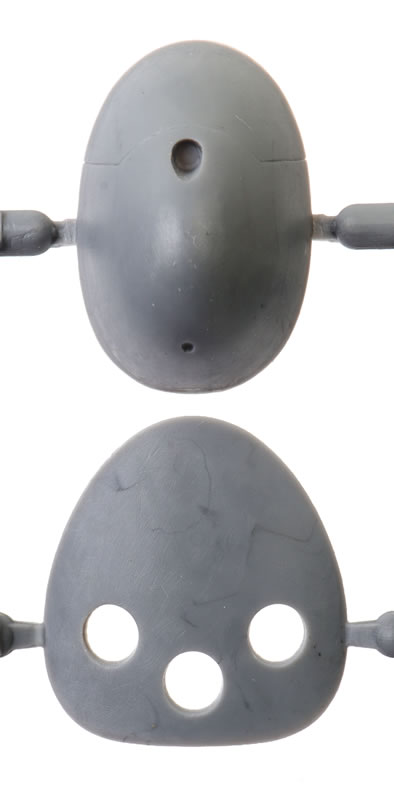
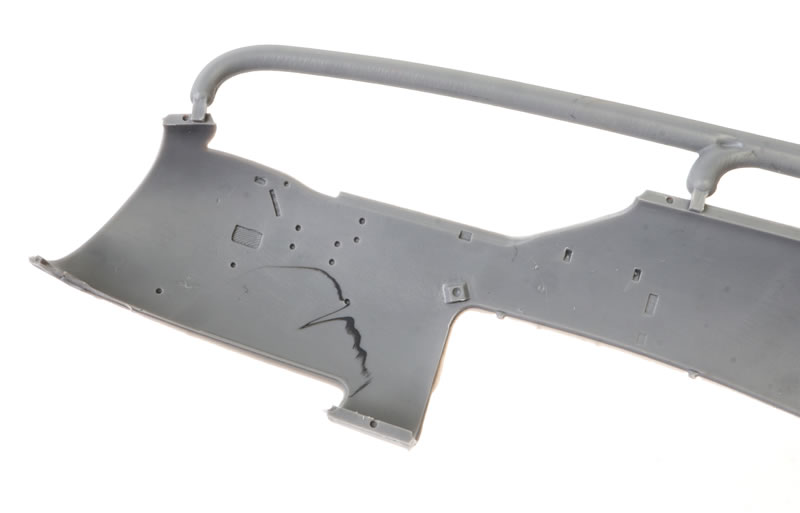
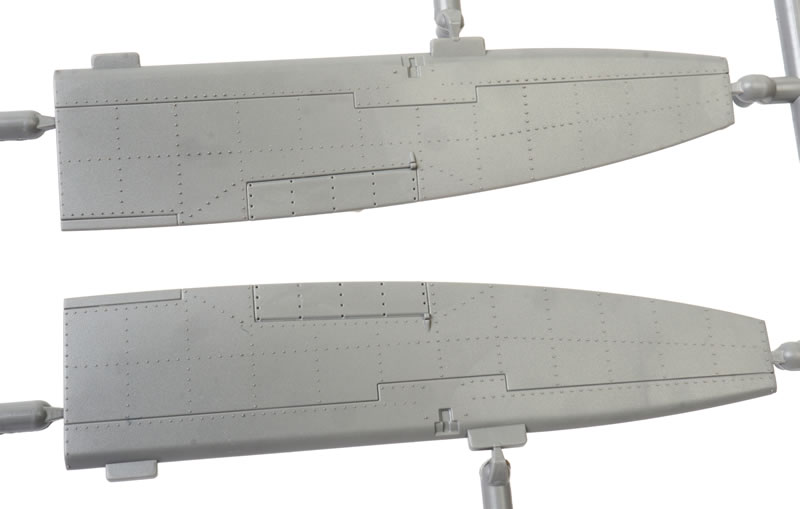
The grey plastic parts are very well moulded. Surface detail is restrained, with crisp recessed panel lines throughout. Most of the large surfaces are smooth and largely free of texture, which is entirely appropriate given the Hornet’s predominantly wooden airframe.
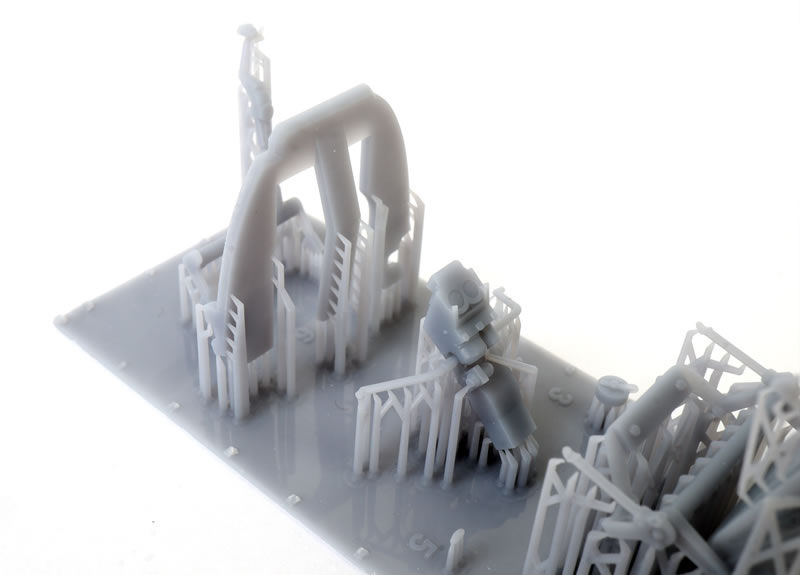
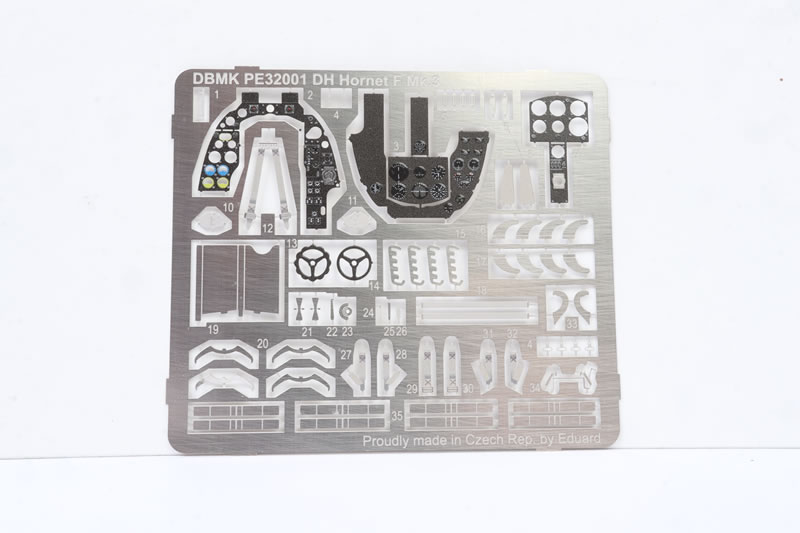
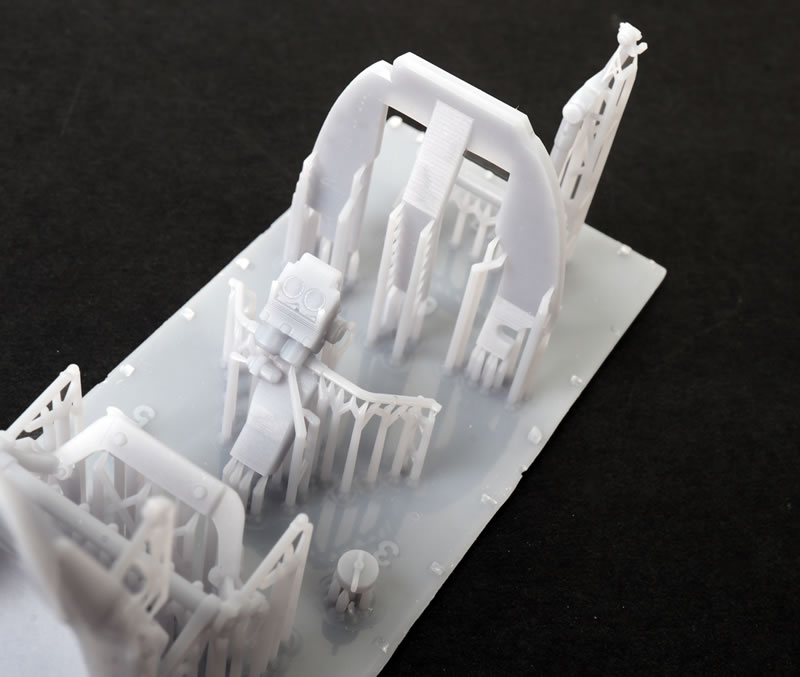
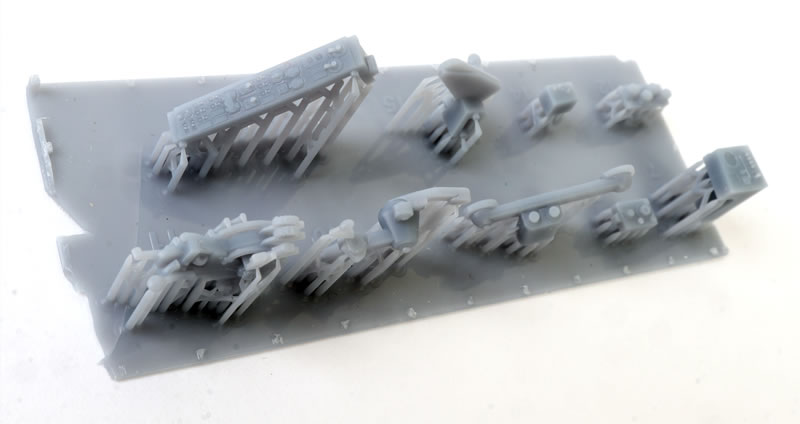
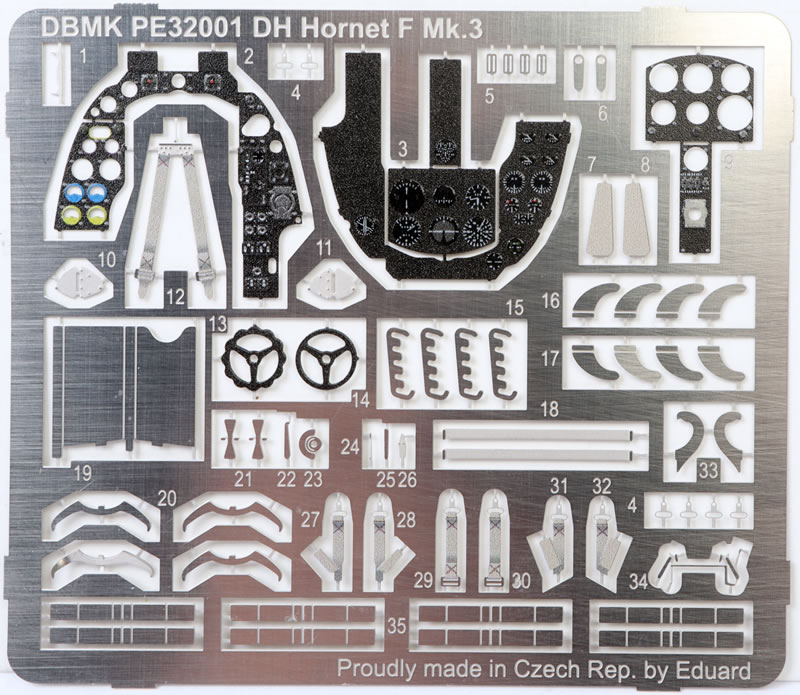
The cockpit is particularly well detailed, combining high-quality 3D-printed and photo-etched parts. The colour photo-etch is supplied by Eduard and meets the high standard we have come to expect from this prolific Czech manufacturer. Highlights include the multi-part instrument panel, trim wheels and harness straps, along with numerous smaller detail parts.
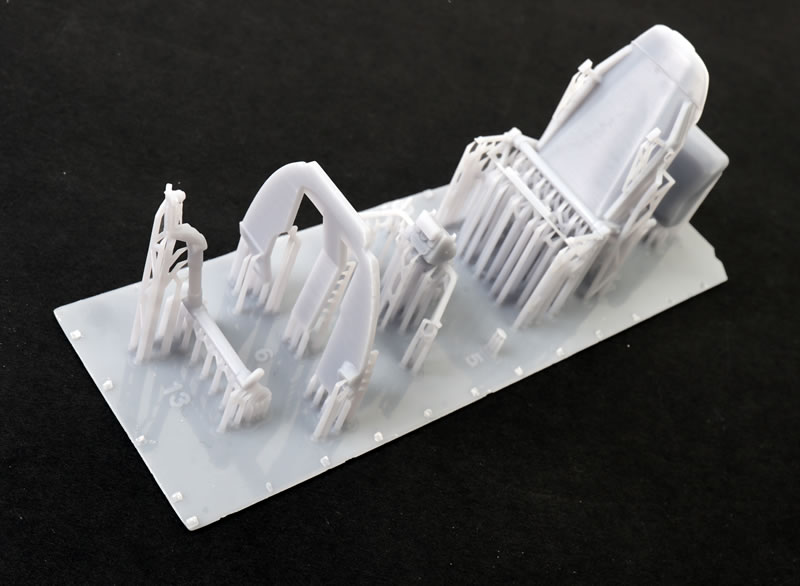
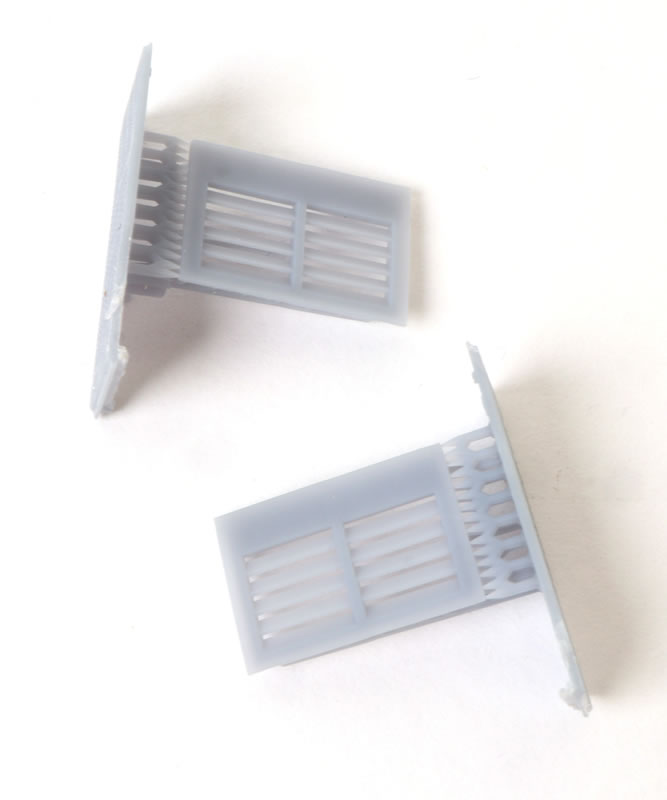
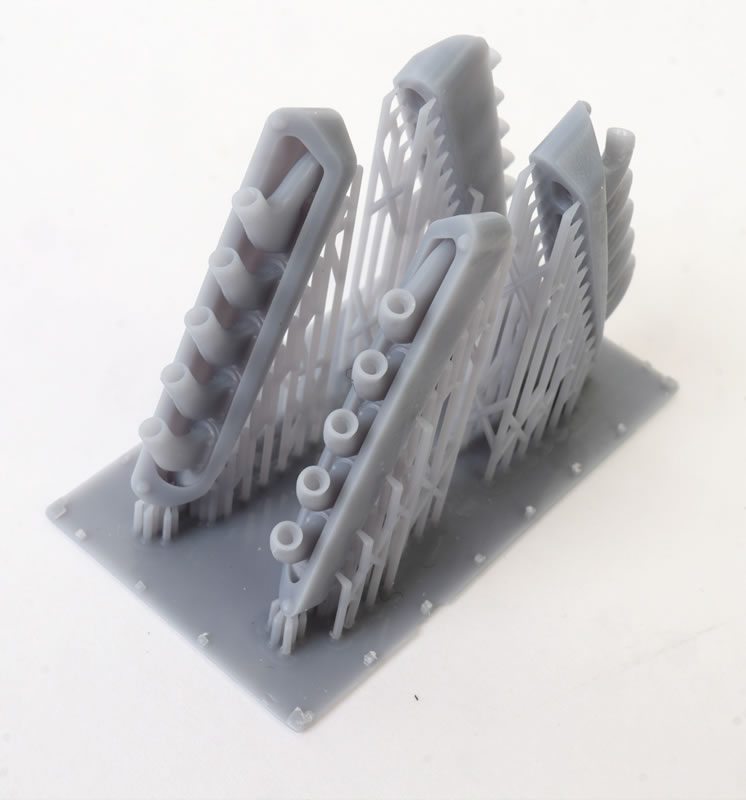
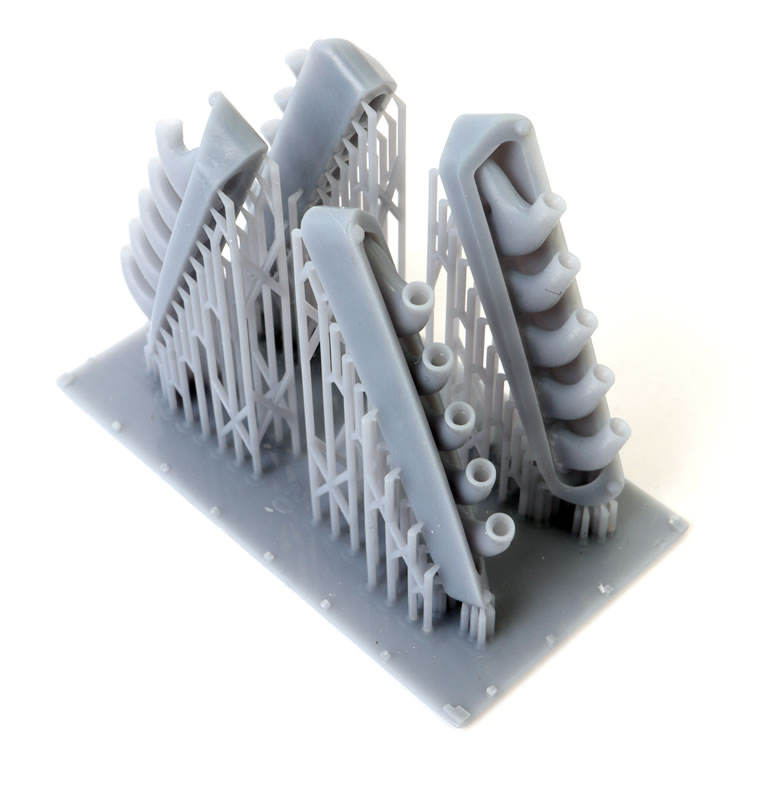
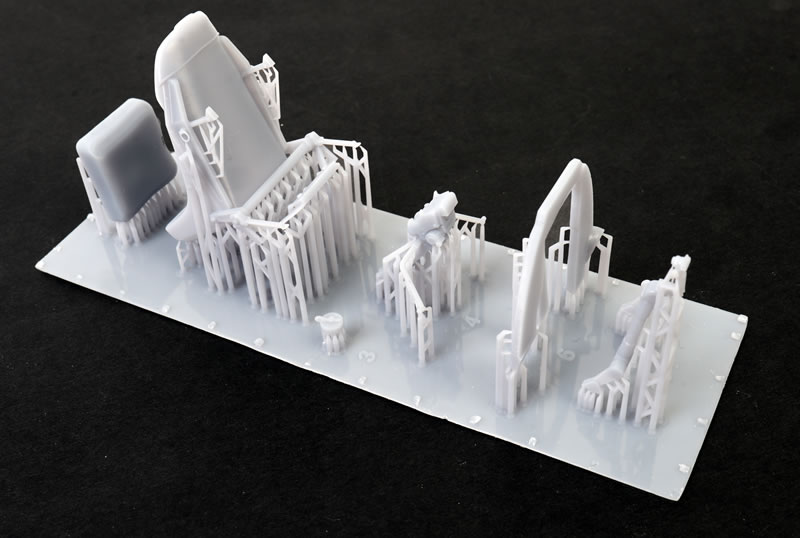
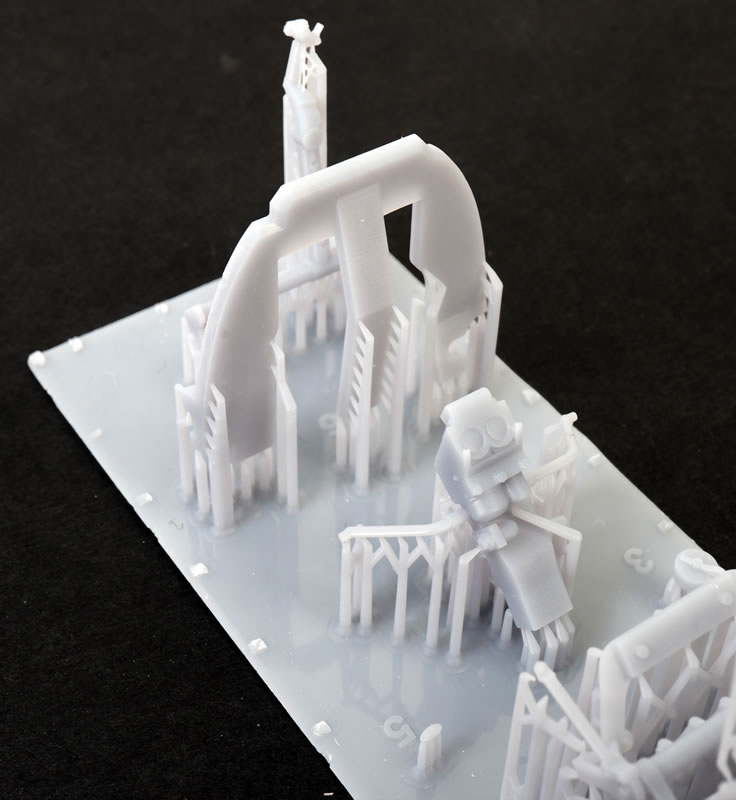
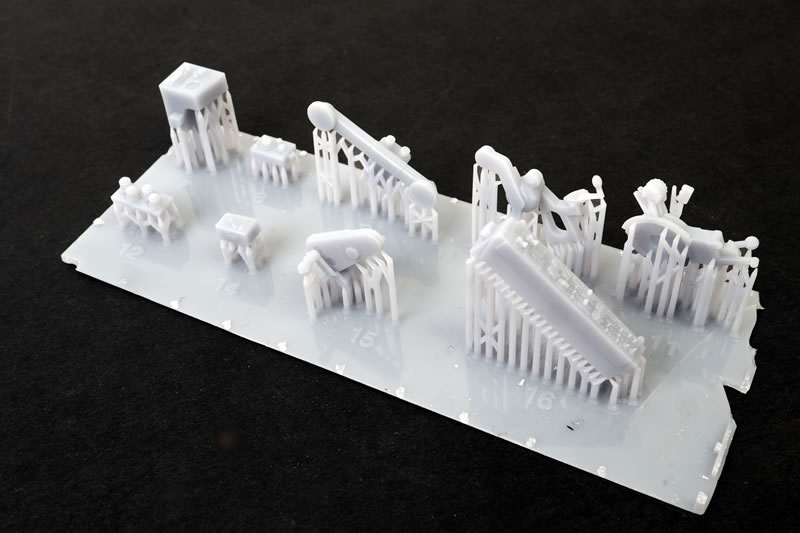
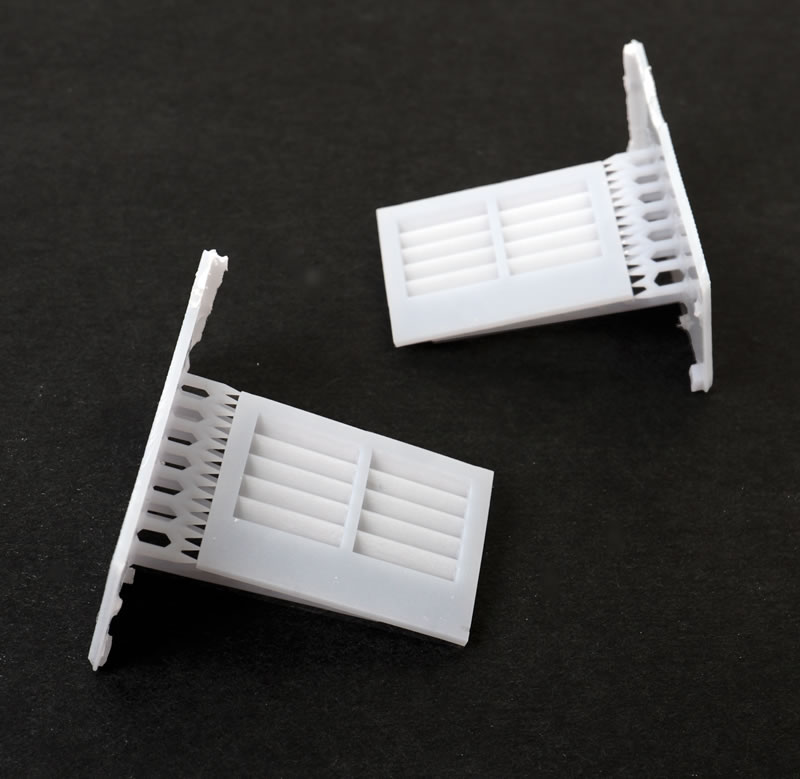
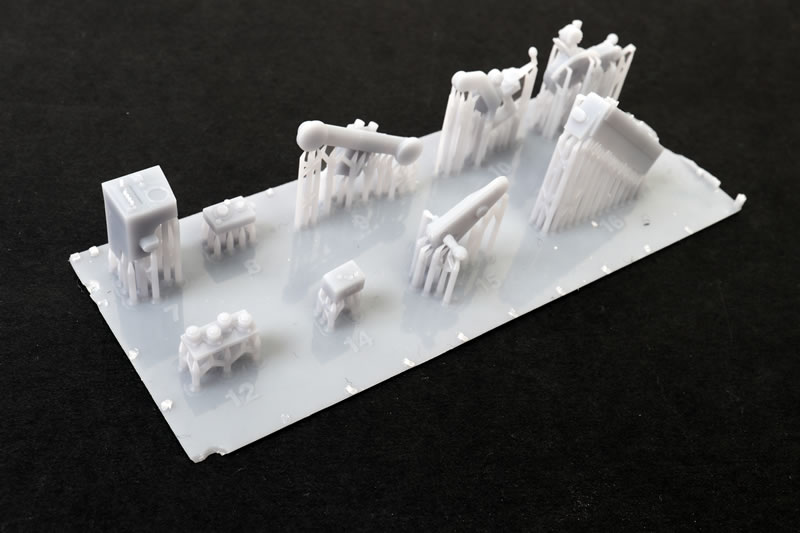
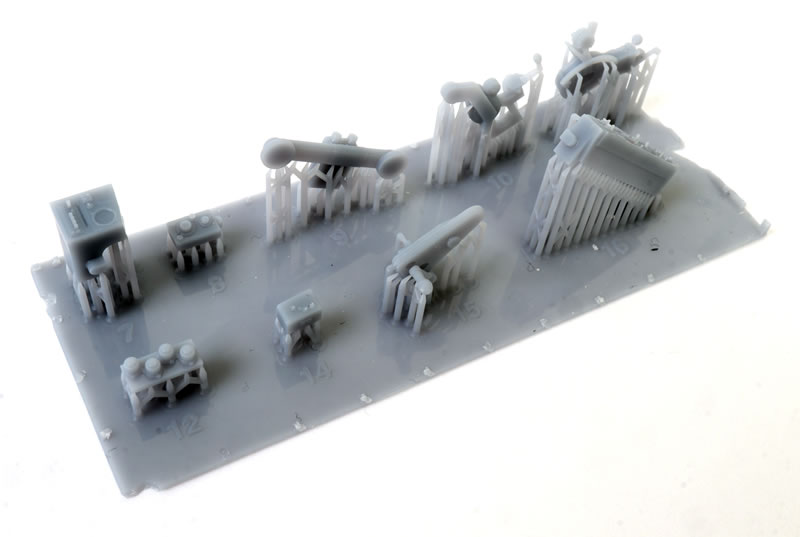
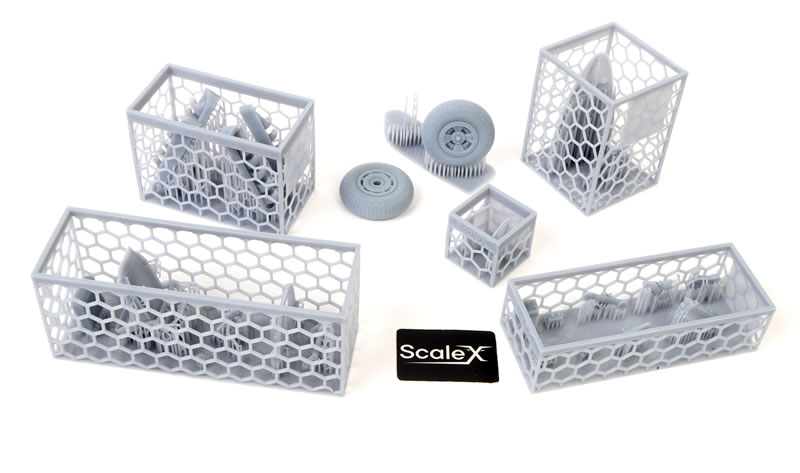
The 3D-printed components are produced by Ukrainian company ScaleX. These are supplied within protective honeycomb boxes, which safeguard the parts while remaining quick and easy to remove.
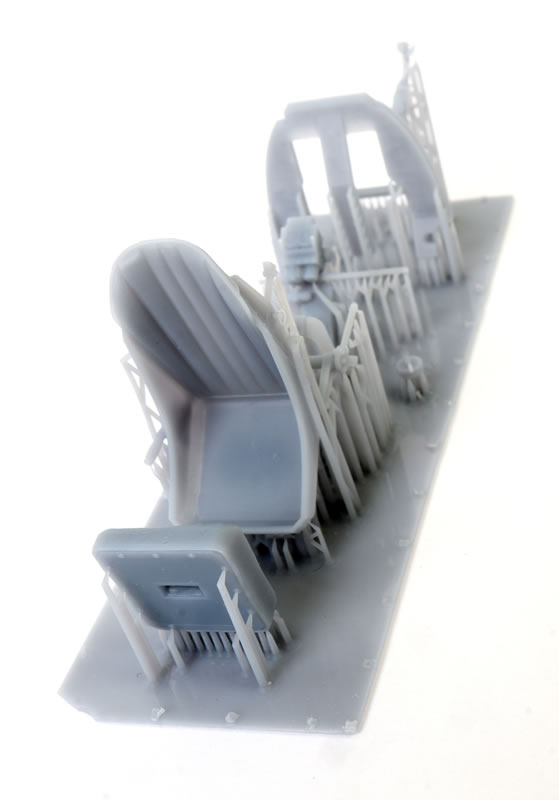
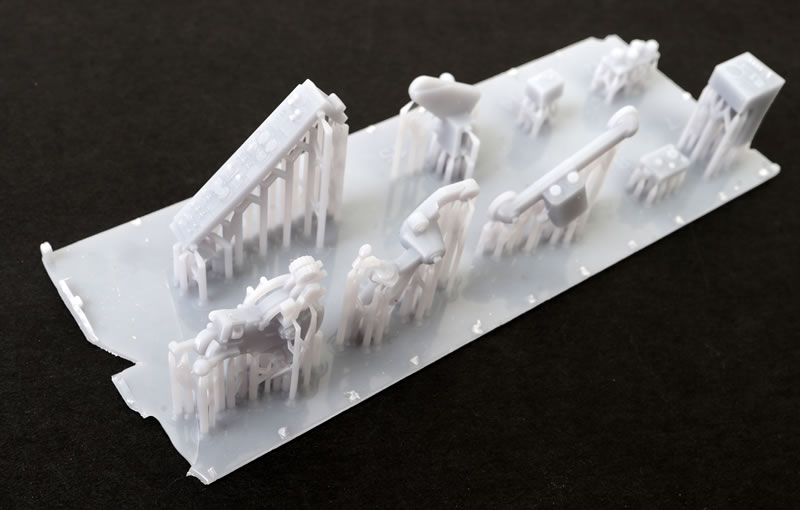
Cockpit-related 3D-printed parts include the pilot’s seat with backrest cushion printed in place, a separate seat cushion, side consoles and boxes, control column, throttle quadrant, undercarriage controls, gunsight, instrument panel backing, and switches.
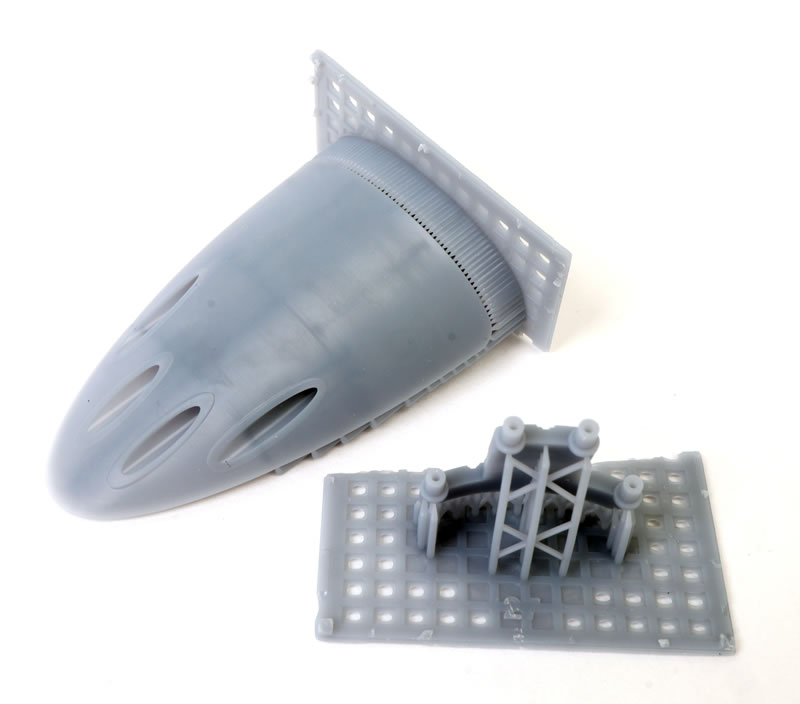
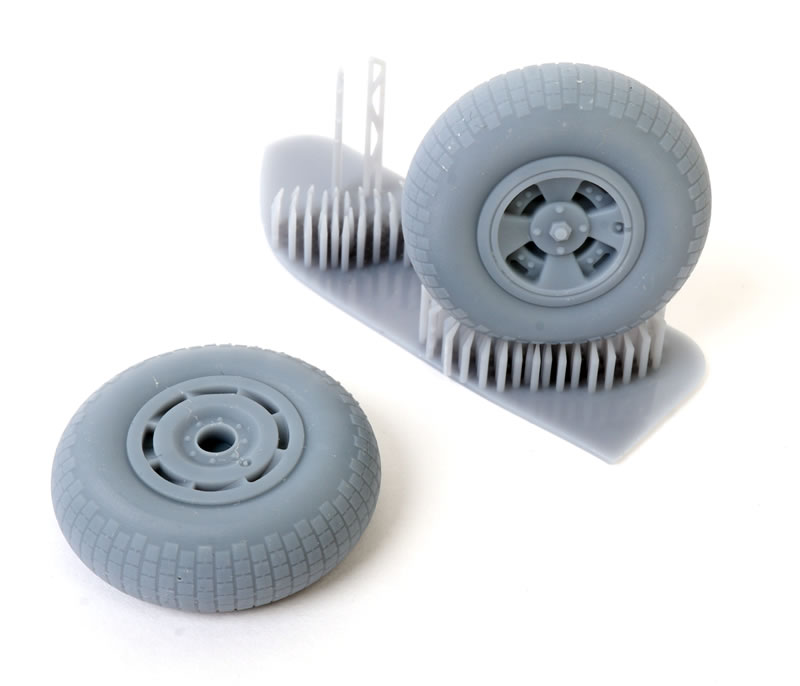
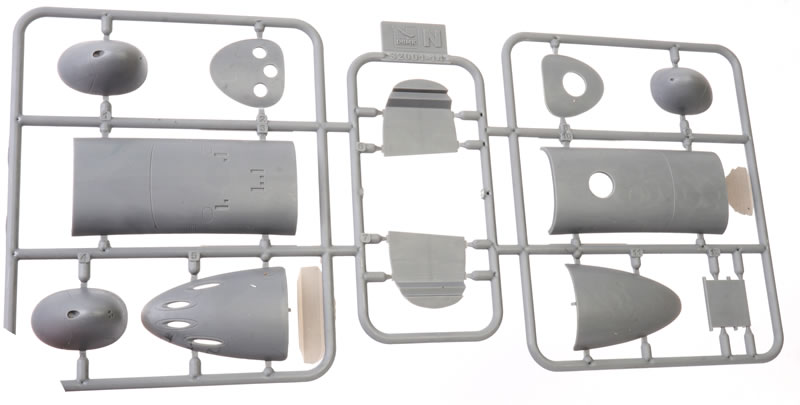
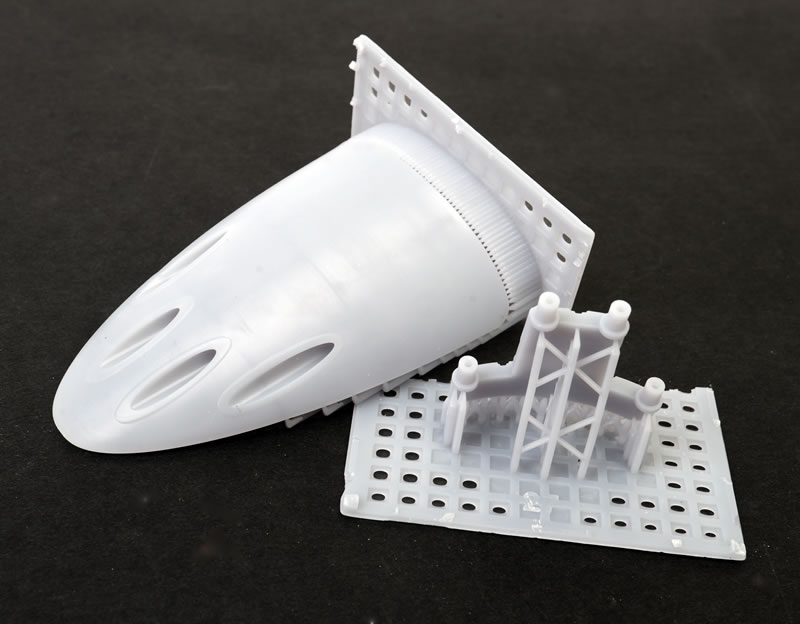
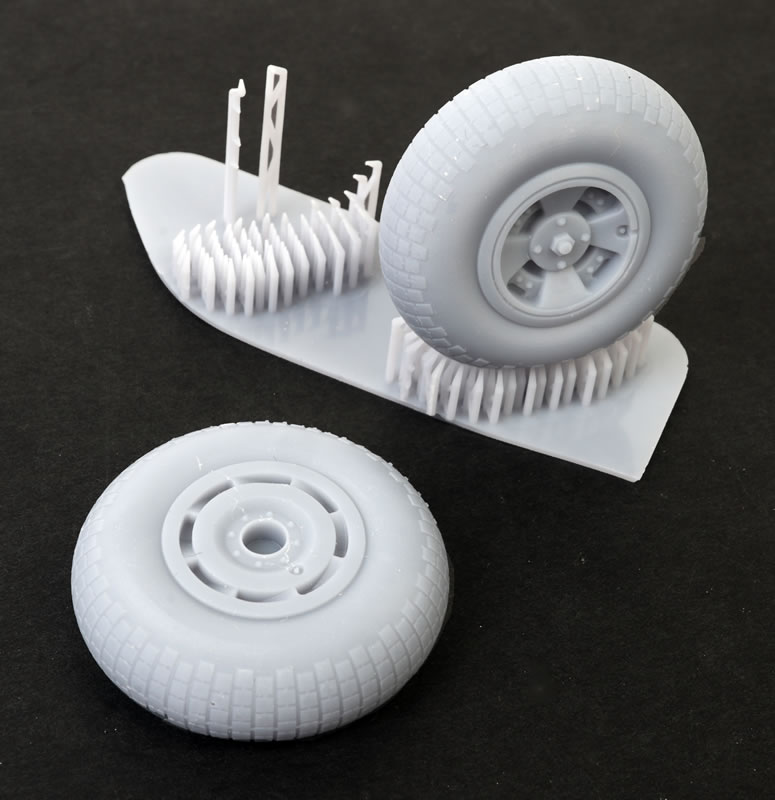
Exterior 3D-printed parts are also provided, including the lower nose with cannon ports, cannon barrel plugs, wing louvres, exhausts, and main wheels.
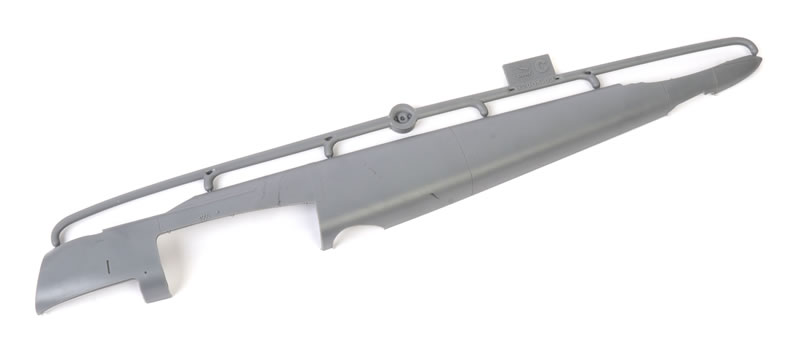
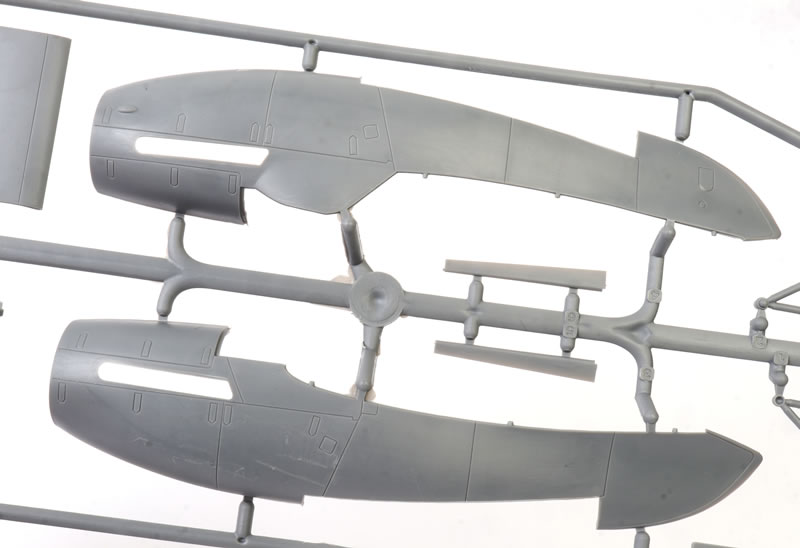
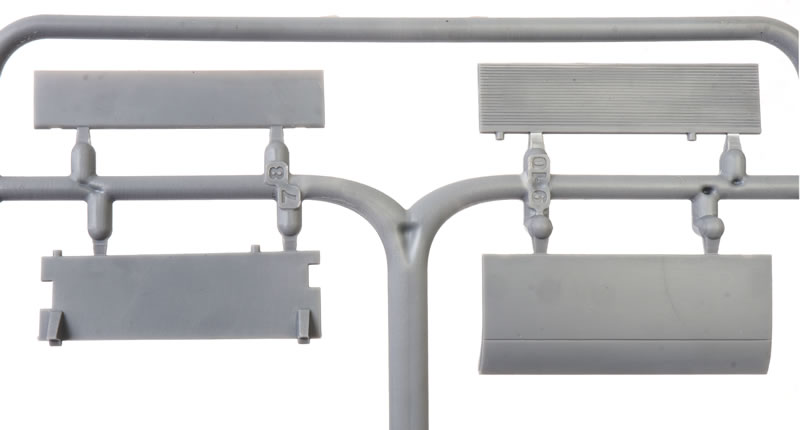
The fuselage is conventionally broken down into two full-length halves. A separate lower fuselage entry hatch may be posed either open or closed.
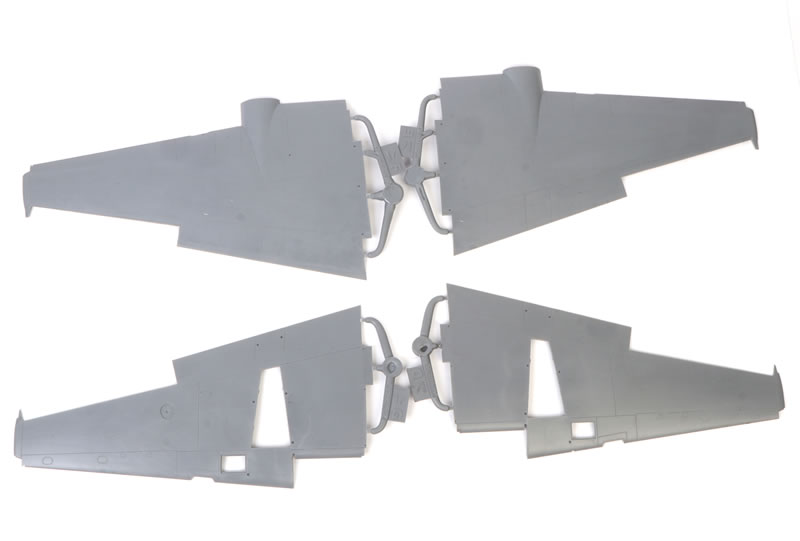
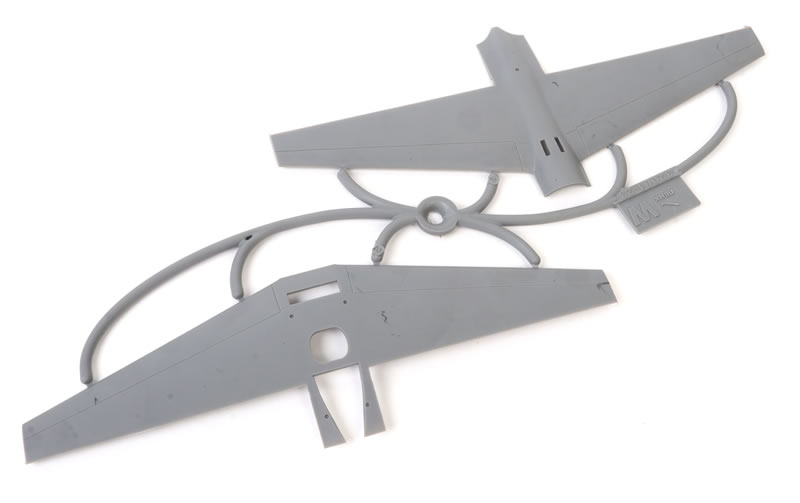
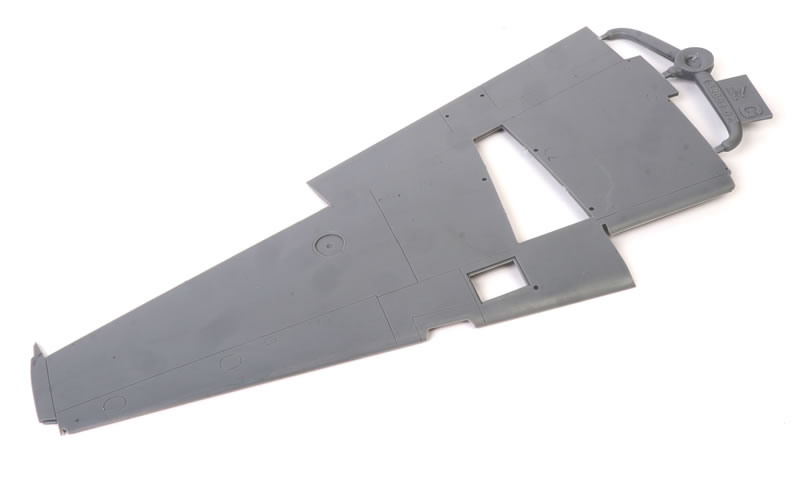
The wings are supplied as separate port and starboard upper and lower sections. These four parts are supported and aligned by a substantial nine-part wing spar assembly. Separate ram-air intakes and louvres are also included.
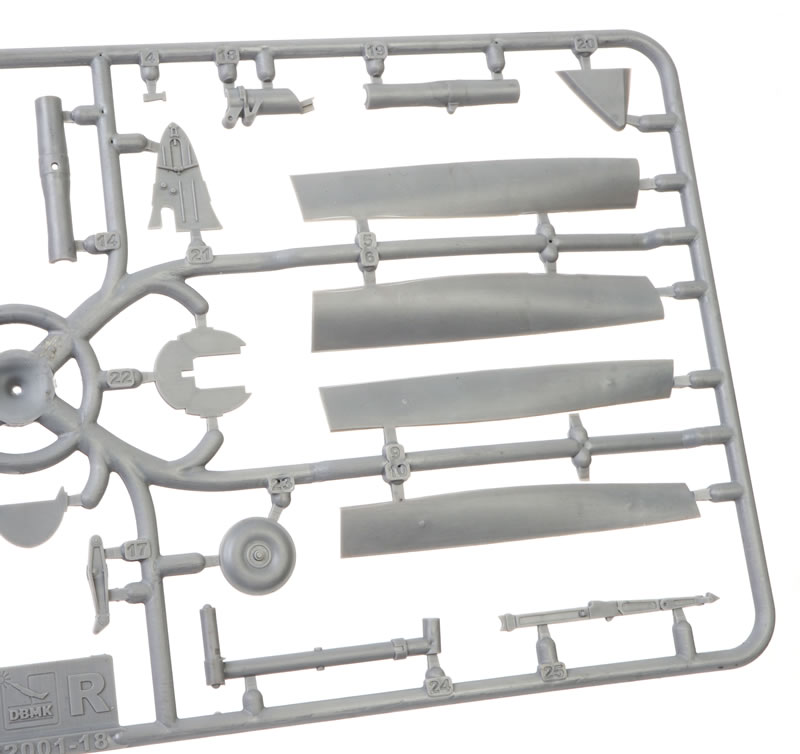
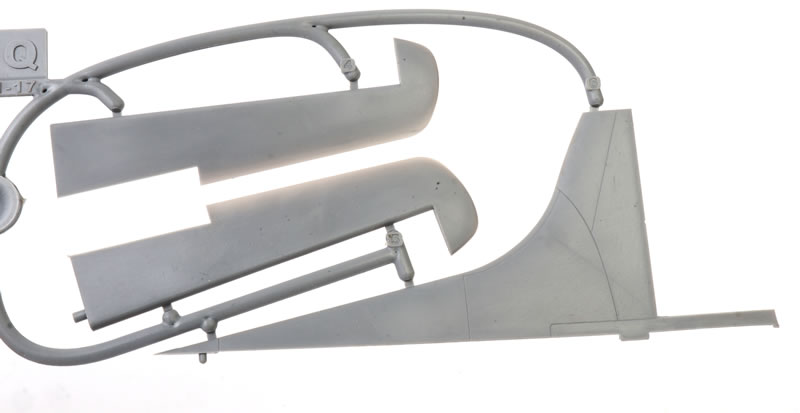
All primary control surfaces are separate parts, including ailerons, trim tabs, elevators and rudder.
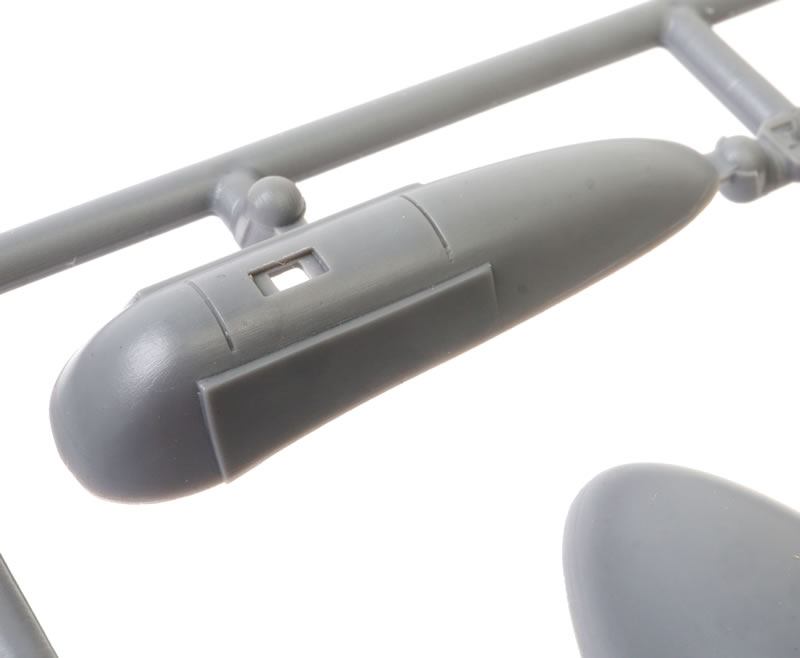
It appears that the undercarriage legs must be installed during assembly of the engine nacelles. This will leave them exposed for part of the construction process and all of the painting, so some care will be required to avoid accidental damage.
The exhausts are printed as one-piece per side with perfectly hollowed-out stacks.
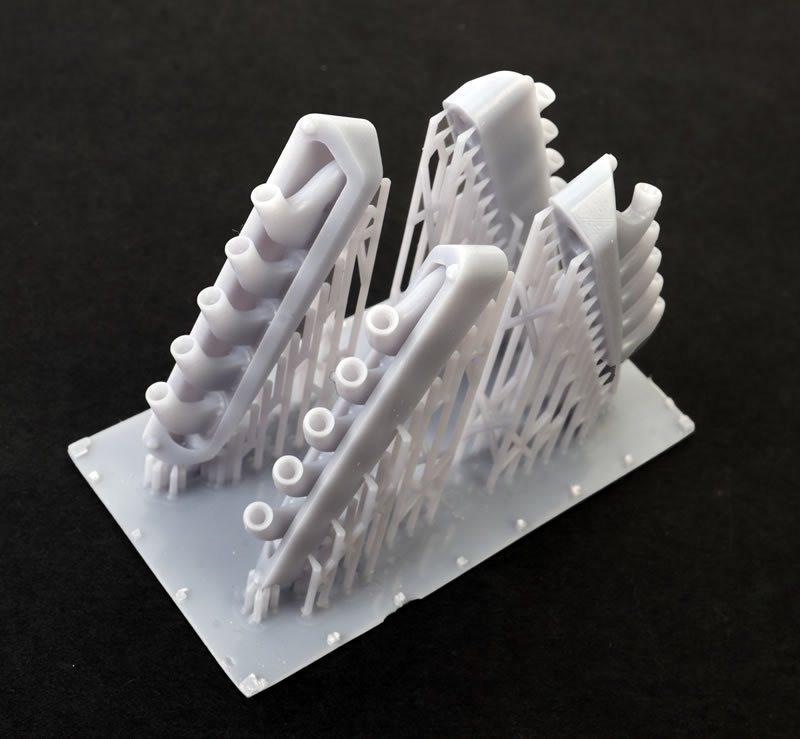
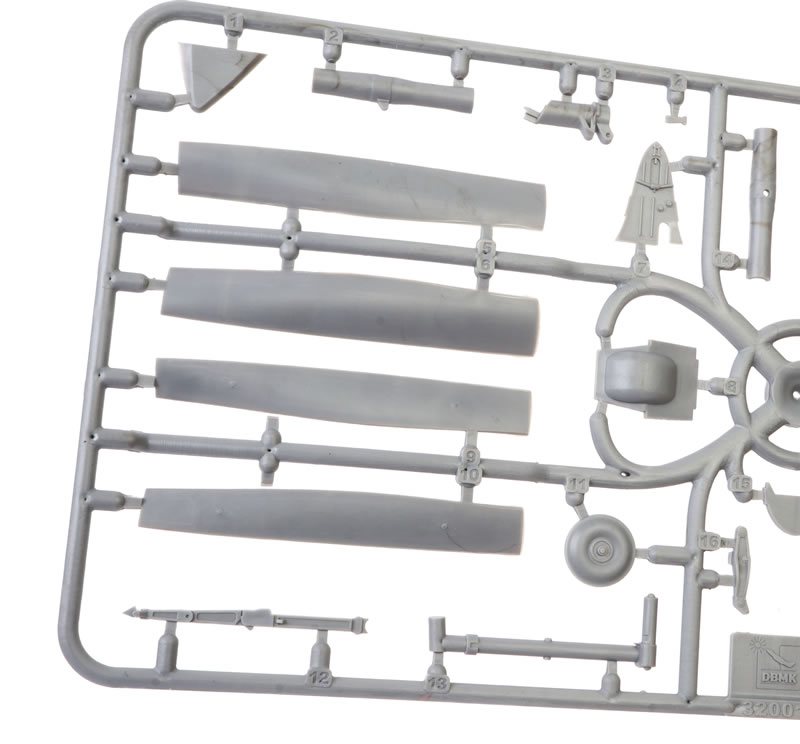
The main wheels are 3D-printed resin items, while the anti-shimmy tail wheel and strut assembly are moulded in plastic.
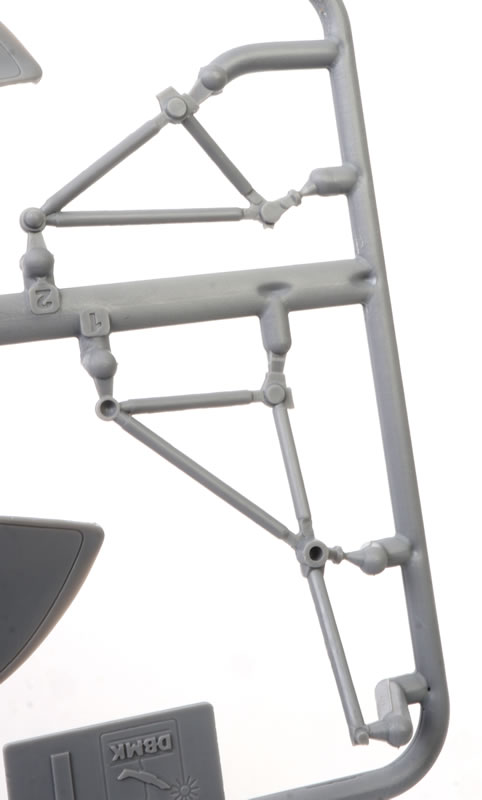
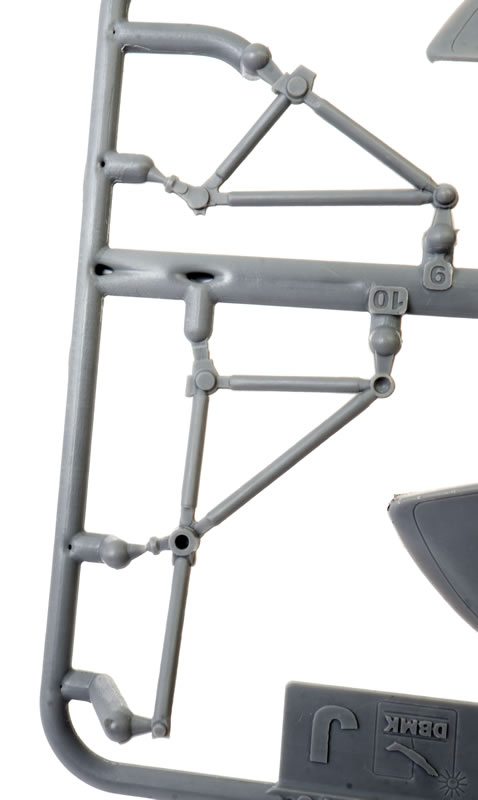
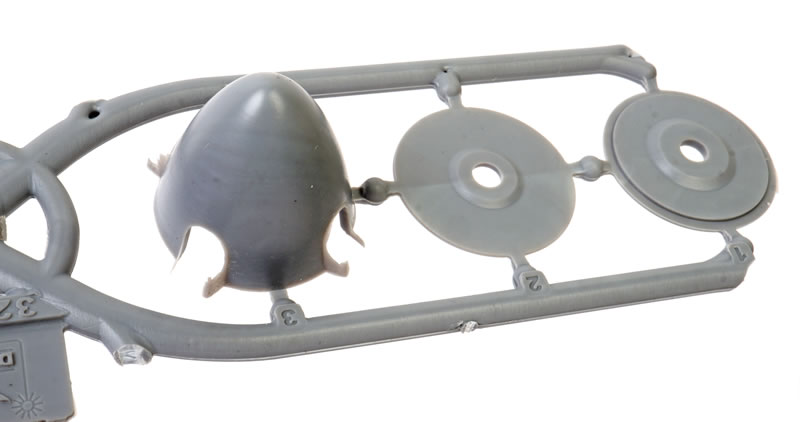
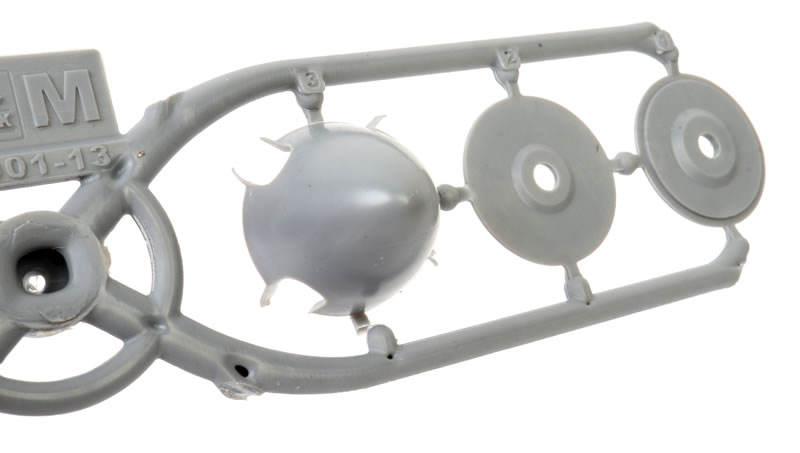
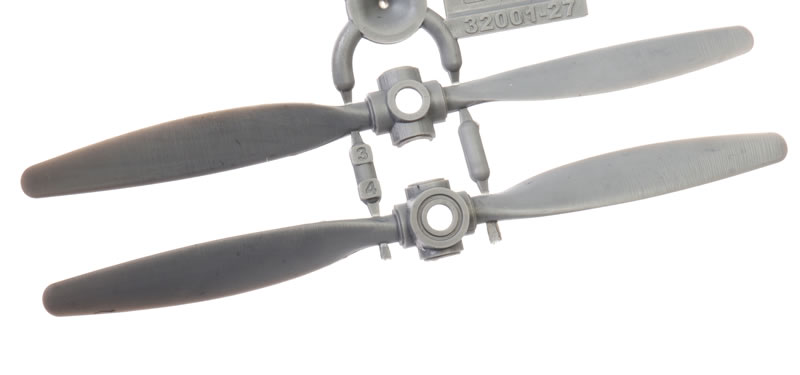
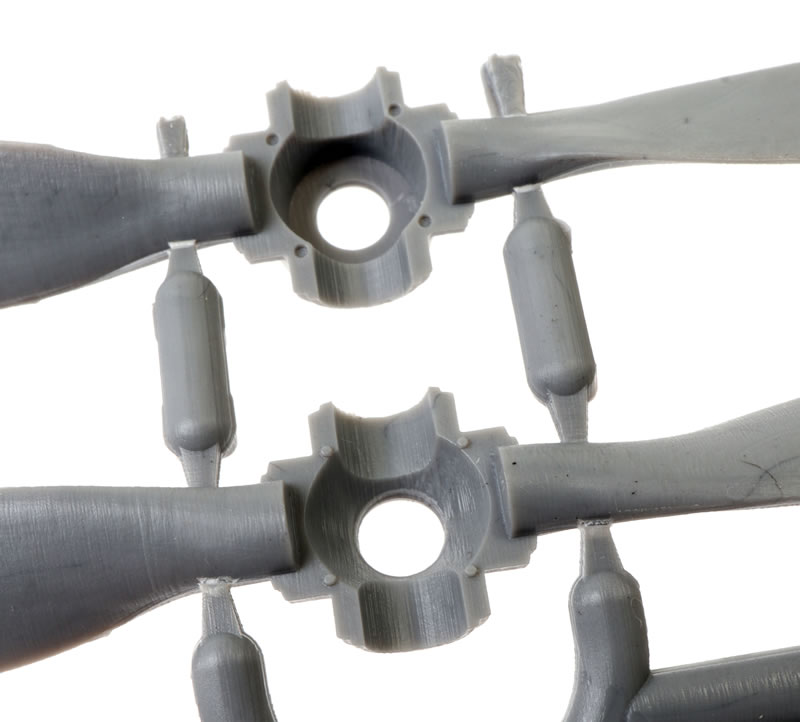
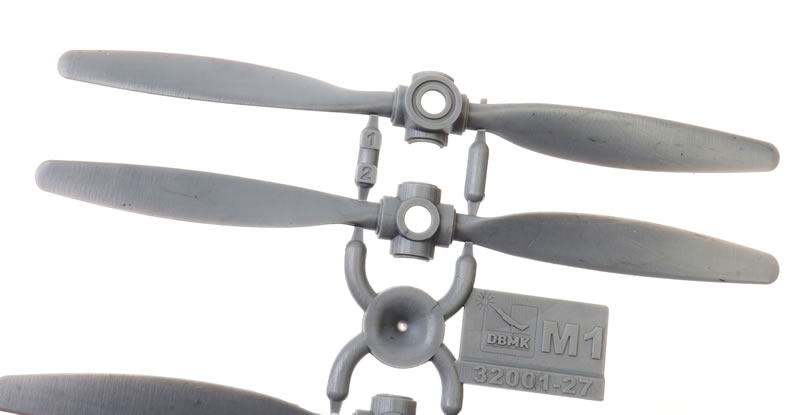
The Hornet’s port and starboard propellers rotated in opposite directions, and the propeller blades are moulded in pairs to ensure the correct pitch and rotation for each unit. Pay attention to the part numbers to ensure the propellers' proper orientation.
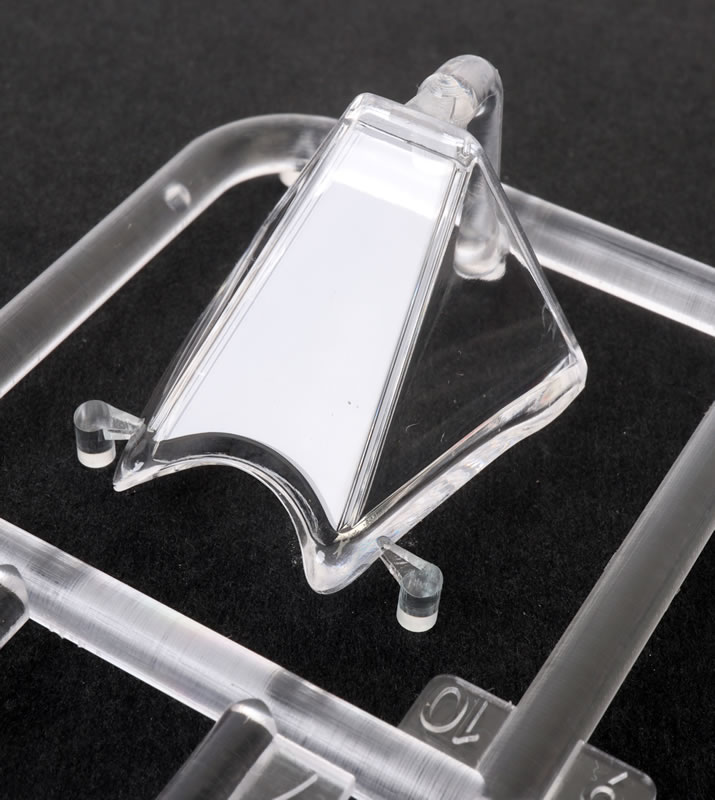
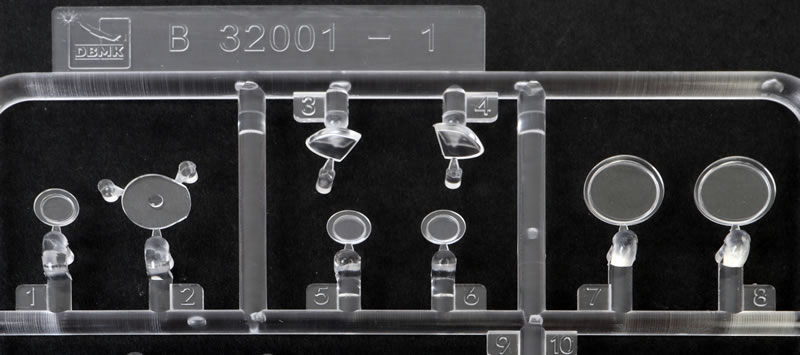
Clear parts are thin, sparkling and free from distortion.
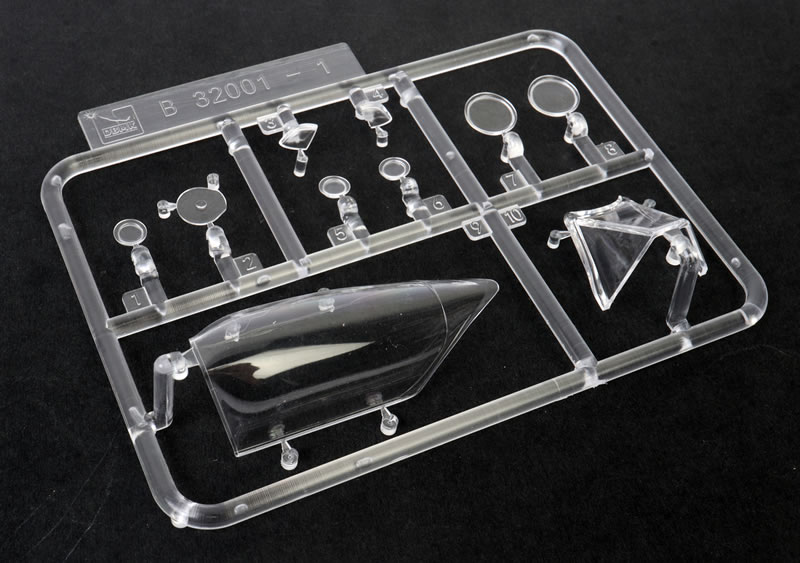
The sliding section of the canopy may be posed either open or closed.
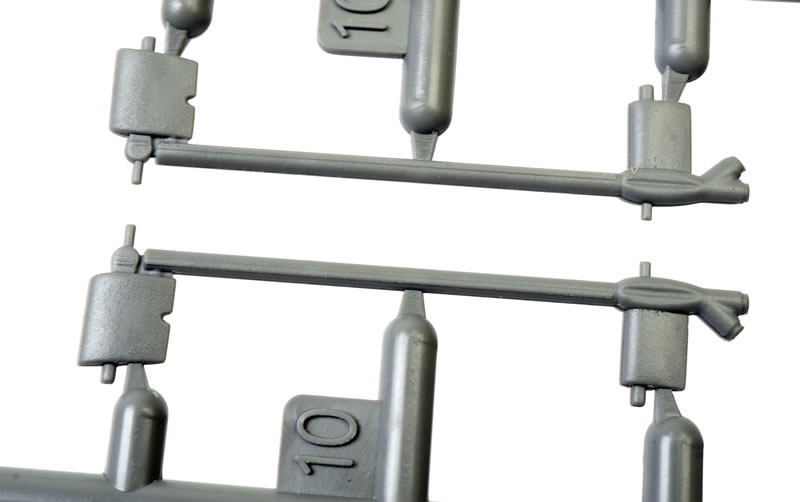
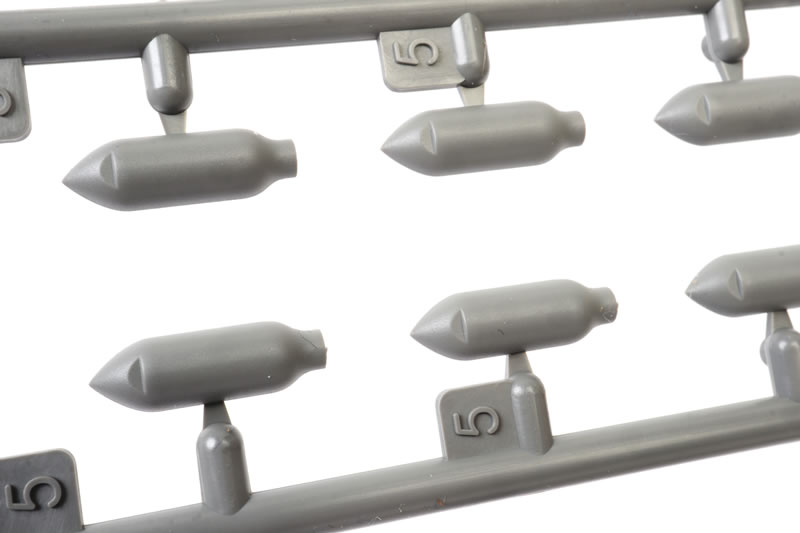
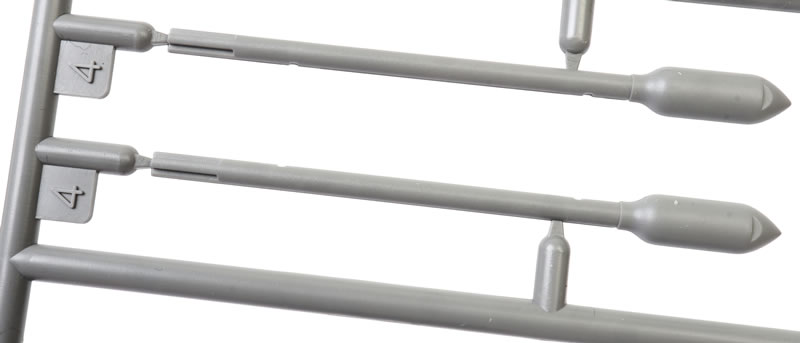
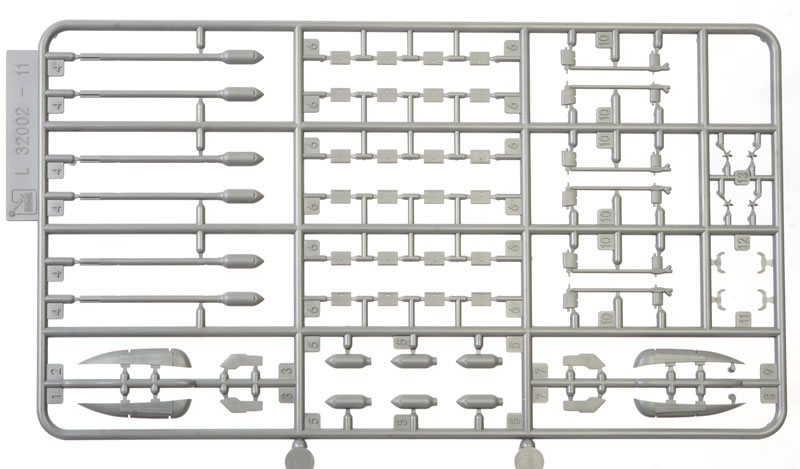
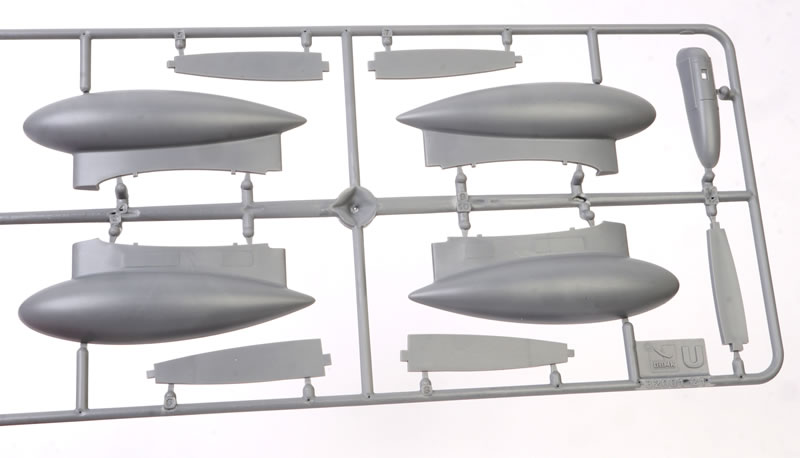
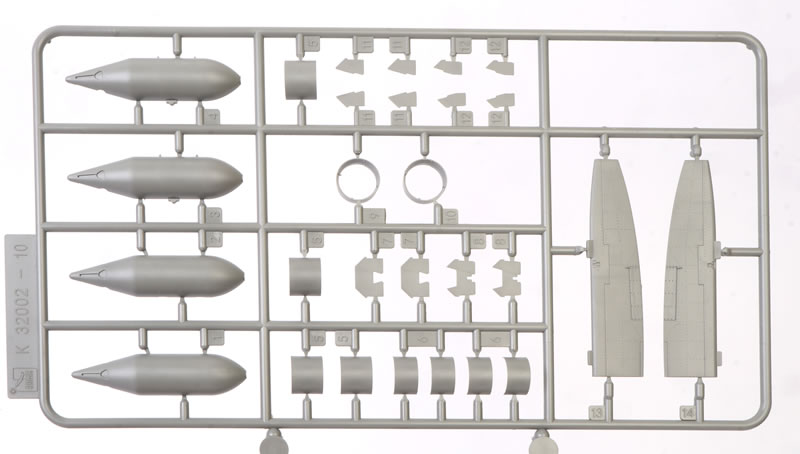
A busy ordnance selection is included, comprising six 60 lb rockets, two 1,000 lb bombs and two 100-gallon underwing fuel tanks.
It should be noted that the underwing tanks represent the Hornet’s most typical operational payload.
Markings
The decals are beautifully printed by Cartograf.
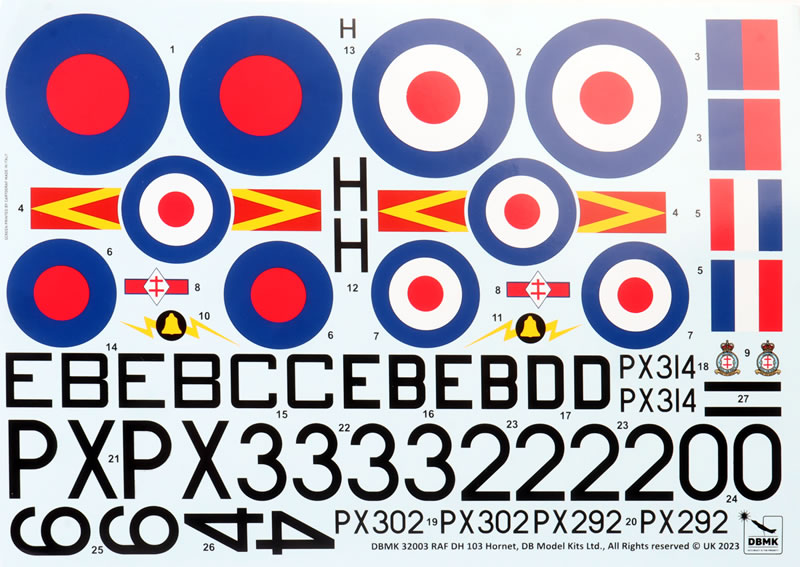
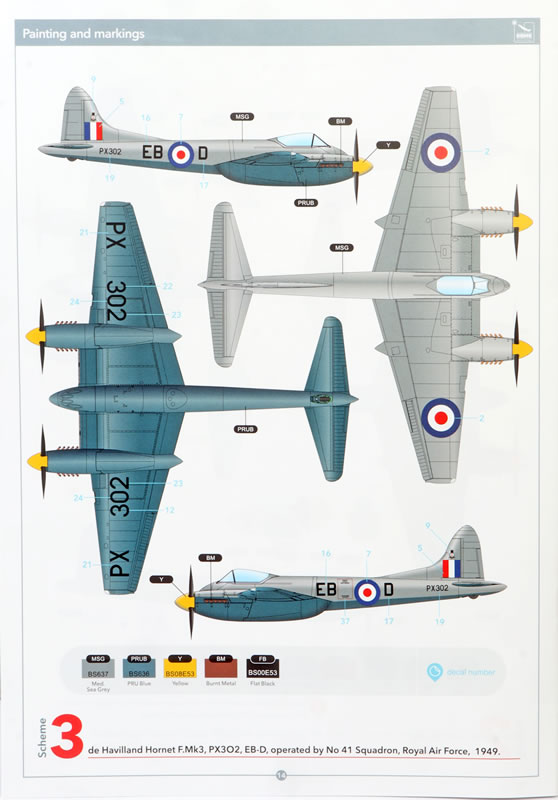
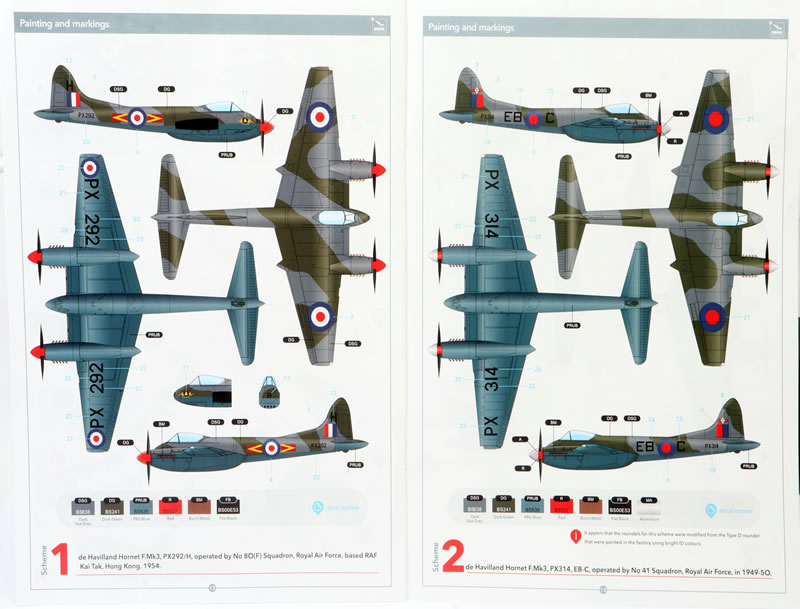
Markings for three aircraft are:
-
de Havilland Hornet F. Mk.3, PX292/H, 80(F) Squadron RAF, Kai Tak, Hong Kong, 1954. Finished in Dark Sea Grey and Dark Green upper surfaces with PRU Blue undersides.
-
de Havilland Hornet F. Mk.3, PX314, EB-C, 41 Squadron RAF, 1949–50. Dark Sea Grey and Dark Green upper surfaces with PRU Blue undersides.
-
de Havilland Hornet F. Mk.3, PX302, 41 Squadron RAF, 1949. Medium Sea Grey upper surfaces with PRU Blue undersides.
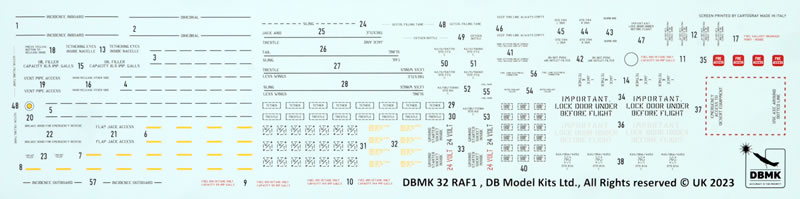
A separate stencil decal sheet is also included.
Accuracy
The kit is based on a CAD model licensed from Arthur Bentley, which was developed using factory drawings. This provides a high degree of confidence in the overall accuracy of the design.
DBMK’s 1:32 scale de Havilland Hornet F. Mk.3 is a welcome and impressive addition to the large-scale aircraft modelling scene. The combination of finely moulded plastic parts, extensive use of high-quality 3D printing, and well-integrated photo-etched details results in a package that is comprehensive and thoughtfully engineered.
Surface textures are restrained and appropriate, the cockpit is outstanding straight from the box and the inclusion of a robust wing spar and full-span fuselage halves suggests a solid and accurate foundation for the model. The parts breakdown is logical overall.
Add to this Cartograf decals, a masking sheet, and a useful selection of stores, and DBMK has delivered a kit that promises to build into a striking and accurate replica of one of de Havilland’s most elegant fighters.
Highly Recommended.
Thanks to DBMK for the test shot sample
Text and Images Copyright © 2026 by Brett Green
Page Created 27 February, 2026
Last updated
27 February, 2026
Back to HyperScale Main Page |
 Home
| What's New |
Features |
Gallery |
Reviews |
Reference |
Forum |
Home
| What's New |
Features |
Gallery |
Reviews |
Reference |
Forum |