Spitfire Mk.I PR Type A
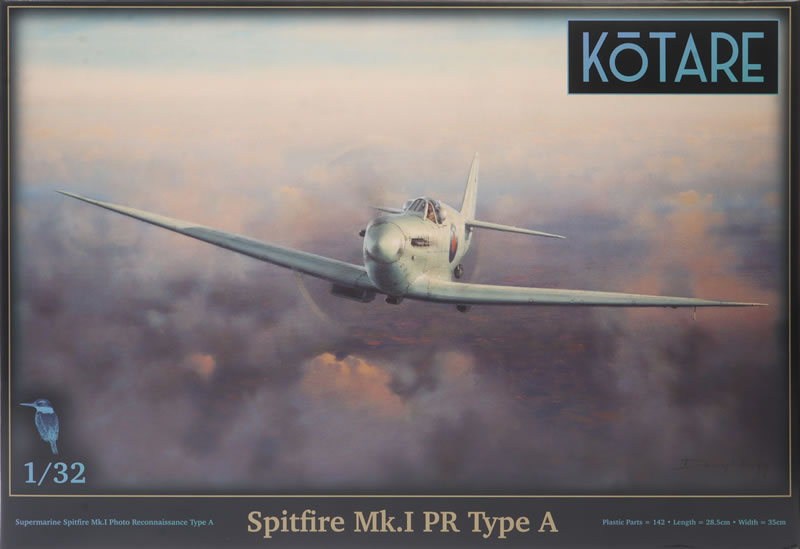
Kotare Models, 1/32 scale
S
u m m a r y : |
Description and Item No.: |
Kotare Models Kit No. K32501 - Spitfire Mk.I PR Type A |
Contents and Media: |
112 parts in grey plastic (less 24 parts marked “not for use”), ten clear parts, decals for two marking options, comprehensive instructions. |
Price: |
USD$109.00 plus shipping available online from Kotare Models' webstore |
Scale: |
1/32 |
Review Type: |
First Look |
Advantages: |
Clever parts breakdown; new parts speciffically for this early PR version; never before offered in 1/32 scale; manageable number of parts; beautifully detailed; perfectly moulded; authentic surface textures; comprehensive instructions and notes; high quality Cartograf decals. |
Disadvantages: |
None noted. |
Recommendation: |
Kotare’s Spitfire Mk.I PR Type A is a superbly presented kit that reflects deep subject knowledge, thoughtful engineering and a clear understanding of what modellers actually enjoy about building.
By resisting the temptation to inflate the parts count, Kotare has delivered a model that is richly detailed yet approachable, accurate without being over-complicated.
This limited-edition release captures a fascinating and often overlooked chapter in Spitfire history, and it does so with elegance and restraint. From the beautifully executed cockpit to the intelligent use of jigs and the exemplary instructions, this kit rewards close inspection.
If this PR Type A is any indication of Kotare Models’ future direction, Spitfire enthusiasts—and modellers in general—have much more to look forward to.
This is a genuine limited release though, so don't dawdle. Get one while you can!
Highly Recommended. |
Reviewed by Brett Green

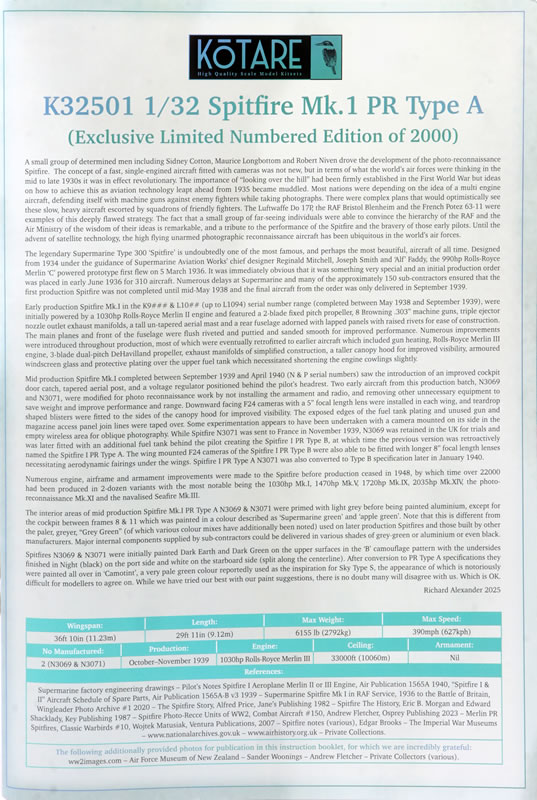
The Dawn of Photographic Reconnaissance
Aerial photographic reconnaissance had its origins in the First World War, where it rapidly evolved from improvised observation to a systematic intelligence-gathering discipline. Early attempts involved hand-held cameras operated by observers in fragile two-seat aircraft, but by 1916 purpose-built camera installations and specialised reconnaissance units were commonplace.
Trench systems, artillery positions and supply routes were meticulously photographed, interpreted and compared over time to detect change.
By the war’s end, photo reconnaissance had become indispensable to modern warfare, establishing the principles of altitude, coverage and interpretation that would later be refined and revolutionised by high-performance aircraft such as the Spitfire.
Aerial Reconnaissance - First Steps in the Second World War
From the earliest days of the Second World War, accurate and timely intelligence was as vital as guns and bombs. Aerial photographic reconnaissance (PR) emerged as one of the most valuable tools available to Allied planners, providing detailed insight into enemy airfields, ports, industrial centres and troop movements. Unlike tactical reconnaissance, which operated close to the front lines, strategic photo reconnaissance required aircraft capable of penetrating deep into enemy territory, operating alone, at high altitude and with absolute discretion. Speed, range and altitude were the primary defences, not armament.

In 1939, the RAF possessed no purpose-built high-speed photographic reconnaissance aircraft. The task instead fell to visionary individuals who recognised that the latest generation of high-performance fighters could be adapted to the role. Foremost among them was Flight Lieutenant Sidney Cotton, whose work would transform RAF reconnaissance doctrine and lead directly to the first Spitfire PR variants.
Selection of a PR Aircraft
Cotton’s pre-war experience in civilian aerial photography convinced him that an effective reconnaissance aircraft needed three key attributes: speed to evade interception, altitude to avoid flak, and stability for high-quality imagery. Armament, radios and other combat equipment were liabilities rather than assets.
Early RAF reconnaissance relied on modified bombers and obsolescent types, but these were slow, conspicuous and vulnerable. The Supermarine Spitfire Mk.I, entering service in 1938, offered a compelling alternative. Its exceptional speed, high-altitude performance and clean aerodynamic design made it an ideal candidate for conversion. Importantly, its stressed-skin construction and relatively spacious fuselage allowed cameras to be installed with minimal external disruption.
Cotton’s early modifications were carried out largely outside official channels, initially using Spitfires borrowed from Fighter Command units. These ad hoc conversions would later be formalised, resulting in a series of Photo Reconnaissance (PR) “Types,” with the earliest operational version designated PR Type A.
Spitfire Mk.I PR Type A – Development and Configuration
The Spitfire Mk.I PR Type A was a straightforward but effective conversion of the standard Mk.I airframe. All armament was removed, along with gunsights, armour plating and unnecessary radio equipment, significantly reducing weight. The eight .303 Browning machine guns and their ammunition were deleted, with gun ports faired over to restore aerodynamic cleanliness.
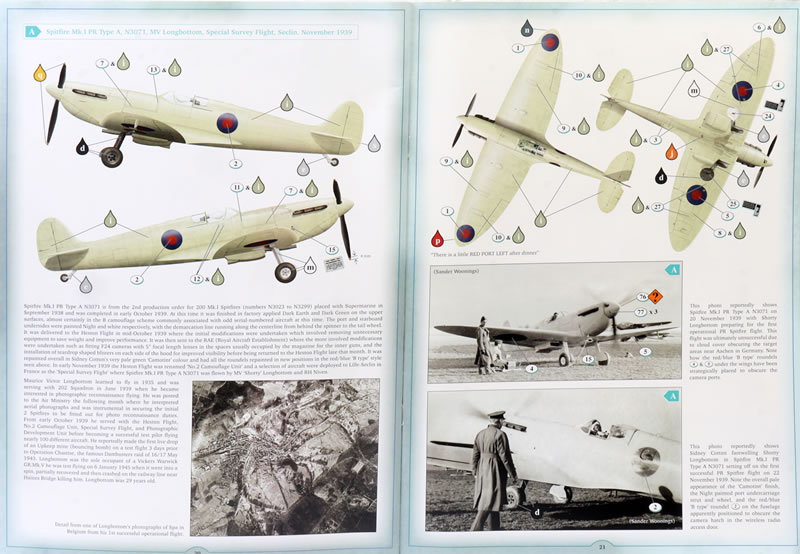
Cameras were installed vertically in the bottom of each wing, typically a pair of F24 cameras. These allowed straight-down mapping photography. Access panels were added to facilitate camera installation and maintenance, though externally the aircraft remained largely indistinguishable from a standard fighter.
The two PR Type As retained the standard Merlin III engine, but the reduction in weight and drag resulted in a useful increase in performance. Perhaps the most visually distinctive feature was the finish. Both aircraft were painted in a smooth overall Camotint shade, later known as Sky Type S, a colour selected by Cotton to reduce visibility at altitude and to photograph better against the sky.
In Service – Unarmed Over Enemy Territory
Operational use of the Spitfire Mk.I PR Type A began in late 1939 and early 1940, initially under the direction of Cotton’s small and secretive reconnaissance unit, later formalised as No. 1 Photographic Reconnaissance Unit (PRU). Missions were typically flown singly, without escort, relying entirely on speed and altitude for survival.
PR Type As conducted some of the earliest deep-penetration reconnaissance flights over Germany, Italy and occupied Europe. Targets included naval bases, industrial installations and airfields, providing invaluable intelligence during the Phoney War and the opening stages of the conflict. The Spitfire’s ability to outpace contemporary German fighters at altitude proved decisive, particularly before the widespread deployment of the Bf 109 E.
Despite their success, the PR Type A was very much an interim solution. Limited fuel capacity restricted range, and the early camera installations were relatively basic. Nevertheless, the aircraft demonstrated beyond doubt that the Spitfire was an outstanding reconnaissance platform. Lessons learned directly informed the development of later, more capable PR Spitfire variants with additional fuel tanks, pressurisation and more advanced camera fits.
Spitfire Mk.I PR Type A Specifications
Type: Single-seat photographic reconnaissance aircraft
Powerplant: Rolls-Royce Merlin III, approx. 1,030 hp
Maximum Speed: Approx. 360 mph (580 km/h) at altitude
Service Ceiling: Around 35,000 ft
Range: Approximately 750 miles (varied with fuel fit and mission profile)
Armament: None
Cameras: Typically two F24 cameras (vertical and oblique)
Crew: One (pilot)
Legacy
The Spitfire Mk.I PR Type A occupies a small but critically important place in aviation history. Though produced in limited numbers and overshadowed by later PR Spitfires, it established the template for high-speed, unarmed photographic reconnaissance that would serve the Allies throughout the war. More than a simple conversion, it represented a conceptual shift in how air power gathered intelligence—quietly, alone and at great risk.
In many ways, the PR Type A exemplifies the Spitfire’s remarkable adaptability and the ingenuity of those who recognised its potential beyond air combat. It was the first step in a lineage that would see the Spitfire become one of the finest reconnaissance aircraft of the Second World War.
Kotare Models is the brainchild of modeller and veterinary specialist Mark Robson.
Mark has assembled a team whose names will be familiar to Wingnut Wings fans, including General Manager Richard Alexander, Product Designer Darren Mildenhall, Decal Artist Malcolm Laird, Profile Artist Ronny Bar and others.
The latest release from this exciting venture is a 1:32 scale Spitfire Mk.I PR Type A.
This is a strictly limited release with only 2,000 kits manufactured. My model boasts a golden sticker embossed with 574 of 2000.
Only two Spitfire Mk.I PR Type As were converted. Either may be built from the box.
Kotare Models’ 1:32 scale Spitfire Mk.I PR Type A comprises 112 parts in grey plastic (less 24 parts marked “not for use”), ten clear parts, decals for two marking options, and comprehensive instructions presented in a 24-page A4-sized booklet.
Let’s talk about the number of parts. In today’s era of “über-kits”, manufacturers seem to be engaged in a race toward ever-higher parts counts. This is especially true of military vehicles, but aircraft kits have followed the same fashion.
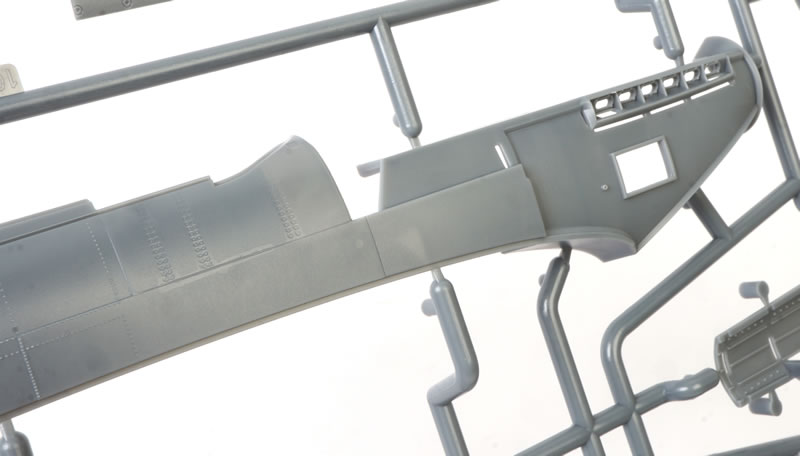
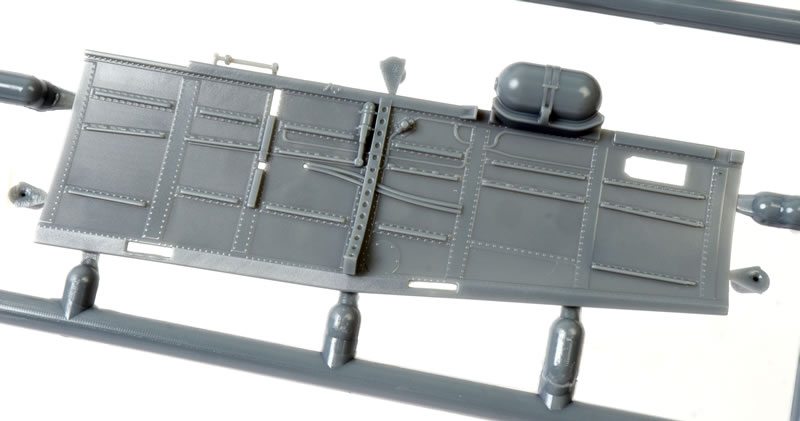
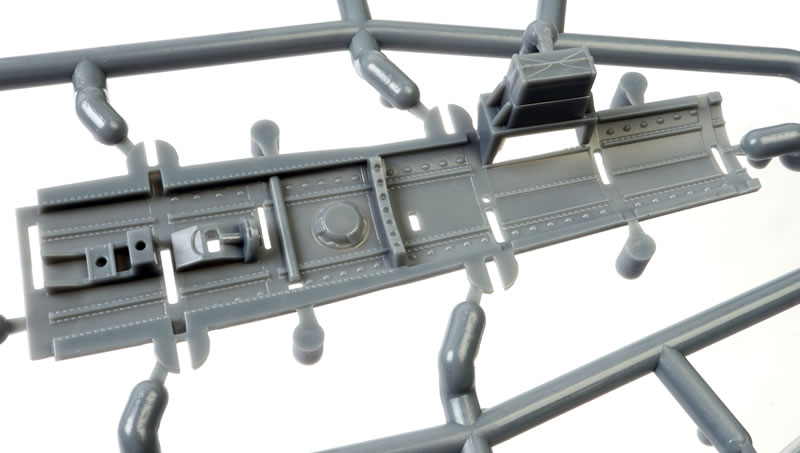
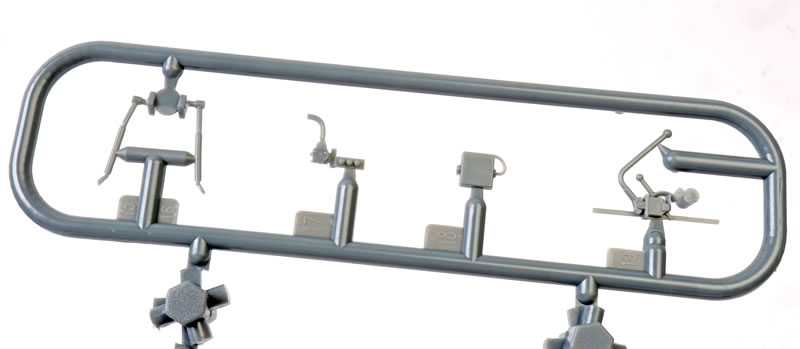
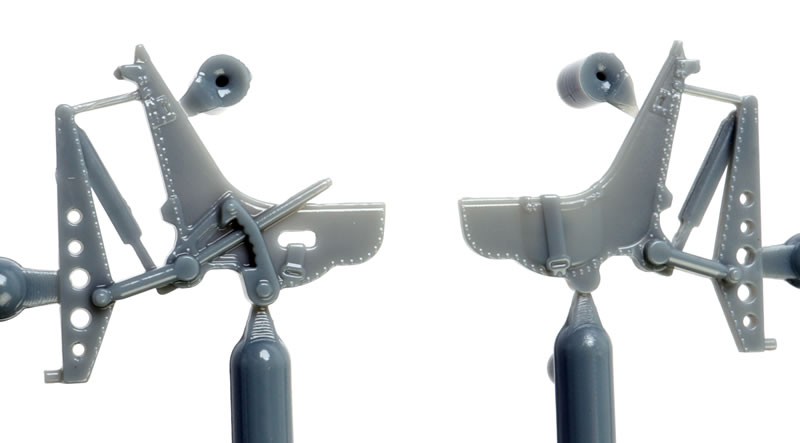
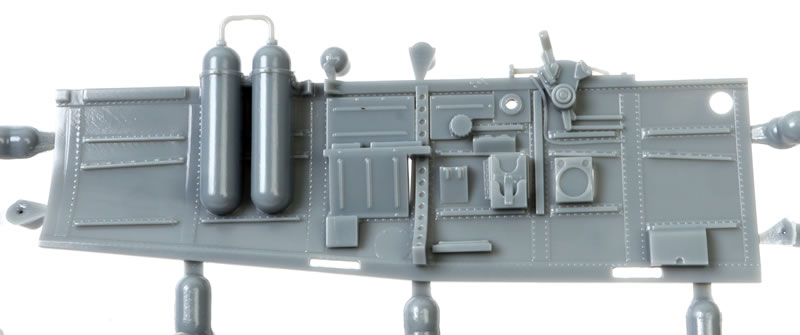
Kotare bucks this trend with a very modest 112 grey plastic parts, minus the 24 not actually used. Impressively, this has been achieved without compromising detail. Much of the kit’s finesse comes from Kotare moulding complex detail as single parts. For example, the port-side lower cockpit sidewall is a single moulding with oxygen bottles, throttle quadrant, dials and boxes all crisply rendered in place, yet nothing appears simplified.
The kit is replete with similar examples. Why design a seven-piece sub-assembly when you can mould it as one part? This appears to be the guiding philosophy behind Kotare’s Spitfire.
I suspect this approach will appeal strongly to modellers who want a beautifully detailed kit but feel intimidated by the daunting parts counts of many recent releases.
It also underlines Kotare’s Spitfire Mk.Ia as a kit designed to be built, not merely a box to be admired on the shelf.
Let’s take a closer look.
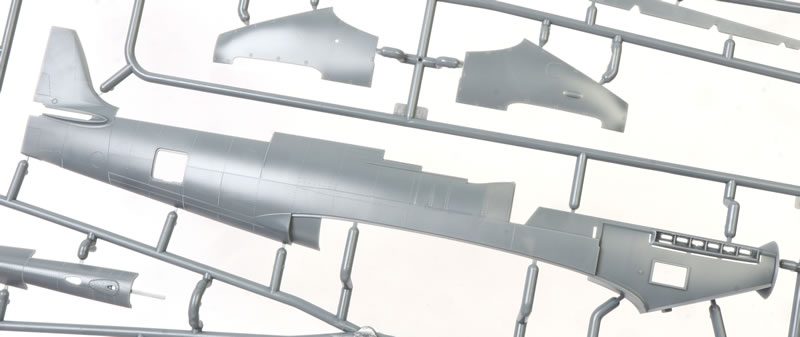
The Spitfire Mk.I PR Type A was a conversion of the standard Spitfire Mk.I, and this is reflected in the parts breakdown and assembly sequence of Kotare’s newest offering.
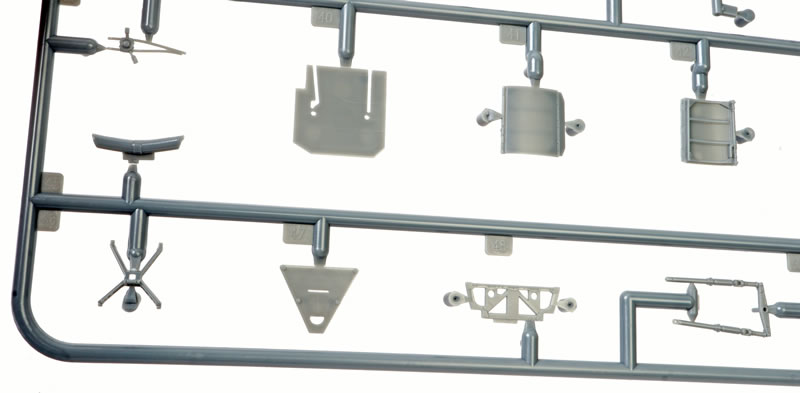
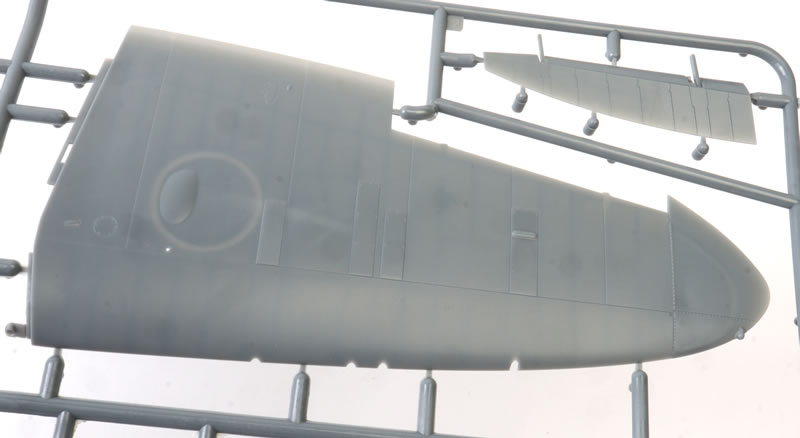
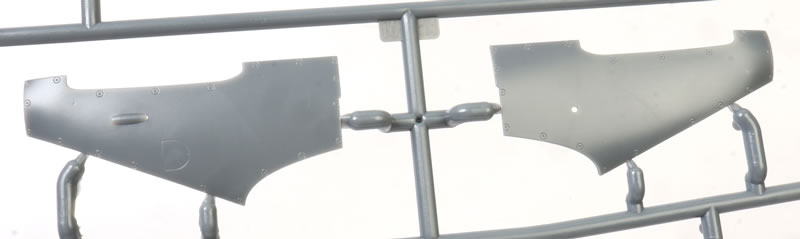
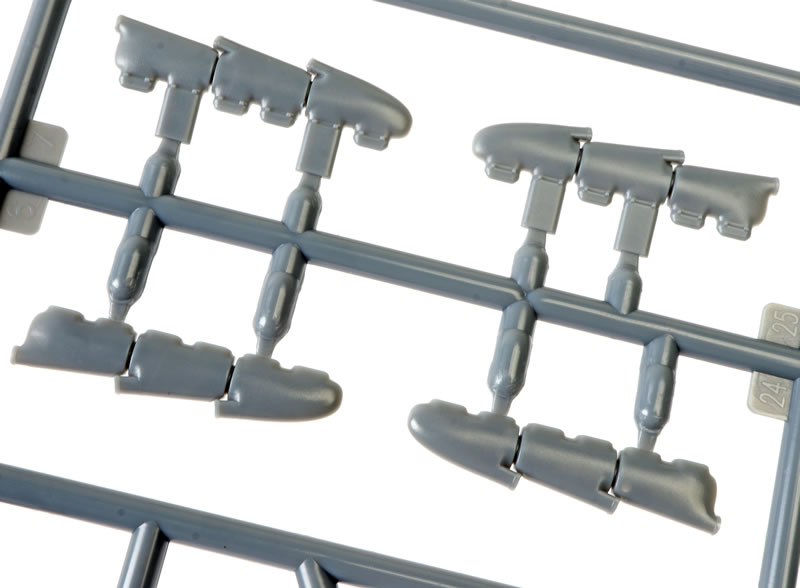
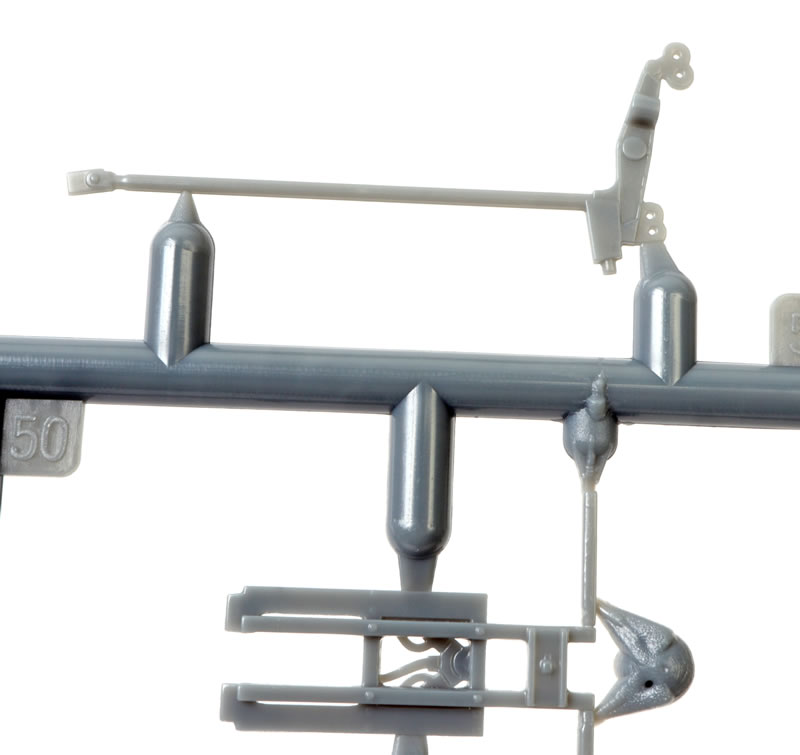
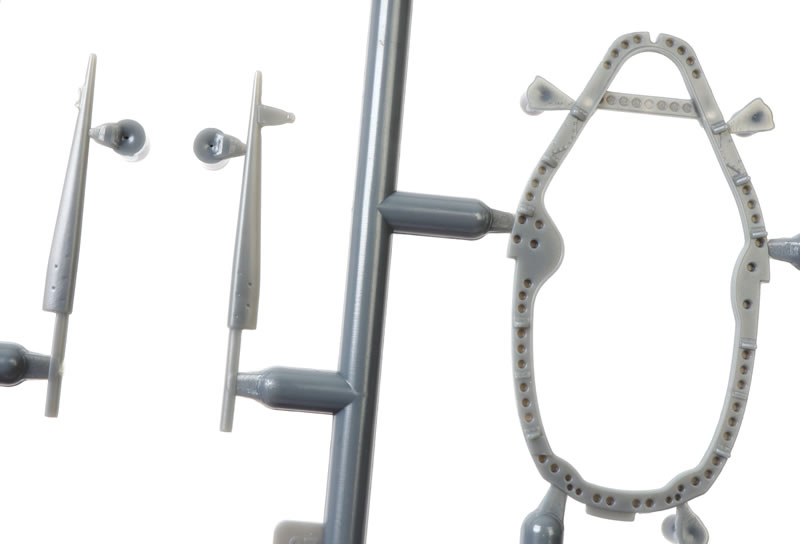
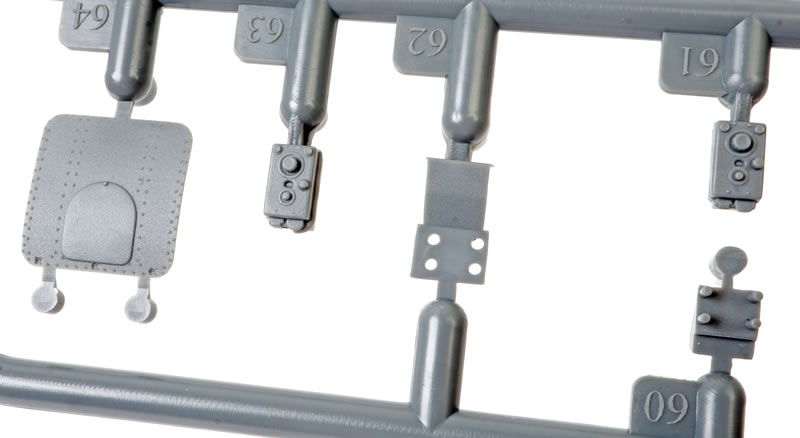
One new grey plastic sprue carries the parts unique to the PR airframe.
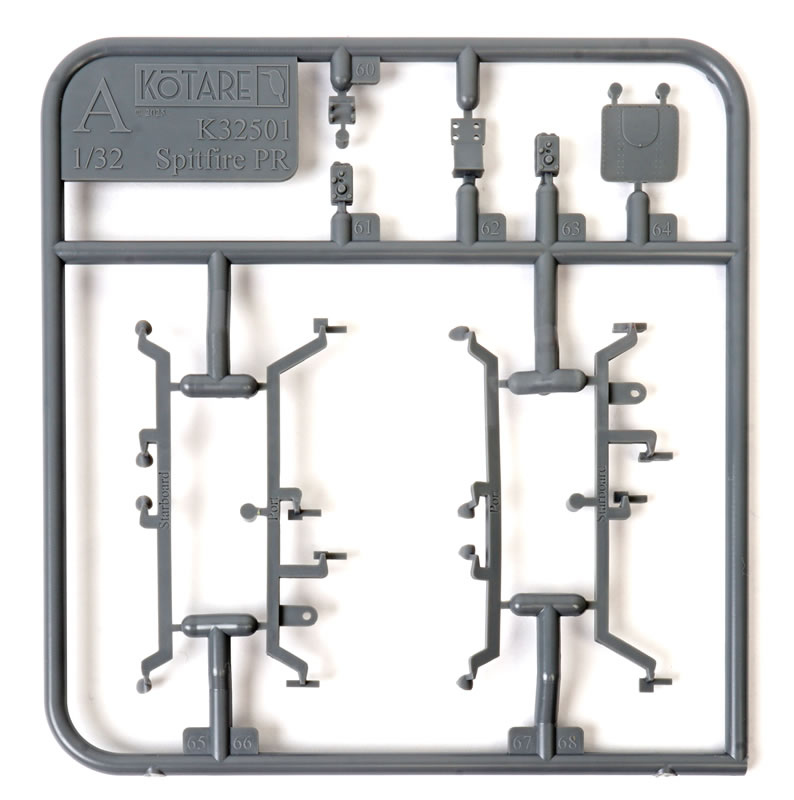
These include gun-port plugs, the camera control box and mount, and the wireless access door with camera port cover.
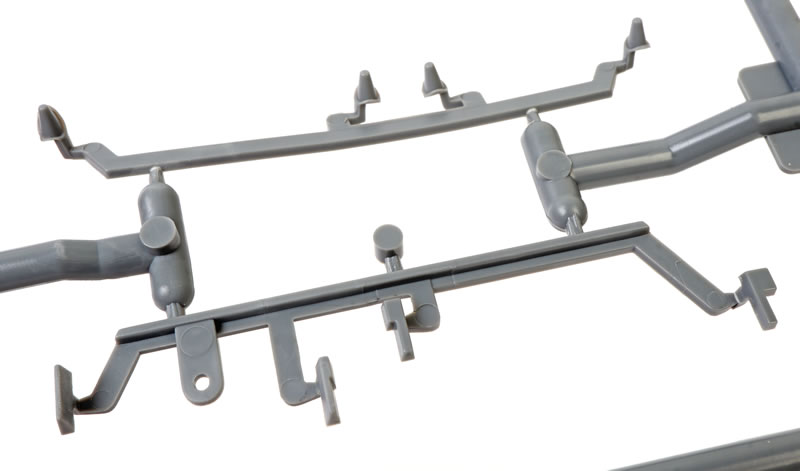
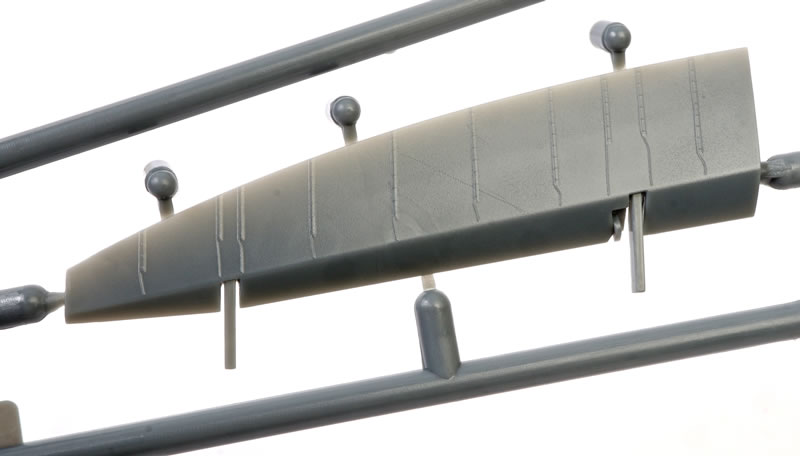
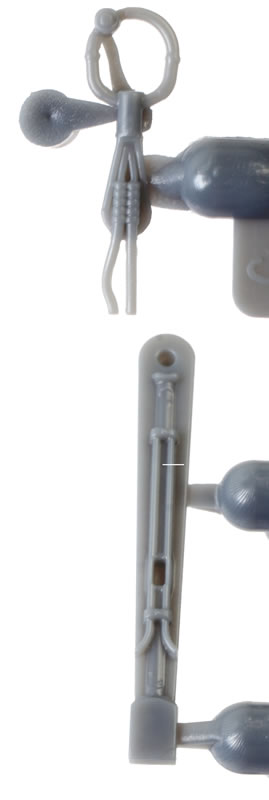
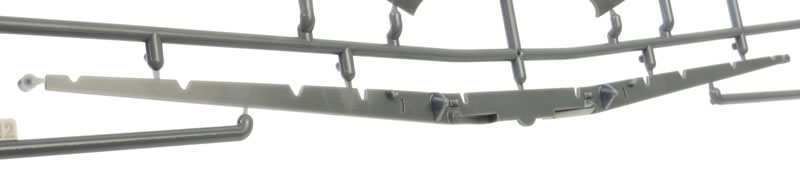
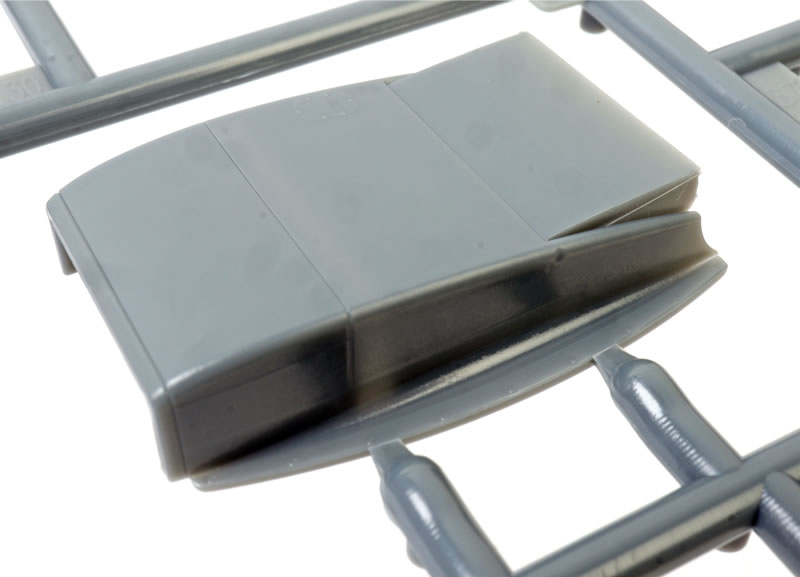
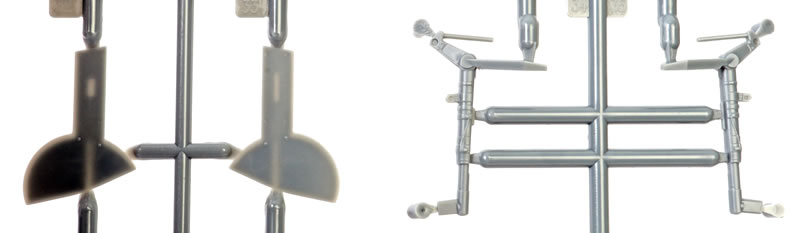
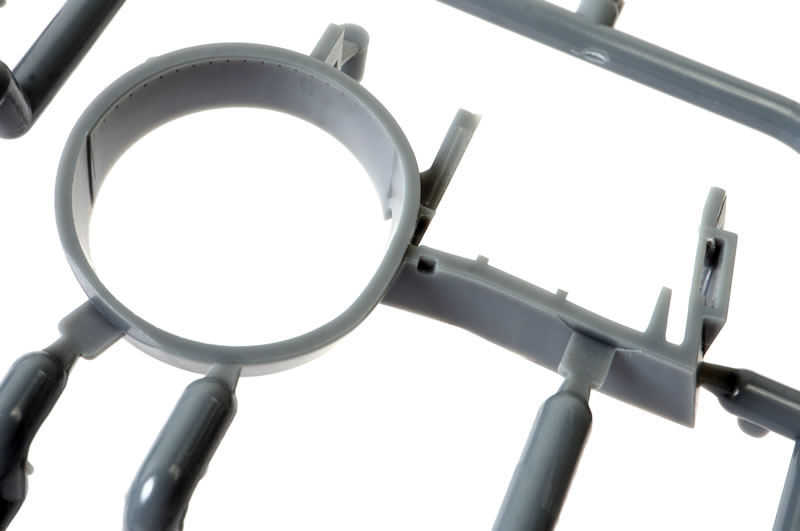
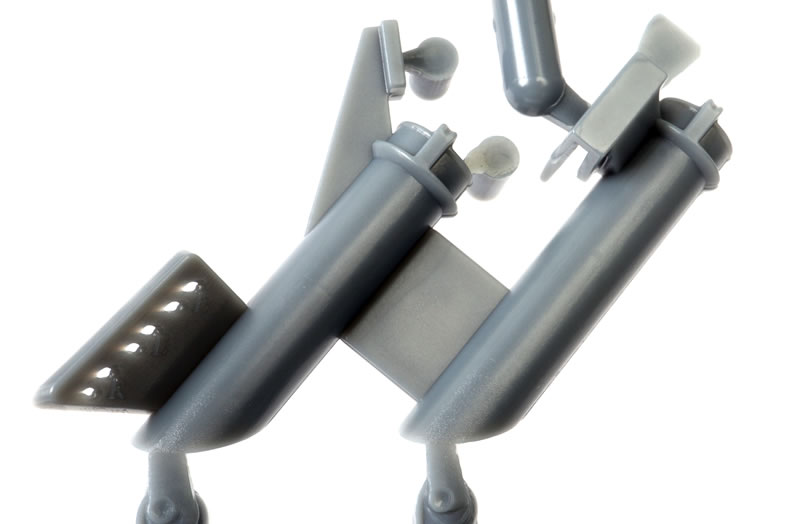
The two plastic jigs are particularly clever and thoughtful. They serve two purposes: acting as locators for drilling the lower wing camera lens pilot holes, and filling the empty shell and link chutes left by the removed armament.
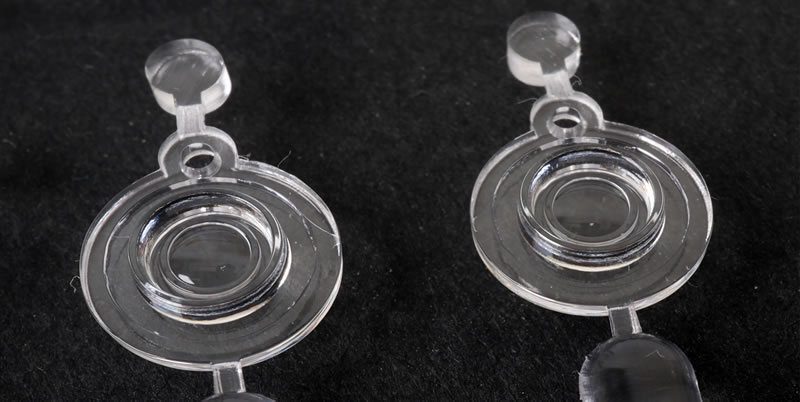
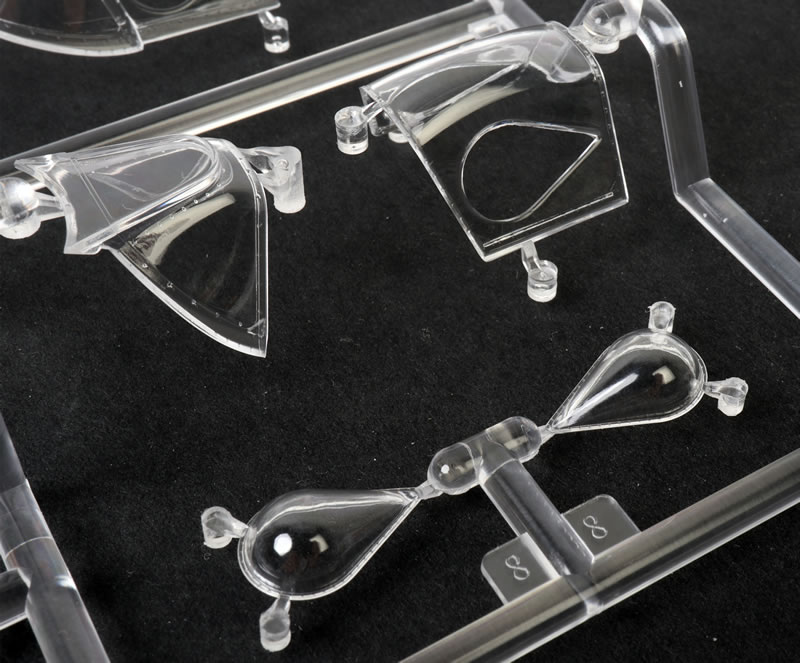
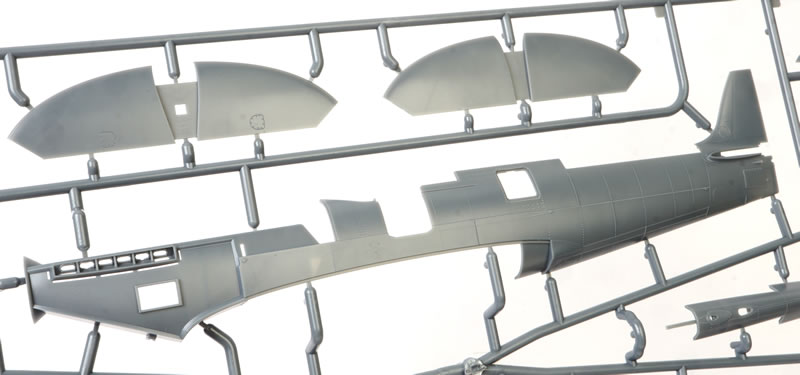
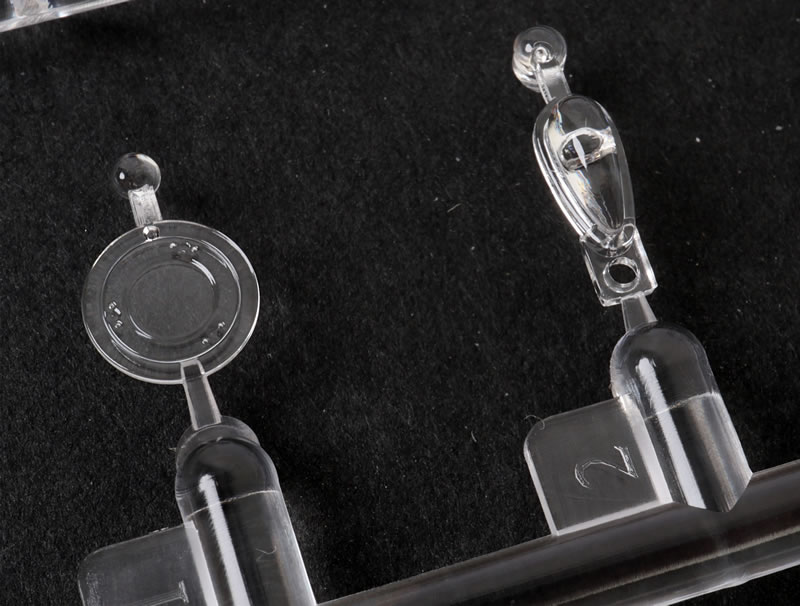
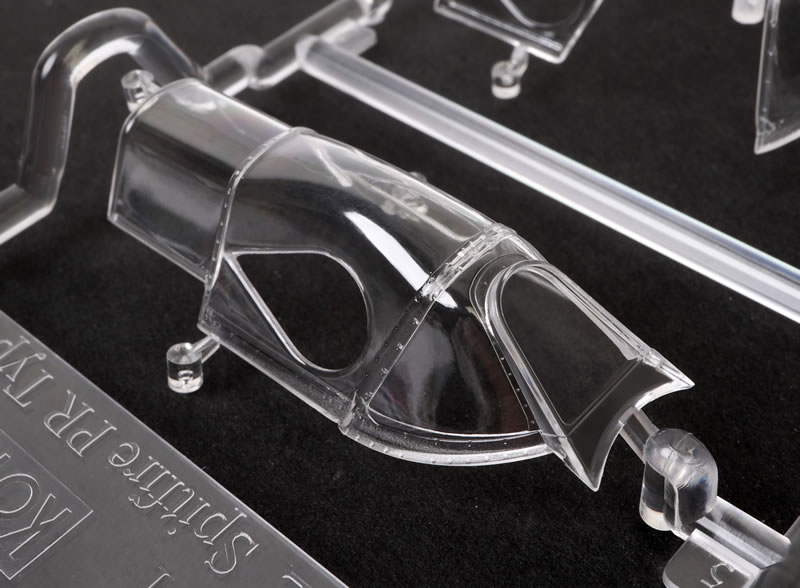
The clear sprue (Sprue C) adds a new canopy with its distinctive PR Type A tear-drop side blisters, along with two F24 camera lenses. The tear-drop blisters accurately capture the shape used exclusively on the PR Type A; later PR variants featured subtly different contours. The blisters are separate parts that attach to the sliding canopy section, which itself features cut-outs on each side. I recommend attaching these with a sparing application of white acrylic glue. Both an optional open canopy (three main pieces, or five including blisters) and a one-piece closed canopy are provided.
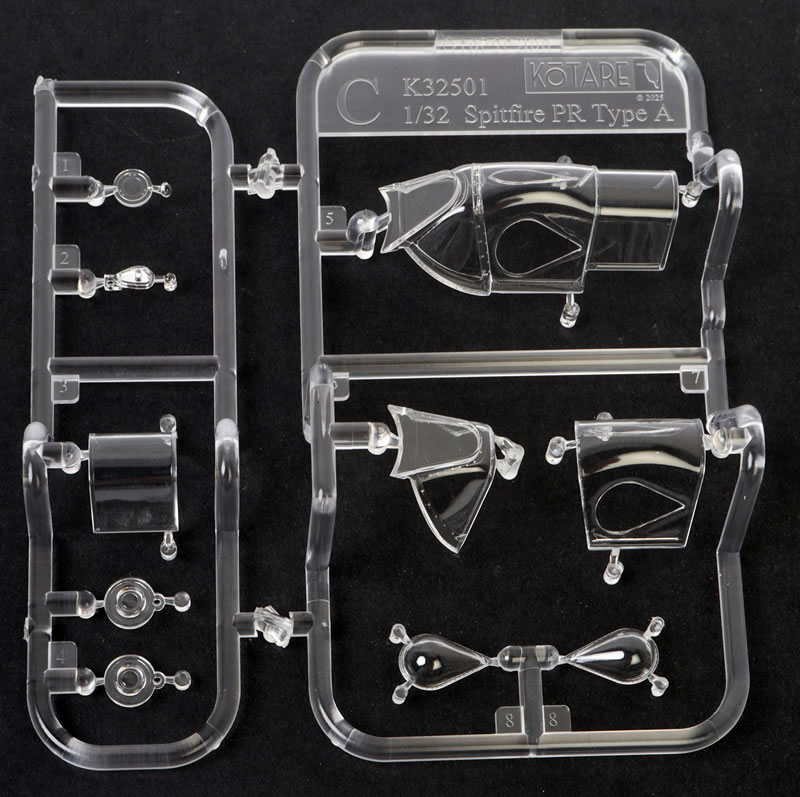
In both cases, the external armoured windscreen glass is moulded integrally with the windscreen.
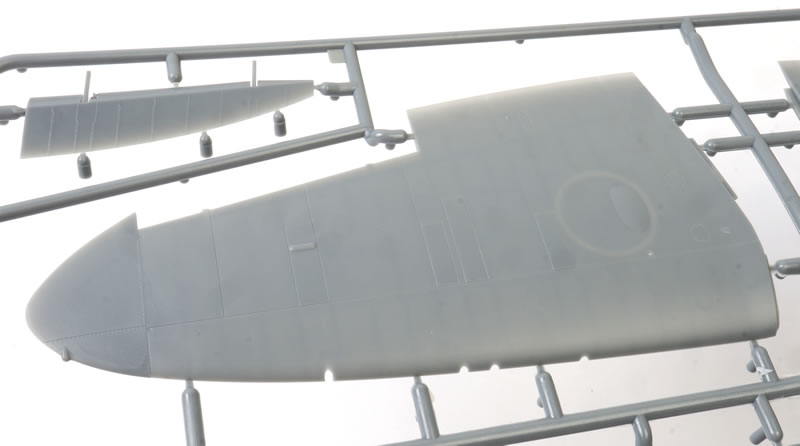
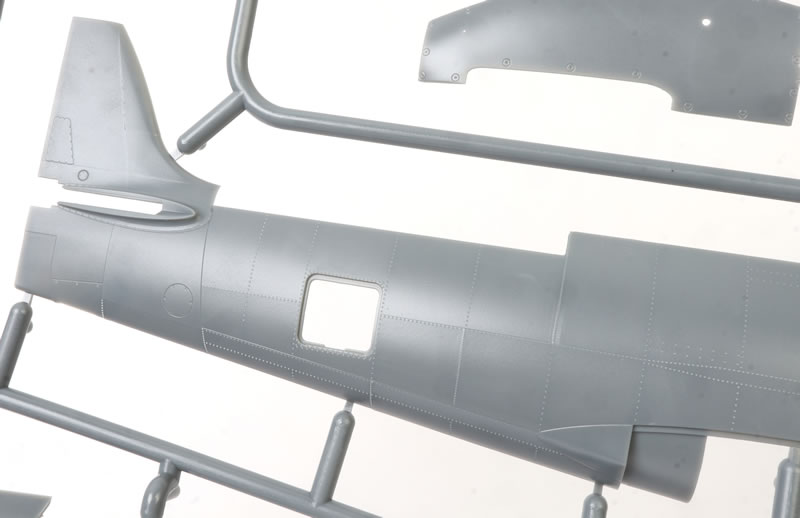
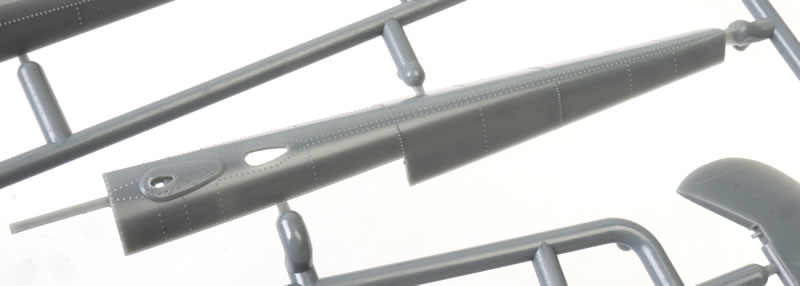
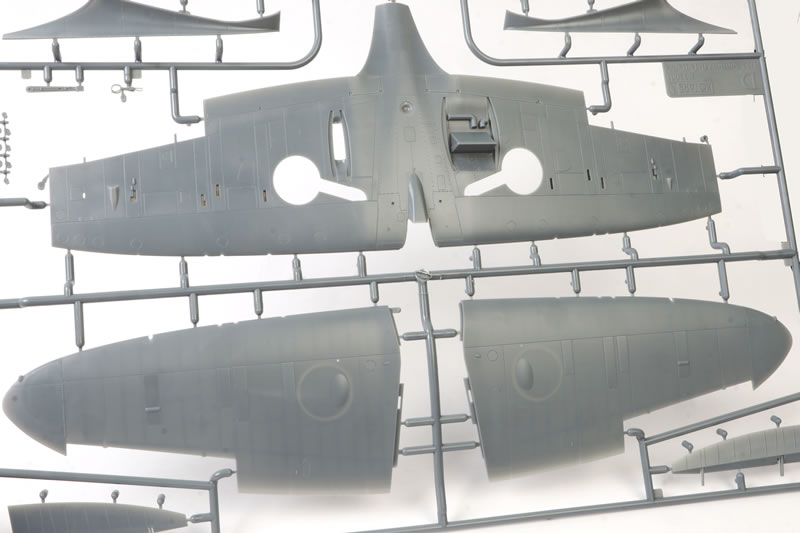
Surface textures are subtle and convincing. A restrained recipe of recessed panel lines, recessed fasteners and raised rivets delivers an authentic overall appearance. Fabric effect is appropriately limited to rows of stitching.
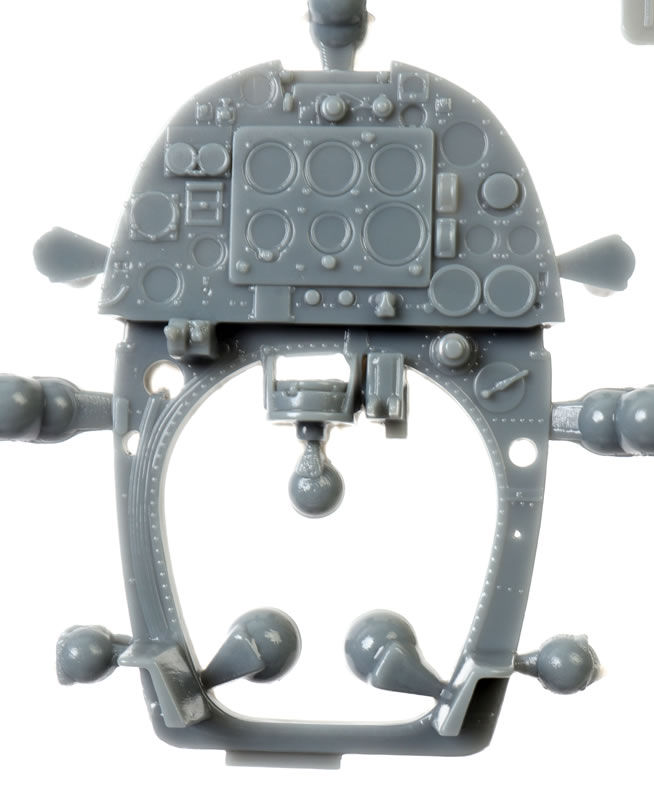
The cockpit is a real highlight. The sidewalls, pilot’s seat and instrument panel deserve special mention. The instrument panel is a single solid plastic part with dial faces, bezels and switch detail crisply moulded in place. The compass and its mount are integrated at the bottom of the panel. Decals are supplied for the dial detail in singles, pairs and trios.
I particularly like that Kotare provides the option of a seat with moulded-on Sutton harness.
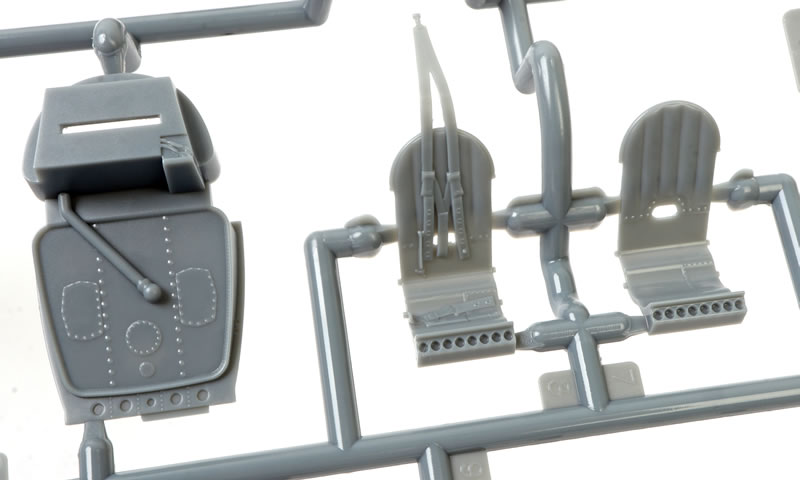
The cockpit floor accurately represents the characteristic bottomless, multi-layered structure of the Spitfire. The control column is a separate part, allowing it to be posed to taste.
The rudder pedals are designed to be offset, matching the rudder’s offset to starboard.
There is also a generous amount of detail moulded into the fuselage interior aft of the pilot.
Another thoughtful touch is the inclusion of a rigging guide covering rudder, aileron and elevator control lines, undercarriage retraction cables, and the attachment line for the shoulder harness mount.
Kotare specifies the main cockpit colour as Supermarine Interior Green (Matt), sometimes known as Apple Green. This is a deeper, more vivid shade than standard RAF Interior Grey Green. The recommended Tamiya mix is two parts XF-71 IJN Cockpit Green to one part X-28 Park Green. The instructions discuss interior colours in useful detail. The pilot’s seat, flare rack, control column and actuator rod are all called out as RAF Interior Grey Green.
The long, kinked undercarriage hand pump on the starboard cockpit wall is accurate for an early- to mid-production Spitfire.
The cockpit door may be posed open or closed.
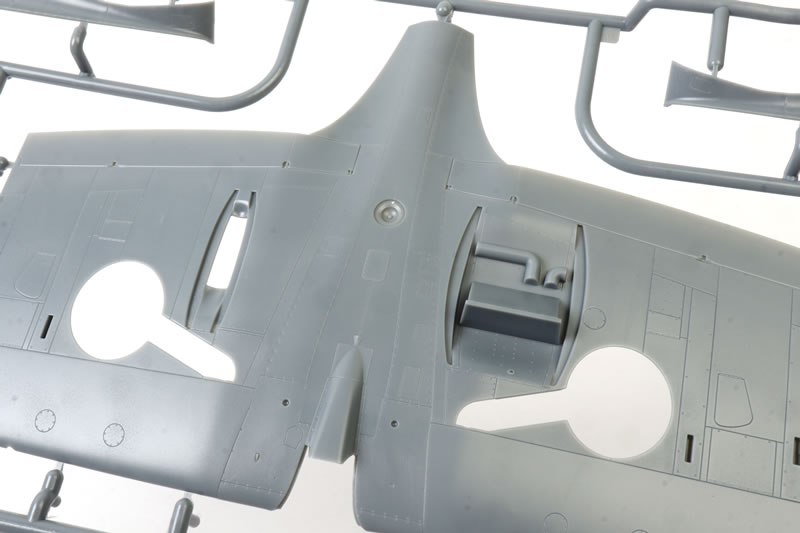
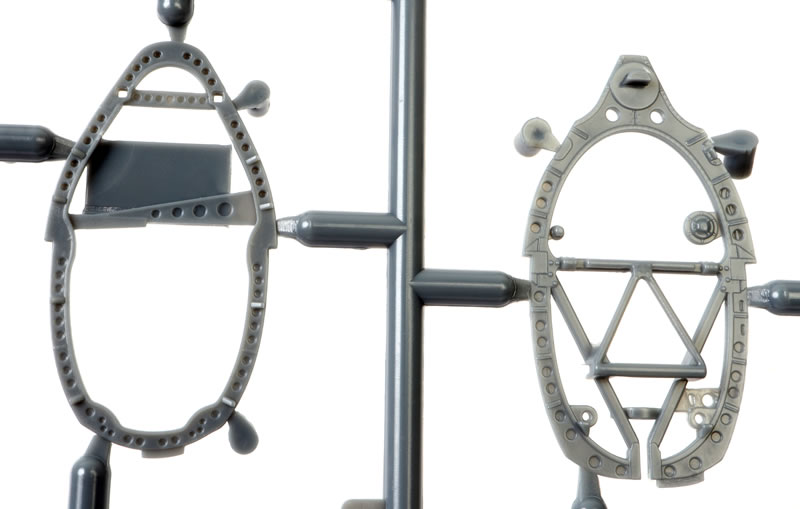
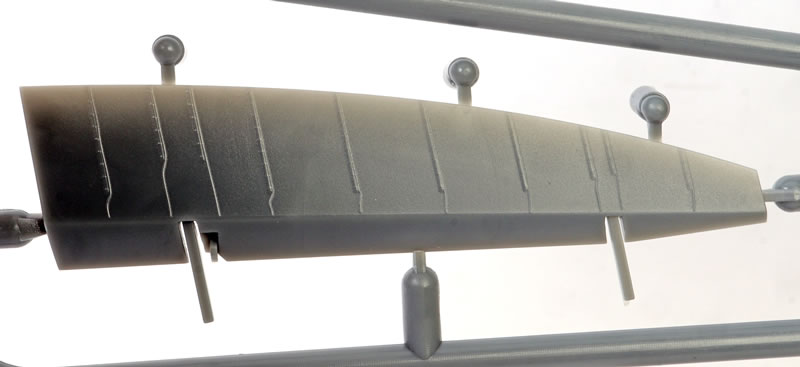
The wings are broken down conventionally, with a full-span lower half and separate port and starboard upper halves. A long-span wing spar ensures correct dihedral.
Wheel well walls are moulded as single parts for each side. A particularly nice detail is the inclusion of the early-style undercarriage down indicators as separate parts for each wheel well.
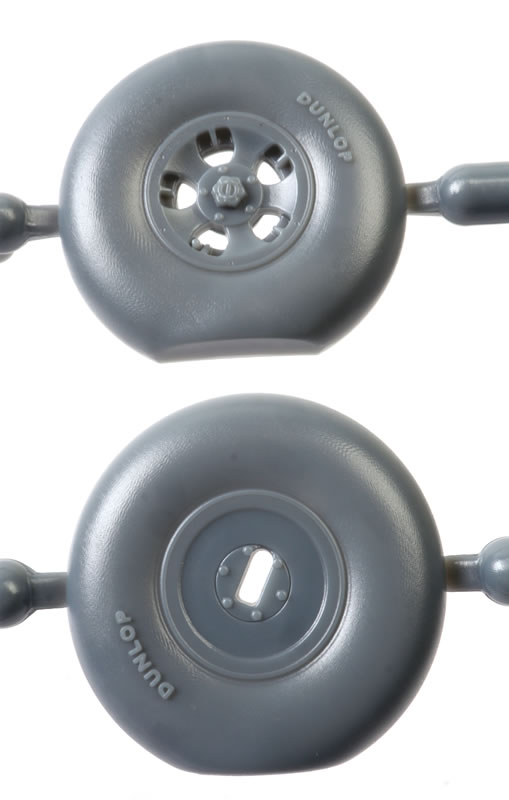
The five-spoke main wheels are provided as two-part assemblies. They are subtly bulged and flattened, with keyed alignment ensuring the flat spot sits correctly on the ground.
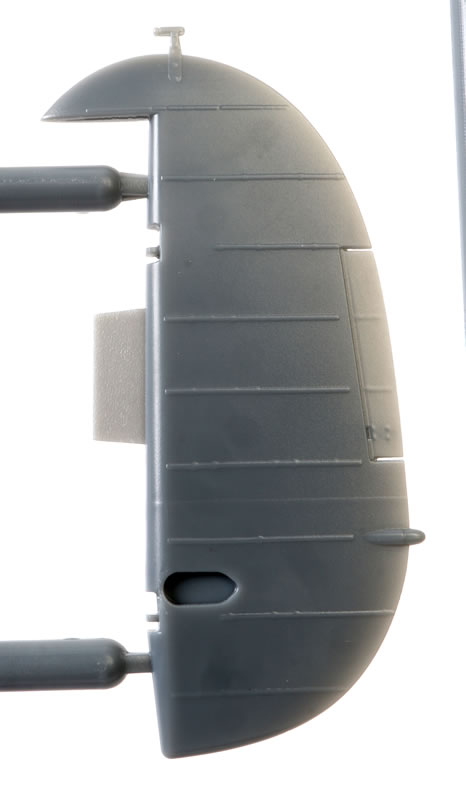
Wing fillets are separate parts, as are the ailerons, elevators and rudder. The rudder and elevators include locating tabs, but these may be easily removed if you wish to pose the control surfaces deflected.
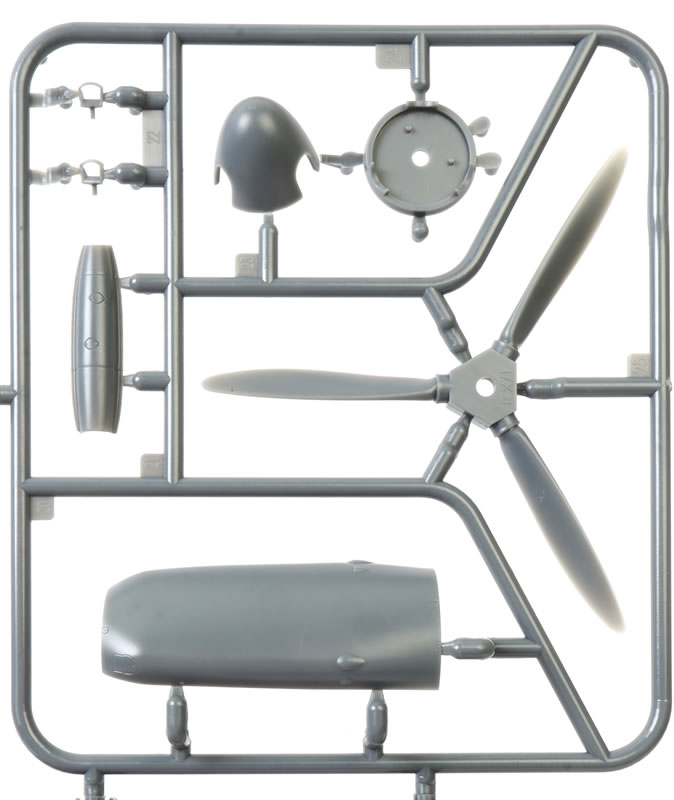
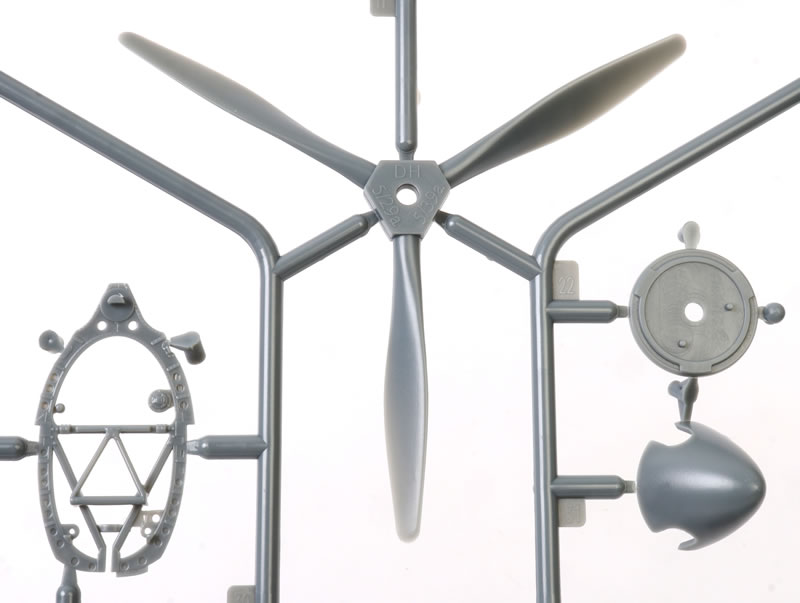
The propeller is moulded as a single piece with the pitch already set.
The clear parts are thin, cleanly moulded and free from distortion.
Instructions and Markings
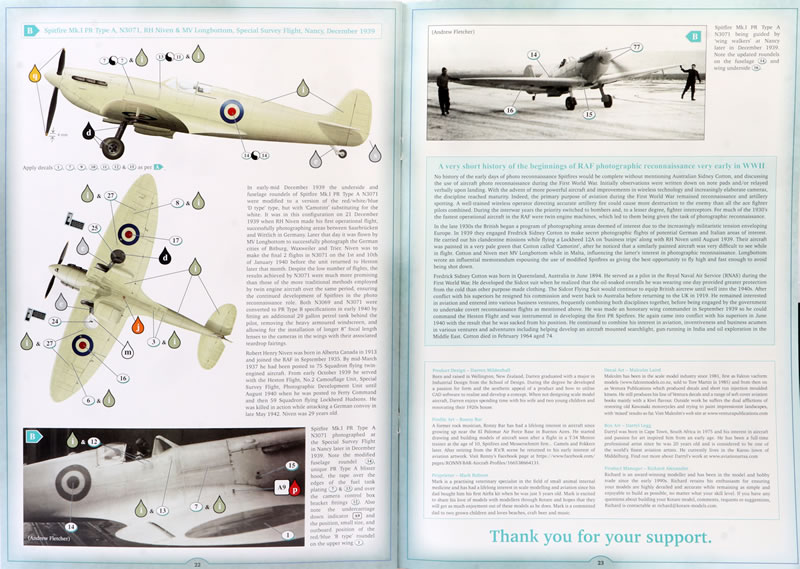
The instructions are as much an educational resource as they are a set of assembly directions. Numerous detail notes are accompanied by well-captioned reference photos and illustrations throughout. The 24-page full-colour A4 booklet presents the build over 16 clearly defined steps, supplemented by colour profiles, reference photos and notes for each of the two marking options, plus additional background material.
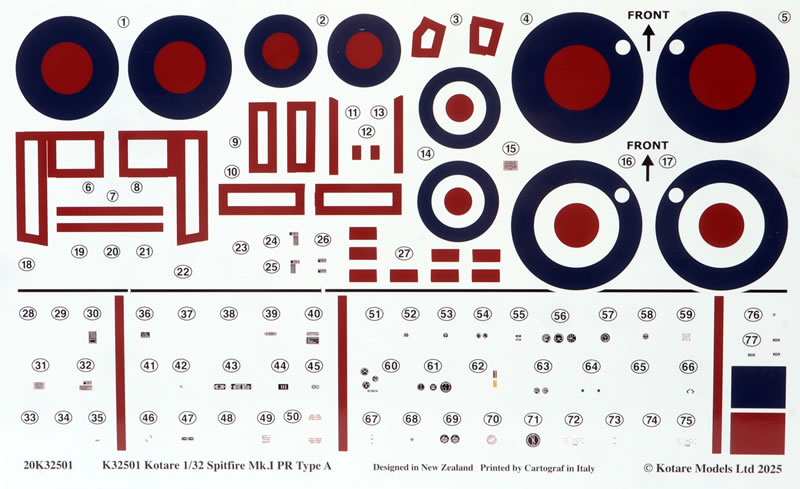
The large glossy decal sheet provides two marking options along with stencils and instrument panel decals. The red tape decals are an innovative touch. These may be applied prior to the top layer of Camotint paint and oversprayed so that just a faint impression remains.
Registration and colour saturation on my sample are flawless. The decals are printed in Italy by Cartograf—another reassuring indicator of quality.
Kotare’s Spitfire Mk.I PR Type A is a superbly presented kit that reflects deep subject knowledge, thoughtful engineering and a clear understanding of what modellers actually enjoy about building.
By resisting the temptation to inflate the parts count, Kotare has delivered a model that is richly detailed yet approachable, accurate without being over-complicated.
This limited-edition release captures a fascinating and often overlooked chapter in Spitfire history, and it does so with elegance and restraint. From the beautifully executed cockpit to the intelligent use of jigs and the exemplary instructions, this kit rewards close inspection.
If this PR Type A is any indication of Kotare Models’ future direction, Spitfire enthusiasts—and modellers in general—have much more to look forward to.
This is a genuine limited release though, so don't dawdle. Get one while you can!
Highly Recommended.
Purchased by the Reviewer
Text and Images Copyright © 2026 by Brett Green
Page Created 16 January, 2026
Last updated
18 January, 2026
Back to HyperScale Main Page
Back to Reviews Page
|
 Home
| What's New |
Features |
Gallery |
Reviews |
Reference |
Forum |
Search
Home
| What's New |
Features |
Gallery |
Reviews |
Reference |
Forum |
Search