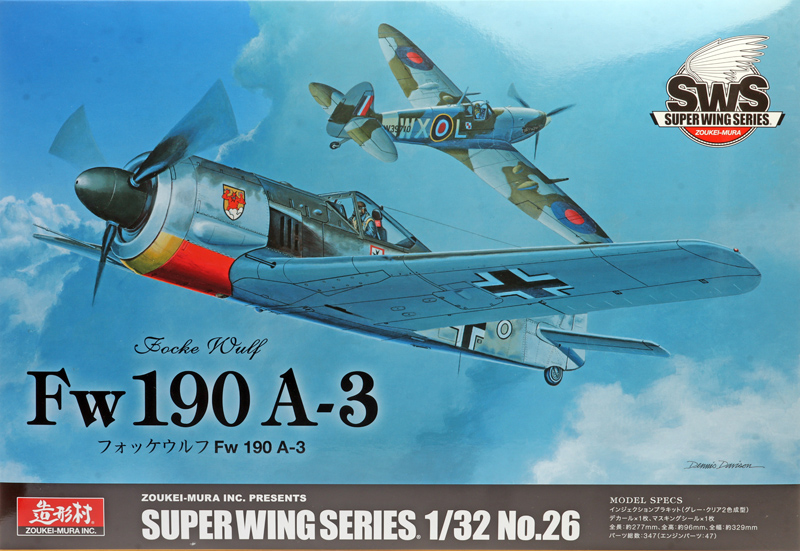
Zoukei-Mura Super Wings Series Kit No. 26 - Focke-Wulf Fw 190 A-3
Contents and Media:
330 parts in grey plastic; 14 parts in clear plastic; self-adhesive die-cut masks; markings for two schemes; detailed 76 page illustrated instructions.
Finely recessed panel lines and fasteners; maximum level of detail including full engine and underlying skeletal frames; amazing attention to detail; wide selection of useful options (some not mentioned in instructions); thoughtful design features; perfectly printed glossy Cartograf decals; accurate.
Disadvantages:
Harness straps not included.
Recommendation:
Zoukei-Mura's 1/32 scale Focke-Wulf Fw 190 A-3 is an outstanding addition to its growing family of early Würger variants. The model combines exceptional engineering, impressive accuracy and a remarkable level of internal and external features in a package that is clearly aimed at modellers who appreciate a deep dive into detail.
The comprehensive engine, cockpit and gun bay detail, combined with a wealth of optional parts and clever engineering solutions—particularly the foolproof main undercarriage installation—should make this a kit that will be a rewarding build.
Surface textures are nicely restrained, the clear parts are excellent, Cartograf decals are flawless, and the inclusion of masks is most welcome. The only omission is the lack of seat harnesses, although this is easily remedied with aftermarket accessories or scratch-built alternatives.
Whether built buttoned up to showcase its elegant lines or peeled back to reveal its impressive internal glory, Zoukei-Mura's 1/32 scale Fw 190 A-3 captures the character of the early Wurger. If you have been longing for a state-of-the-art early Fw 190 A-3 in 1/32 scale, the wait is over!
Highly recommended.
Reviewed by Brett Green
Introduction
The Focke-Wulf Fw 190 was conceived by Kurt Tank as a rugged, heavily armed alternative to the Messerschmitt Bf 109. Powered by the air-cooled BMW 801 radial engine, the new fighter was designed to combine high speed, excellent low and medium altitude performance, heavy firepower and exceptional pilot visibility. When the Fw 190 A-1 entered operational service with the Luftwaffe in the summer of 1941, it immediately demonstrated a significant advantage over the RAF's Spitfire Mk.V in virtually every respect except sustained turning performance.
Fw 190 A-3
The Fw 190 A-3 represented the first major production refinement of the design. Entering production in the spring of 1942, it was powered by the improved BMW 801 D-2 engine producing around 1,700 horsepower, replacing the earlier BMW 801 C series. The additional power improved climb, acceleration and overall performance while maintaining the aircraft's renowned handling characteristics. The A-3 also incorporated numerous detail improvements to systems and equipment as experience with earlier A-1 and A-2 variants accumulated in frontline service.
Externally, the A-3 was almost indistinguishable from its predecessors, retaining the clean, compact lines of the early Fw 190 family. Armament remained formidable, typically comprising two 7.92 mm MG 17 machine guns above the engine and four 20 mm MG 151/20 cannon in the wings, giving the aircraft one of the heaviest fighter armaments of its day. Some A-3s were adapted as fighter-bombers (A-3/U variants) or fitted with specialised equipment for ground attack and reconnaissance duties, demonstrating the versatility that would become one of the Fw 190's defining characteristics.
Into Action
By mid-1942 the A-3 equipped fighter wings across Western Europe and was increasingly committed to combat on the Eastern Front and in the Mediterranean. Against contemporary Allied fighters—including the Spitfire Mk.V, Hawker Hurricane and early Curtiss P-40 variants—the Fw 190 A-3 enjoyed clear advantages in speed, roll rate, acceleration and firepower. Its wide-track undercarriage also made it significantly easier to handle during take-off and landing than the Bf 109, reducing accidents on rough or temporary airfields.
Compared with the Messerschmitt Bf 109 F and early Bf 109 G, the Fw 190 offered pilots a roomier cockpit, greater structural strength, superior visibility, heavier armament and exceptional manoeuvrability in the roll. The Bf 109 generally retained advantages in sustained turning performance, climb rate and high-altitude capability, while its liquid-cooled inline engine presented a smaller frontal area. Many Luftwaffe pilots who flew both types regarded the Fw 190 as the more forgiving and versatile aircraft, particularly at low and medium altitudes where most combat occurred during 1942.
Legacy
Production of the A-3 was relatively brief before it was superseded by the externally similar A-4 later in 1942, but it established the standard configuration for the early BMW 801-powered Fw 190 family. The aircraft's success confirmed Kurt Tank's design philosophy and laid the foundation for the many fighter, fighter-bomber, reconnaissance and ground-attack variants that followed.
Although later Fw 190 models boasted more powerful engines, revised armament and specialised equipment, the A-3 represents one of the purest expressions of the original concept: a fast, robust, heavily armed fighter that could outperform most of its contemporaries while proving adaptable enough to serve in almost every tactical role assigned to the Luftwaffe. Its influence extended well beyond its relatively short production run, cementing the Fw 190's reputation as one of the outstanding combat aircraft of the Second World War.
Fw 190 in 1/32 scale
A number of large scale Wurgers have been available ovet the last half Century.
Hasegawa's line-up included two generations of 1/32 scale Fw 190 A.
The first dated back as far as 1970. This was a bit of a mish-mash with Hasegawa claiming it was an A-5, A-7, A-8 and G-3 in various boxings. Detail was basic and surface details comprised raised panel lines.
Hasegawa's second attempt was much better. Unlike its earlier effort, Hasegawa's 2001 Fw 190 A-8 is accurate and well-detailed. Hasegawa also released a Fw 190 A-5 based on A-8 kit a few years later. Fit was excellent and with only 112 grey plastic parts, they are a fast build too. These kits' biggest shorthcoming is that they are pretty much unless youave an unlimited eBay budget.
In early 2015 Revell released an all-new 1/32 scale Fw 190 F-8 followed by a number of Fw 190 A variants. These kits featured a good level of detail including full engine, recessed panel lines, subtle fabric surfaces, separate control surfaces and useful options. At the time of its release it was inexpensive too.
However, we had never had an early-version Fw 190 A as a long-run injection moulded kit in 1/32 scale. The closest we have come is a resin conversion from Montex, and Pacific Coast Models' short-run 1/32 scale Fw 190 A-1 / 2 / 3 / 4 kit.
Zoukei-Mura addressed this shortcoming with their all-new Fw 190 A-4 in 2024. This was the best 1/32 scale Wurger released to date, not to mention the only early version in this scale.
Now it is joined by its immediately older sibling, the Fw 190 A-3.
FirstLook
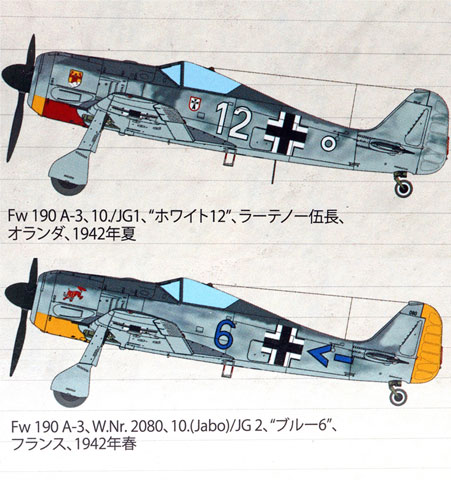
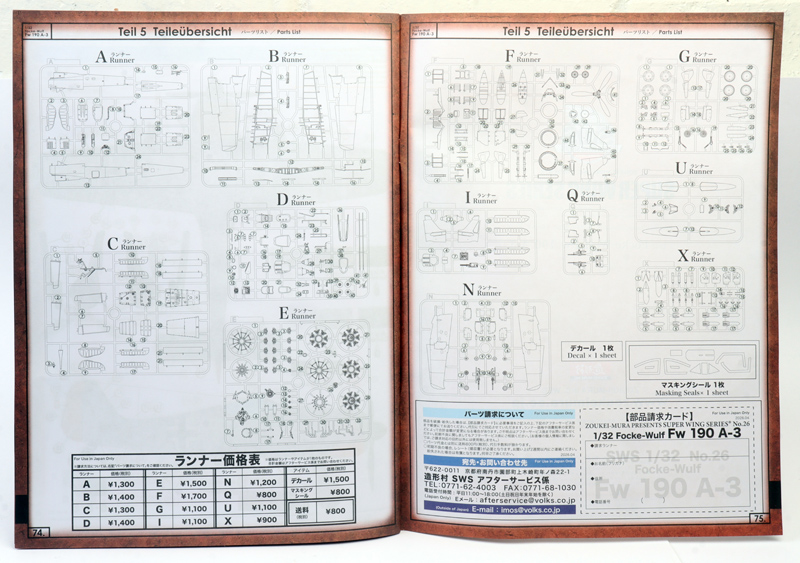
Zoukei-Mura's new 1/32 scale Focke-Wulf Fw 190 A-3 comprises 330 parts in grey plastic, 14 parts in clear plastic, self-adhesive die-cut masks, markings for three schemes (including one aircraft at two different times) and detailed 76 page illustrated instructions.
This is Zoukei-Mura's third boxing of the Fw 190 A, the first being an A-4 released in 2023 and a reboxing with new markings in 2024 and parts to build the two-gun Light Armament wing in the 2023 release.
The subjects in this boxing represent Fw 190 A-3 standard wing armament.
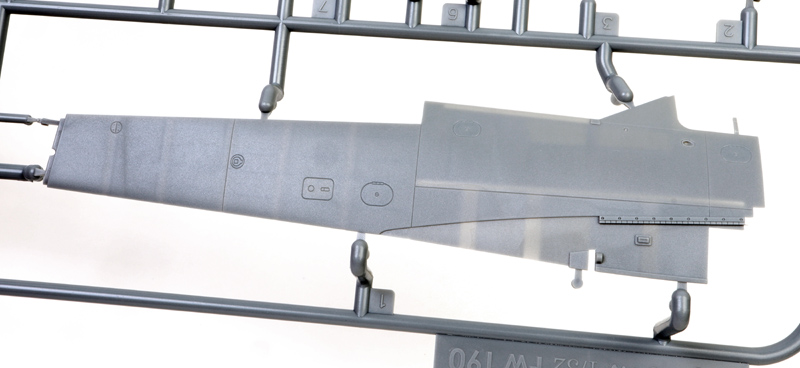
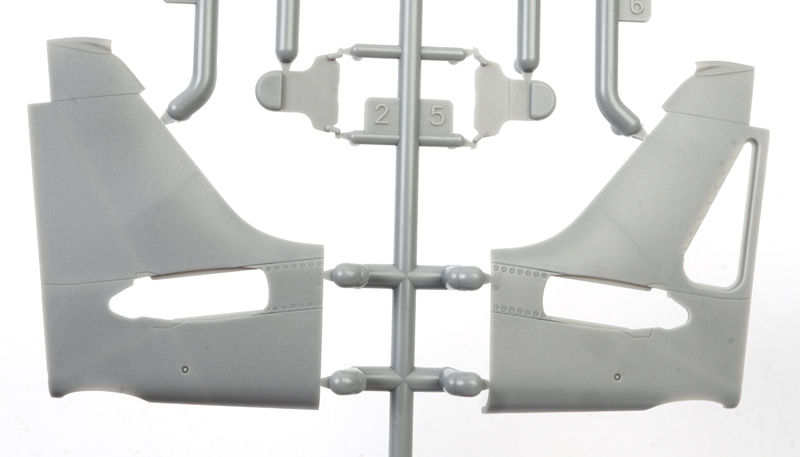
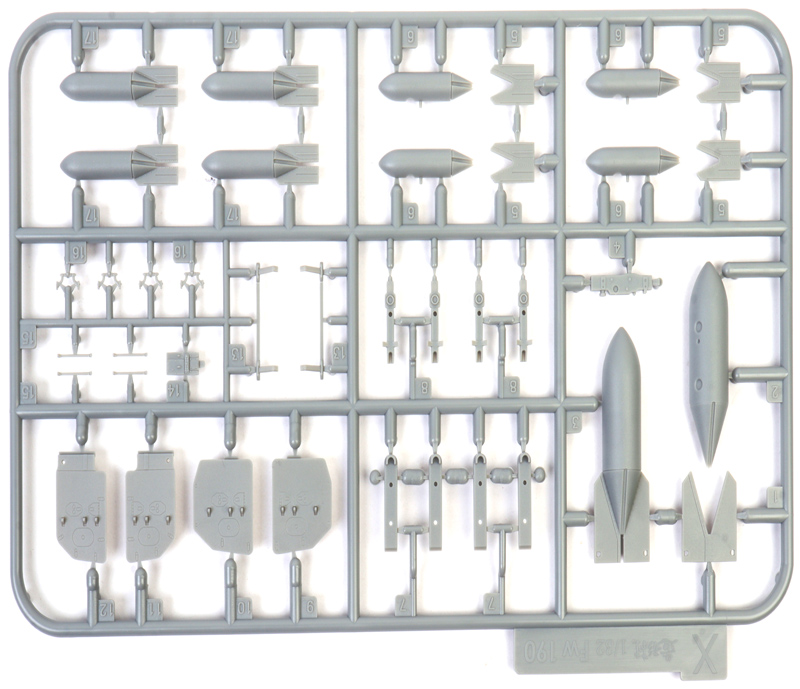
Most parts are common with the earlier release Fw 190 A-4 kit, but the A-3 includes three new plastic sprues. These are Sprue I, which includes the empennage insert with its distinctive flattened aerial wire attachment point and ailerons, Sprue N with the standard A-3 armament lower wing and Sprue X, supplying an SC 250 bomb, four 100 kg bombs (not for use for either of the two options her), sway braces and alternative lower wing panels.
Zoukei-Mura has generously retained the tall aerial attachment empennage insert and other optional parts allowing the modeller to build an early production Fw 190 A-4 too.
The parts breakdown is strikingly unique to Zoukei-Mura with full detail inside and out. This includes frames and stringers represented on the inside surfaces of the wings and fuselage.
On the exterior, surface textures are restrained with fine recessed panel lines, hatches and minimal fasteners and rivets.
Interior details are equally impressive.
Zoukei-Mura has supplied full engine detail. The engine is made up from 47 plastic parts described over 11 pages of instructions. The result will be very impressive. The instructions also note that you may build a display jig from the kit sprues.
The cockpit continues the detail theme with 43 parts. The plastic instrument panels are supplemented by detailed decals for dials, switches, stencils and more.
An optional clear plastic upper instrument panel is offered.
Surprisingly, harness and rudder toe straps are not included.
Fuselage cooling vents may be posed open or closed. Cooling slots are also supplied as an option for earlier production aircraft.
Control surfaces are all separate parts and may be posed to taste. Fabric texture is subtle and convincing.
Flaps are supplied as two optional pairs. The dropped flap option features deep structural detail on the inner surfaces.
Full gun details is supplied. All access hatches may be posed open or closed.
The early-style inner main undercarriage doors may be posed open or closed too.
Other options include:
Alternative cross tread and smooth tyres
Alternative main wheel hubs
Alternative tail wheels
Two styles of drop tank
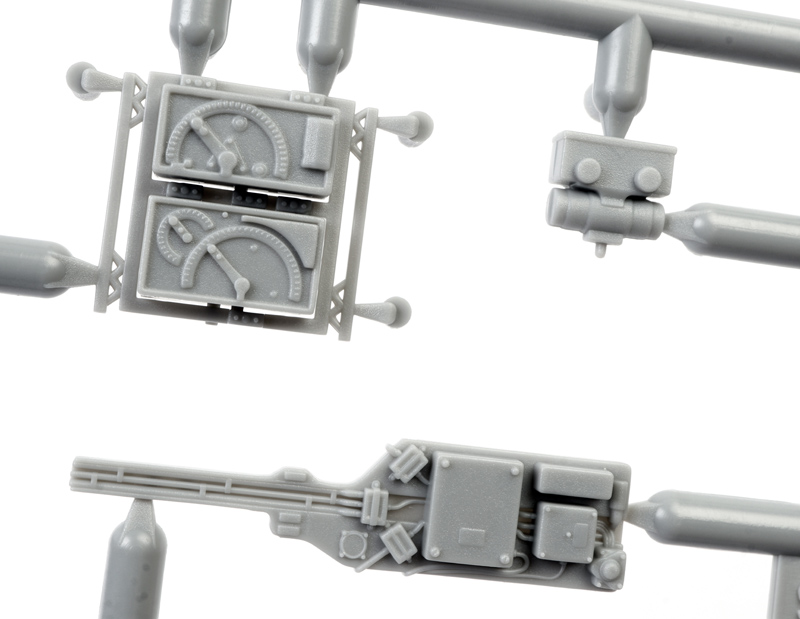
Poseable side fuselage hatch including oxygen bottles and radio equipment inside.
Separate tail gear inspection panel that may be posed open or closed.
Alternative pilot's head armour (although I confess I can't tell the difference!)
A set of sway braces appears on the sprue too, but no centreline rack.
Setting accurate rake and splay for Fw 190 main undercarriage legs is notoriously tricky. Zoukei-Mura has minimised this challenge with solid and precisely keyed undercarriage legs that are cleverly slotted into the front of the wings and secured with a leading edge insert.
The inserts conform with panel lines.
The fuselage is split with the empennage as a separate sub-assembly. This parts features a fixed tall antenna post on top of the fin.
The clear sprue is this and free from distortion. The sprue includes bulged and flat sliding canopy sections.
Two versions of each sliding canopy are included - one representing and open canopy and the other closed. On the real Würger, the canopy was somewhat flexible. This flexibility was further enhanced with a short hinge on the top. This was necessary because the canopy rails tapered inwards back along the fuselage, requiring the front bottom corners of the canopy to pinch inward when opening (ie, the width was narrower when the canopy was open).
Other parts on the clear sprue are navigation lights, armoured glass, gun sights and the aforementioned clear instrument panel.
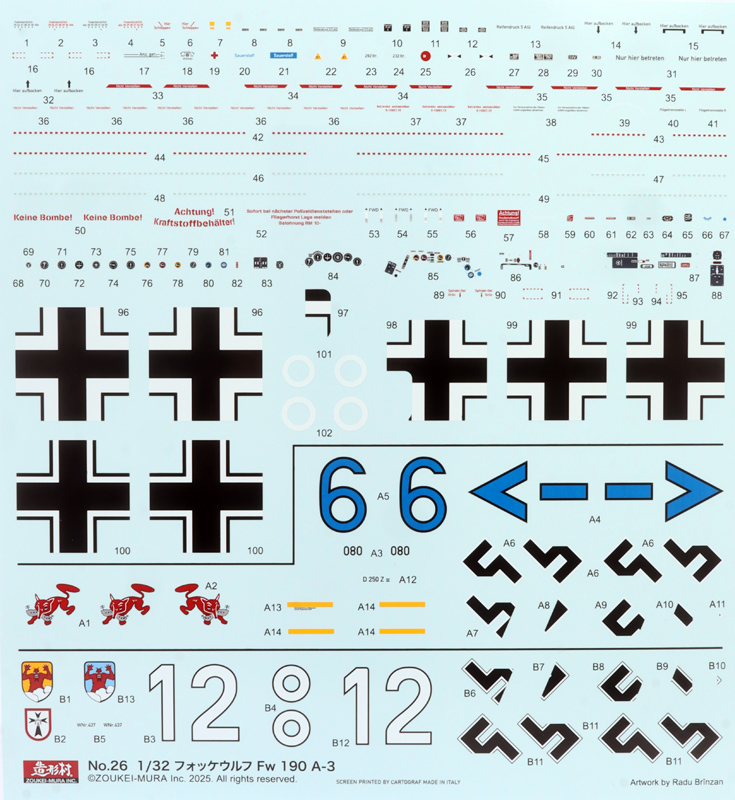
Decals are printed perfectly by Cartograf.
Stencil markings are printed onto the single large decal sheet along with the unique markings of the two subjects.
The inclusion of die-cut self-adhesive masks is a nice touch.
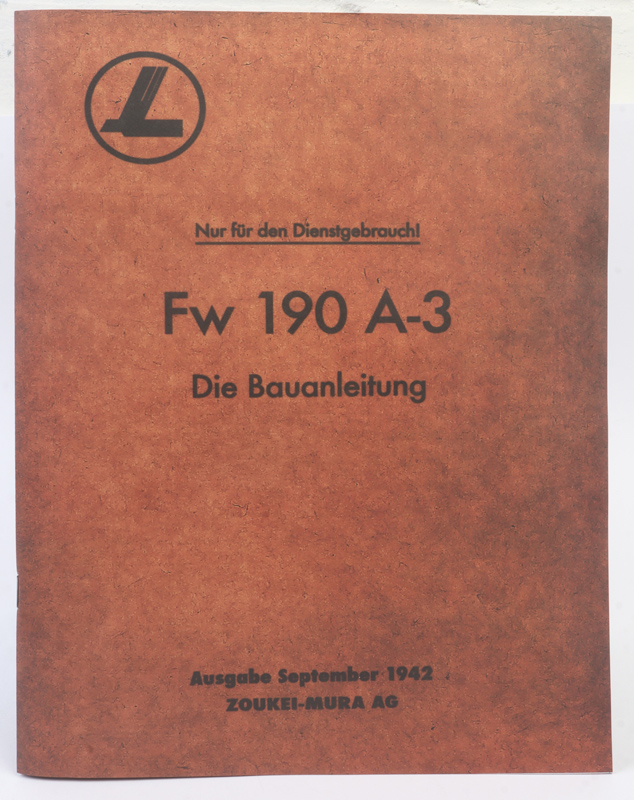
Instructions are exhaustive with 76 pages of illustrations and text. Zoukei-Mura offers multiple views from different angles to ensure that the modeller fully understands the sequence and position of assembly.
Conclusion
Zoukei-Mura's 1/32 scale Focke-Wulf Fw 190 A-3 is an outstanding addition to its growing family of early Würger variants. The model combines exceptional engineering, impressive accuracy and a remarkable level of internal and external features in a package that is clearly aimed at modellers who appreciate a deep dive into detail.
The comprehensive engine, cockpit and gun bay detail, combined with a wealth of optional parts and clever engineering solutions—particularly the foolproof main undercarriage installation—should make this a kit that will be a rewarding build.
Surface textures are nicely restrained, the clear parts are excellent, Cartograf decals are flawless, and the inclusion of masks is most welcome. The only omission is the lack of seat harnesses, although this is easily remedied with aftermarket accessories or scratch-built alternatives.
Whether built buttoned up to showcase its elegant lines or peeled back to reveal its impressive internal glory, Zoukei-Mura's 1/32 scale Fw 190 A-3 captures the character of the early Wurger. If you have been longing for a state-of-the-art early Fw 190 A-3 in 1/32 scale, the wait is over!
 Home
| What's New |
Features |
Gallery |
Reviews |
Reference |
Forum |
Search
Home
| What's New |
Features |
Gallery |
Reviews |
Reference |
Forum |
Search